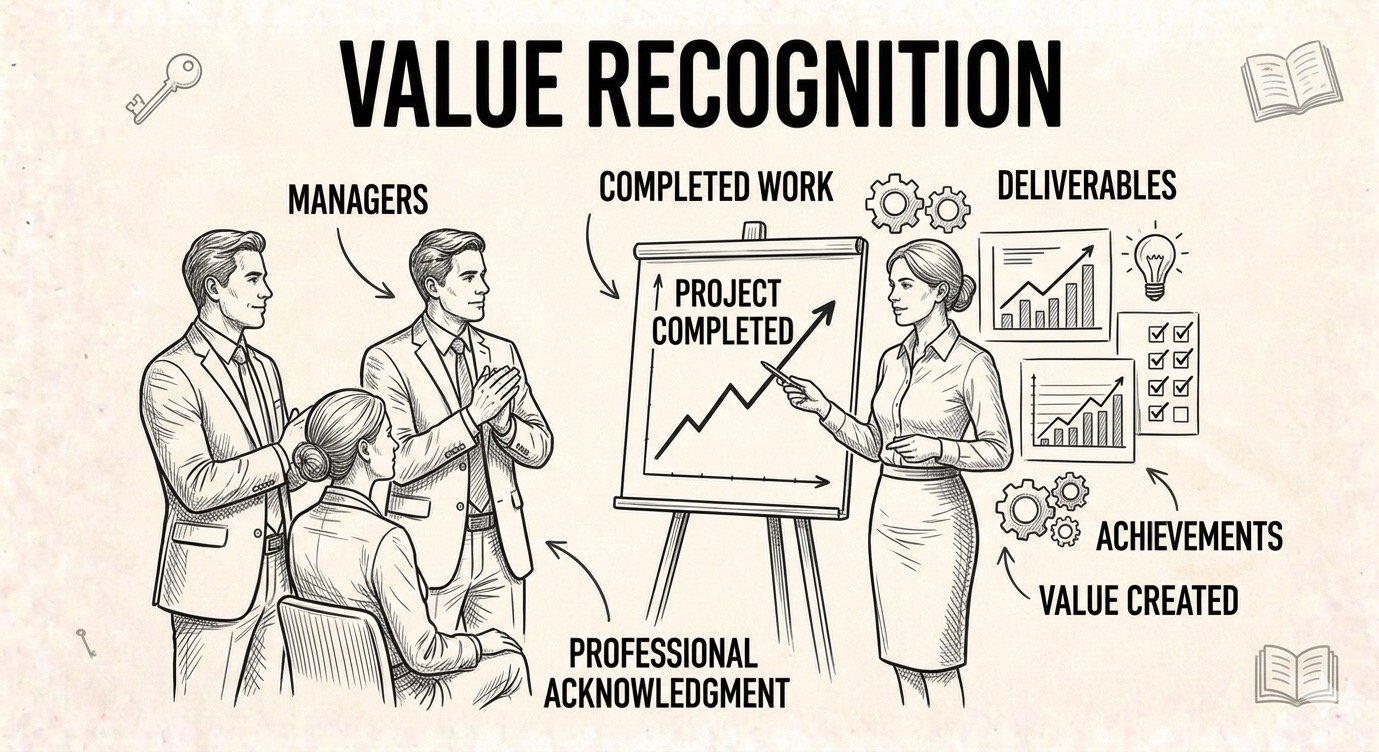
Dictionary defines marketing as, "the action or business of promoting and selling products or services, including market research and advertising." It is easier to comprehend marketing when it is related to products or services, on the other hand self-marketing may connotate boasting, show-off and in extreme cases may be interpreted as narcissism. But in the professional world doing self-marketing within the realms of ethics, is much needed skill in the highly competitive world.
Engineers, when they work on solving a complex problem, do not mind publishing their work as a technical paper in their professional magazine. They don't consider it as "show off" activity, rather that it is their professional responsibility. But the little opportunities at work, that may not merit publishing a technical paper, but good enough for knowledge sharing, doesn't get marketed. The engineer may feel embarrassed (to market) or even lazy to showcase his work coming out of such little opportunities. When the push to do so comes from their manager, they hesitate, but they do it. They don't feel embarrassed that they are "showing-off". But letting such golden opportunities of "self marketing" to their managers is risky as not all managers may be aware of such opportunities.These opportunities help not only marketing an individual's work but also that of the organisation. For an individual's professional growth, besides papers and patents, internal recognition through knowledge sharing is also critical. These opportunities of self-marketing are perfect to accumulate such internal recognitions. One also needs to look for opportunities for external recognition. Writing white papers in industry magazines, giving tutorials or lecture in universities, writing blogs, replying to a question on forums like Quora, sharing ideas on LinkedIn are good avenues to self-market oneself.
Self marketing helps individuals improve their image and reputation to advance their careers. It gives individuals more opportunities to effectively communicate their values, skills, experiences, and vision to potential employers. Successful self marketing helps employees separate themselves from the hundreds of other applicants who may be competing for the same job. Make self marketing a habit - Dedicate a portion of you career-plan to work on self marketing efforts.
Finally, as you start setting goals for this year, do remember to set couple of goals for self-marketing.
Why This Matters
Organizations promote people they know contribute value. But knowledge of your contributions requires visibility, and visibility rarely happens accidentally-especially in distributed, fast-paced work environments where managers oversee large teams and attention is fragmented. Research consistently shows that professionals who actively manage their visibility advance faster than equally talented peers who assume quality work speaks for itself. This isn't because evaluators are superficial; it's because they can only recognize contributions they know about. In an era where career advancement increasingly depends on reputation and network effects, the professional who treats self-marketing as distasteful or unnecessary will consistently lose opportunities to peers who understand that communicating value is part of creating value. The ability to ethically market your contributions isn't a personality trait-it's a learnable skill that directly impacts career trajectory.
Leadership in Practice
A senior engineer at a major technology company consistently delivered exceptional technical work but rarely shared insights beyond immediate team interactions. Meanwhile, a peer with comparable technical skills regularly wrote internal blog posts explaining complex problems they'd solved, presented at brown-bag sessions, and actively participated in cross-functional technical forums. When a high-profile project required selecting a technical lead, the more visible engineer was chosen despite both having similar expertise. The selection wasn't bias or politics-it was information asymmetry. Leadership knew the visible engineer could handle complex problems because they'd repeatedly demonstrated problem-solving approaches in public forums. The quieter engineer's capabilities remained largely unknown beyond their immediate team.
This experience prompted the overlooked engineer to fundamentally change their approach. They began documenting solutions in the company wiki, volunteering to present at architecture review meetings, and writing detailed post-mortems after major initiatives. Within eighteen months, they'd become one of the most respected technical voices in the organization-not because their work improved (it was always strong), but because their contributions became visible. They were invited to join strategic initiatives, asked to mentor junior engineers, and ultimately promoted ahead of the peer who'd initially advanced faster.
The insight they gained: "I thought quality work spoke for itself. I was wrong. Quality work speaks for itself within the room where it happens. Everywhere else, you need to speak for it. That's not ego-that's professional responsibility."
Leadership Framework
**The Strategic Visibility Framework**
Effective self-marketing requires systematic approach across multiple channels:
**1. Internal Knowledge Sharing**
Identify three to five significant learnings or solutions each quarter and package them for sharing: Document clever solutions in team wikis with searchable titles. Volunteer to present lessons learned at team meetings or brown-bag sessions. Participate actively in technical forums and internal Q&A platforms. Offer to mentor others in areas where you've developed expertise. Each interaction builds your reputation as someone who doesn't just execute but contributes to collective intelligence.
**2. Cross-Functional Visibility**
Break out of your immediate team bubble: Participate meaningfully in cross-functional meetings-ask insightful questions, share relevant experiences. Volunteer for initiatives that expose you to other parts of the organization. Build relationships with managers and leaders outside your direct reporting chain. This broader visibility creates career opportunities your immediate team cannot provide.
**3. External Professional Presence**
Extend your reputation beyond organizational boundaries: Write articles or blog posts about industry challenges you've tackled. Present at local user groups, meetups, or conferences. Contribute to technical forums like Stack Overflow with thoughtful answers. Publish analysis or commentary on platforms like LinkedIn or Medium. Each external touchpoint builds professional capital that transcends your current role.
**4. Strategic Documentation**
Make your contributions discoverable: Maintain a personal achievement log documenting significant contributions. Keep a portfolio of work products-designs, analyses, presentations. Write project post-mortems that capture not just outcomes but approaches and lessons. This documentation becomes invaluable during review cycles, role transitions, and opportunity discussions.
**5. Manager Partnership**
Help your manager market you: In one-on-ones, proactively share significant accomplishments and impacts. When receiving praise from others, forward it to your manager with context. Ask explicitly: "Are there opportunities for me to gain visibility with senior leadership?" Your manager wants you to succeed but cannot promote contributions they don't know about.
**6. Quality Over Volume**
Self-marketing isn't about constant self-promotion: Choose moments that represent genuine learning, innovation, or impact. Focus on sharing insights that benefit others, not just celebrating yourself. Let the value of your contributions speak through the usefulness of what you share. One thoughtful technical deep-dive generates more credibility than ten shallow status updates.
**Critical Success Factor**: The professionals who advance fastest aren't necessarily those who do the best work-they're those who do excellent work AND ensure key stakeholders know about it. This isn't cynicism; it's reality. Treat visibility as a professional skill requiring the same systematic attention you give to technical execution.
Leadership Takeaway
Starting this quarter, set two specific self-marketing goals: one internal (present at a team meeting, write a technical wiki article) and one external (write a blog post, present at a meetup, contribute meaningfully to a professional forum). Track these goals with the same discipline you track project deliverables. Remember: if you feel uncomfortable marketing yourself, reframe it-you're not promoting yourself, you're sharing knowledge that helps others. Your contributions create value, but unrealized value is wasted value. Make visibility a habit, not an afterthought.
"Your work speaks for itself-but only to people who can see it." - Wisdom from countless professionals who learned visibility matters
Ramu Kaka's Wisdom
The farmer who grows the finest crops but never brings them to market will starve while lesser farmers prosper. It's not enough to do excellent work-you must ensure the right people know about it. This isn't boasting; it's the professional responsibility to help your organization recognize and leverage the value you create.
Reflection Questions
- What significant contribution have you made in the past three months that your manager's manager does not know about-and what does that invisibility cost you?
- If you tabulated all the meaningful problems you have solved or innovations you have created, what percentage has been documented or shared beyond your immediate team?
- What specifically makes you uncomfortable about self-marketing, and is that discomfort protecting your career or limiting it?
Comments