Part I - Foundations of Leadership

Protecting the Culture of Excellence

Listen to Audio
Chapter Illustration

Excerpts from the book “Extreme Ownership” by Jocko Willink and Leif Babin

There are many instances in business and sports, a strong leader, when he takes charge of a poorly performing team, he turns them around and makes them a better team. Vice-versa, a poor leader can take a good team south in their performance. In the book, the author talks about two boat crew teams, one lead by a poor leader and the other by an effective leader. The team lead by the poor leader was losing. After few rounds of competition, the leaders of the teams were swapped. It was noticed that in the future races, the earlier team which was losing, started to win. This established the fact that there are "No Bad Teams, Only Bad Leaders". This case was analysed and following observations were made:

The poor leader whose team was losing, was justifying the team's poor performance with many number of excuses. In his mind, the leader of the other winning team had been lucky enough to be assigned with better team members. His attitude reflected victimisation. As a result, his attitude prevented his team from looking inwardly at themselves and where they could improve. Finally, the leader and the team members focused not on the mission but on themselves, their own exhaustion, misery, and the individual pain and suffering. Though the instructors demanded that they do better, the team became comfortable with substandard performance. Working under poor leadership and an unending cycle of blame, the team constantly failed. No one took ownership, assumed responsibility, or adopted a winning attitude.

When the good leader took charge of the team that was losing, he faced the facts: he recognised and accepted that the team's performance was terrible. He didn't blame anyone, nor did he make excuses to justify poor performance. His realistic assessment, acknowledgement of failures, and ownership of the problem were key to developing a plan to improve performance and ultimately win. Most important of all, he believed winning was possible. He focused his team on the mission. Rather than tolerate their bickering and infighting, he pulled the team together and focused their collective effort to the single specific goal of winning the race. He established a new and higher standard of performance and accepted nothing less from the team.

Leaders when they drive their team to higher standard of performance, they must recognise that when it comes to standard, as a leader, it's not what you preach, *it's what you tolerate*. If substandard performance is accepted and no one is held accountable, that poor performance becomes the new standard. Therefore the leaders must enforce standards. Leaders must push the standards in a way that encourages and enables the team to utilize extreme ownership. Leaders should never be satisfied. They must strive to improve, and they must build that mind-set into the team. They must face the facts through a realistic, brutally honest assessment of themselves and their team's performance. Identifying weaknesses, good leaders seek to strengthen them and come up with a plan to overcome challenges. The recognition that there are no bad teams, only bad leaders facilitates extreme ownership and enables leaders to build high-performance teams.

Why This Matters

The culture of your team is determined entirely by the standards you enforce, not the standards you espouse. Every time you tolerate mediocrity, you're teaching your team that excellence is optional. High performers watch to see if you hold low performers accountable. When you don't, your best people either leave or lower their standards to match everyone else. Protecting a culture of excellence isn't about being harsh - it's about respecting your top performers enough to maintain the standards that attracted them.

Leadership in Practice

When management researcher Jim Collins researched companies for "Good to Great," he discovered the "First Who, Then What" principle - great companies first get the right people on the bus before deciding where to drive it. A successful airline embodies this philosophy. The CEO built the airline on a foundation of protecting its culture fiercely. The airline industry is brutally competitive, yet the airline has been profitable for decades - unheard of in the industry. How? By being ruthless about culture fit. The CEO famously said he'd fire someone with perfect job skills but wrong attitude, while keeping someone with right attitude and imperfect skills. The airline receives over an extremely competitive hiring ratio. They don't just screen for skills - they screen intensively for culture fit. In interviews, they assess whether candidates will protect and enhance their fun-loving, customer-obsessed culture. This isn't soft management - it's strategic clarity about what drives success. By protecting their culture relentlessly, they've created sustained competitive advantage in a notoriously difficult industry.

Leadership Framework

The Culture Protection Framework:

1. DEFINE EXPLICIT STANDARDS - Articulate specific behaviors that define your culture - Make standards observable and measurable - Ensure everyone knows what excellence looks like

2. ENFORCE RUTHLESSLY - Address violations immediately, every time - Apply standards consistently across all levels - Remember: what you walk past, you endorse

3. CELEBRATE EXEMPLARS - Publicly recognize those who embody standards - Tell stories about culture carriers - Make heroes of those who protect the culture

4. EXIT VIOLATORS - Remove toxic high performers quickly - Don't compromise culture for short-term results - Show the team that culture is non-negotiable

5. RECRUIT FOR FIT - Hire for attitude, train for skill - Screen new hires against cultural standards - Remember: every hire either strengthens or weakens culture

Warning Signs of Culture Erosion: - High performers leaving - Increasing tolerance of poor behavior - "That's just how [person] is" becoming accepted - Standards applied inconsistently - More complaining, less accountability

Leadership Takeaway

Your culture is not what you say in meetings or write in values statements. Your culture is what you tolerate in practice. Every time you ignore poor behavior, miss a standard, or make an exception, you're redefining your culture downward. Protecting excellence isn't about perfection - it's about consistency. Your best people are watching to see if standards matter. Show them.

Culture eats strategy for breakfast. - Peter Drucker

Ramu Kaka's Wisdom

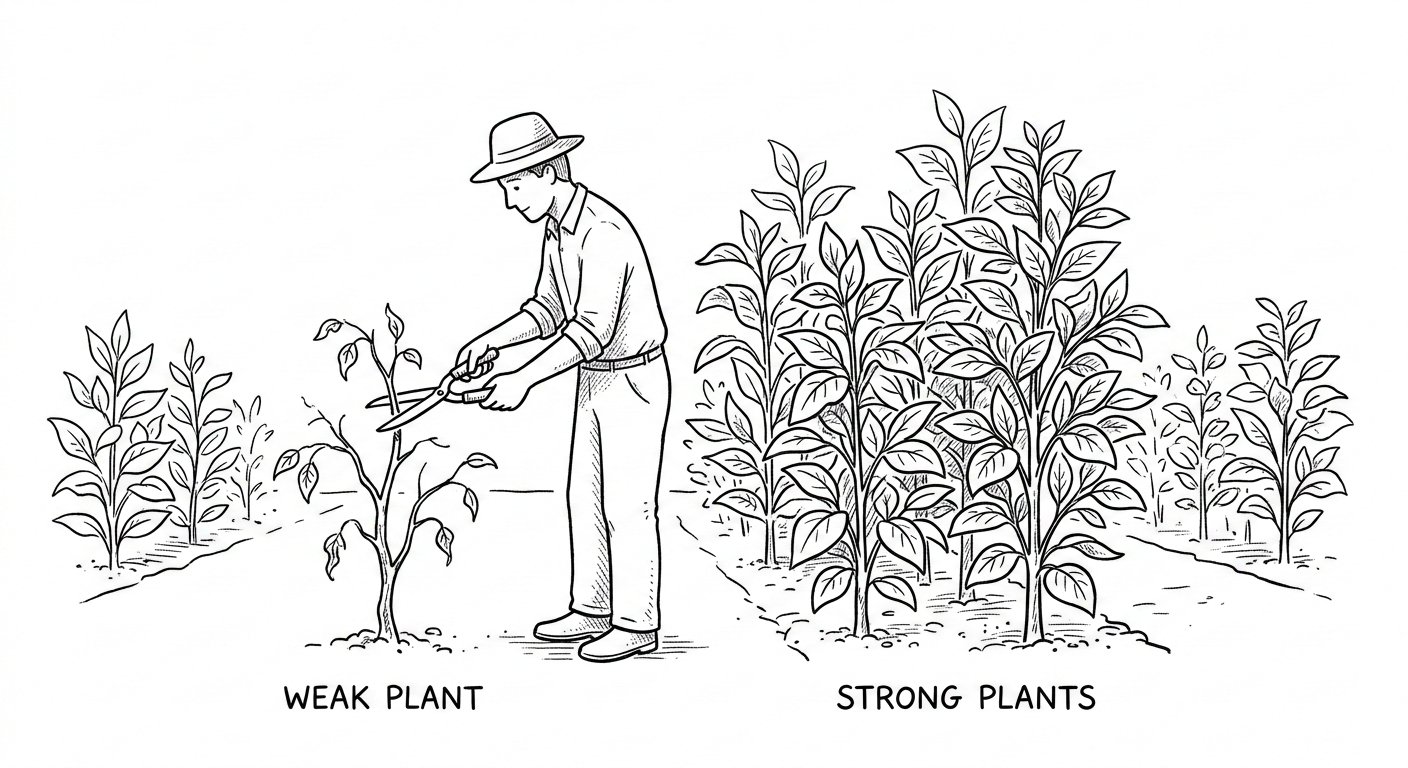
A culture of excellence is like a garden - it must be tended constantly. Weeds (mediocrity) grow naturally; flowers (excellence) require deliberate cultivation. Your job as a leader is to pull weeds quickly, water flowers consistently, and never let the garden go untended.

Reflection Questions

Comments