Part I - Foundations of Leadership

Extreme Ownership

Listen to Audio
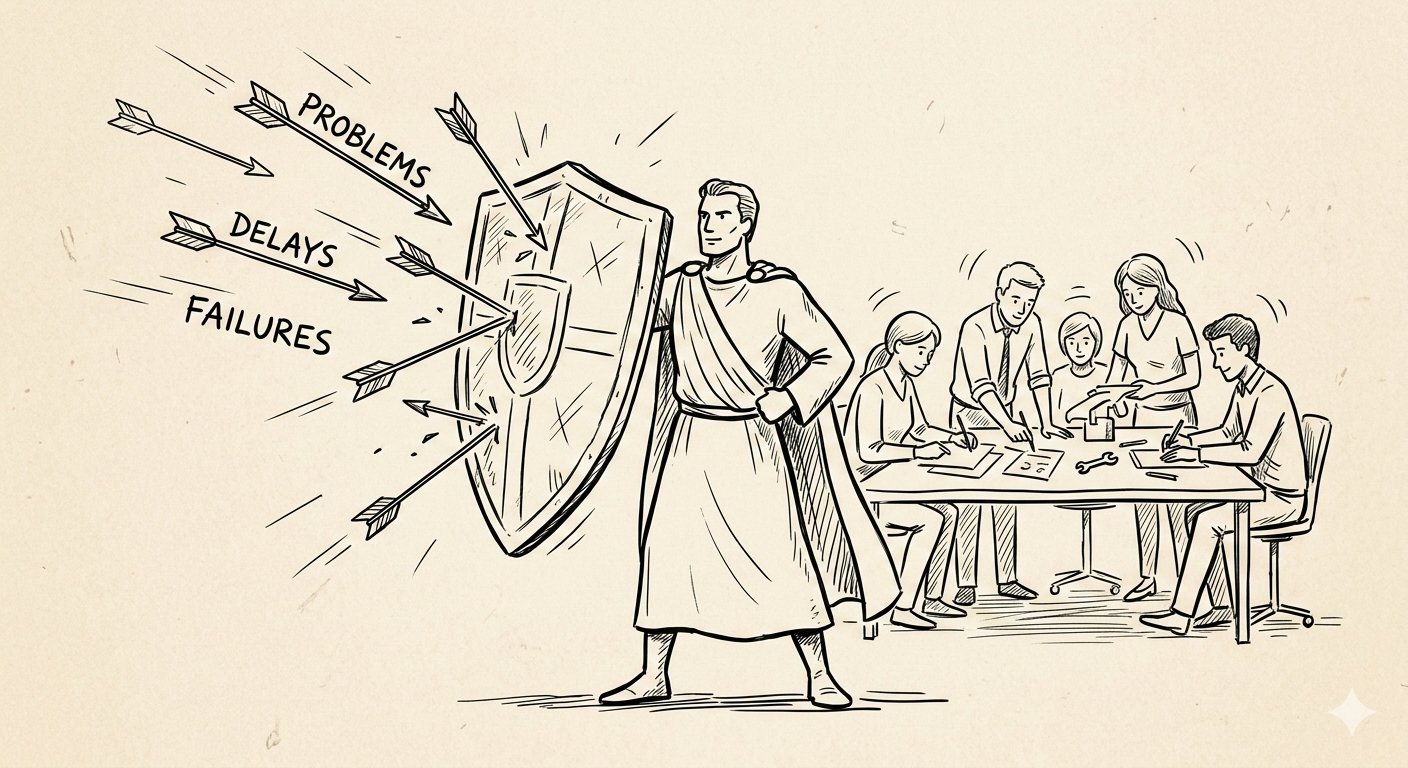
Chapter Illustration

Excerpts from the book of the same name by Jocko Willink and Leif Babin , US Navy SEAL

On any team, in any organization, all responsibility for success and failures rests with the leader. The leader must own everything in his or her world. There is no one else to blame. The leader must acknowledge mistakes and admit failures, take ownership of them, and develop a plan to win. The best leaders take extreme ownership of everything that impacts the mission. This fundamental core concept enables SEAL leaders to lead high-performing teams in extraordinary circumstances and win. Application of extreme ownership is fully relevant in business team in any industry.

When subordinates aren't doing what they should, leaders that exercise Extreme Ownership cannot blame them. The leader bears full responsibility for explaining the strategic mission, developing the tactics, and securing the training and resources to enable the team to properly and successfully execute. If an individual on the team is not performing at the level required for the team to succeed, the leader must train and mentor that underperformer. But if the underperformer continually fails to meet the standards, then the leader must be loyal to the team and the mission above any individual. The leader must make tough call to terminate the underperformer and hire others who can get the job done.

Total responsibility for failure is a difficult thing to accept, and taking ownership when things go wrong requires extraordinary humility and courage. But doing just that is an absolute necessity to learning, growing as a leader, and improving a team's performance.

Extreme Ownership requires leaders to look at an organization's problems through the objective lens of reality, without emotional attachments to agendas and plans. It mandates that a leader set ego aside, accept responsibility for failures, attack weakness and consistently work to build a better and more effective team. Such a leader, however, does not take credit for his or her team's success but bestows that honor upon his subordinate leaders and team members. When a leader sets such an example and expects this from junior leaders within the team, the mindset develops into the team's culture at every level. As a group they try to figure out how to fix their problem - instead of trying to figure out who or what to blame. As a leader in our mind we think we are doing everything right. So when things go wrong, instead of looking at ourselves, we blame others. But no one of infallible. With extreme ownership, one should remove individual ego and personal agenda. It's all about the mission. How can you best get your team to most effectively execute the plan in order to accomplish the mission? “That is the question you have to ask yourself. That is what Extreme Ownership is all about.”

Why This Matters

When leaders blame circumstances, other departments, or their team members, they surrender their power to improve. Extreme ownership is the difference between teams that make excuses and teams that make progress. Organizations where leaders take complete responsibility create cultures of accountability where problems get solved rather than explained away. Without this foundation, even talented teams become mired in finger-pointing and defensiveness.

Leadership in Practice

When the new CEO took over as CEO of a major technology company several years ago, the company was struggling with a toxic culture of internal competition and blame. Divisions wouldn't share information, teams protected their turf, and innovation suffered. The CEO's first major initiative wasn't a product launch - it was introducing a growth mindset and extreme ownership culture. He started by taking ownership of the company's failures himself, publicly acknowledging the company had missed mobile and failed to see cloud's importance early enough. Rather than blame his predecessors, he focused on what he and the current leadership team would do differently. This modeling of ownership from the top transformed the organization. The results speak for themselves: the company's market cap has increased significantly under the CEO's leadership. Teams that previously competed now collaborate. The company that was written off as irrelevant became a cloud computing powerhouse. The transformation began with one leader taking extreme ownership and insisting every leader do the same.

Leadership Framework

The Extreme Ownership Framework:

1. OWN EVERYTHING - Accept that if you are in charge, everything that happens under your leadership is your responsibility. No exceptions, no excuses.

2. NO BAD TEAMS - Recognize that poor team performance is a leadership problem. Leaders who take over underperforming teams and turn them around prove there are only bad leaders, not bad teams.

3. BELIEVE IN THE MISSION - You cannot effectively lead a mission you don't believe in. If you cannot support it, work to change it or step aside.

4. CHECK YOUR EGO - Set aside personal pride and defensiveness. Focus relentlessly on the mission and team success, not on being right.

5. LEAD UP AND DOWN - Practice ownership not just with your subordinates but with your superiors and peers. Help them succeed through your ownership mindset.

Critical Success Factors: - Model ownership publicly before demanding it from others - Replace blame language with solution language - Analyze failures objectively without defensiveness - Give credit down, take blame up - Make ownership part of your culture, not just a slogan

Leadership Takeaway

The moment you accept that everything happening under your leadership is your responsibility, you gain the power to change it. Stop waiting for others to step up. Stop explaining why things aren't working. Start owning every outcome - good or bad - and watch how quickly your team's performance transforms. As a leader, the question isn't 'Whose fault is this?' The question is 'What will I do about it?'

In the end, it is important to remember that we cannot become what we need to be by remaining what we are. - Max DePree

Ramu Kaka's Wisdom

A leader's power is directly proportional to the responsibility they accept. The more you own, the more you can change. The more you blame, the more powerless you become. Your team will never take more ownership than you do.

Reflection Questions

Comments