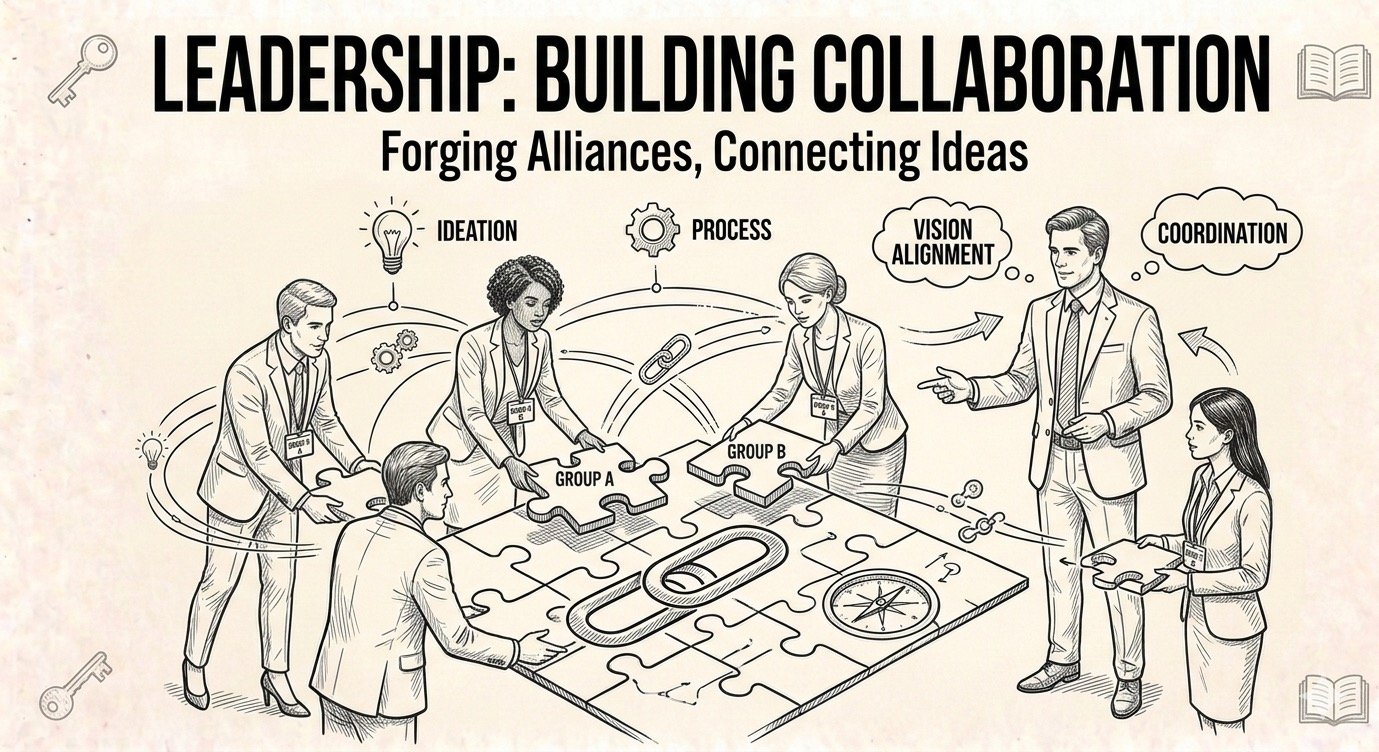
In the previous blog, mapping of the political terrain and the model to identify the agenda and the approaches of others in the organization was discussed. Continuing with the topic of "Getting them on your side", in this session we will talk about identifying allies and resistors and the need for creating a coalition. To start with, determine your agenda, as it relates to your initiative - Traditional/Adjuster/Developer/Revolutionary. List all key stake holders as they relate to your initiative. Include those who may have competing objectives, as well as those who are key decision makers. Identify agenda of each stakeholder. Analyse the list, identify those who are like you, those who are in opposite quadrants, and those who share similar goals or implementation strategies. The challenge is not to simply identify high profile stake holders who will be impacted immediately, but also to identify invisible stakeholder who will be impacted down the road.
Identify the agenda of the stakeholder. Remember previous initiatives and how they reacted. Do role-play to get into their shoes and anticipate the behaviour. Ask others their views on how the person will react to an idea in a manner that doesn't telegraph your intentions. Analyze your allies and resistors. Those who share your agenda will be allies and who oppose it are resistors. Those who share the goal are potential alllies and those who share your approach are potential resistors.
With Allies solidify their support, coalesce and get them behind you in a solid and consolidated way. With potential allies, who will be on the fence on your side, convince them of your approach. With potential resistors, whose legs are dangling on other side, you should neutralize their influence or you should convince them to move to your side of the fence.With potential resistors, try to neutralize them.
The next step is to create your coalition. By having others join you, you are less vulnerable. You can harmonize your differences and reduce resistance, pursuing atleast the appearance of common course of action. Building coalition is a necessity for survival and success. Coalition is proactive mode of enhancing participation. It is distinctly different from "giving" through empowerment. Coalitions are based on your recognition of others as critical to the political reality of getting something done.
Coalition is critical when your initiative has far reaching consequences. When your efforts are perceived high risk and complex. When your initiative vies for scarce resources. Coalition is important at every stage of the change initiative. When you are preparing for the change, coalition helps spread risk and helps create critical mass. When initiating change, it helps in overcoming resistance and secure legitimacy. When implementing change it helps avoid sabotage and to get over the hump to make the change. Lastly when stabilising change it helps deflect revenge and maintain support for next project.
Establishing your credibility is the next step in the process of "getting them on your side" .. we will talk about it in another Gyan session.
Why This Matters
Research on organizational change demonstrates that initiative failure correlates far more strongly with inadequate coalition-building than with flawed strategy. Technical excellence and strategic insight matter, but without sufficient political support, even superior ideas languish while lesser initiatives backed by stronger coalitions move forward. This is not organizational dysfunction - it is how collective decision-making works in contexts where multiple competing priorities vie for limited resources. The ability to systematically build and maintain coalitions is not a political skill separate from leadership; it is core leadership competency that determines whether you can actually implement the changes you envision.
Leadership in Practice
A senior director at a major technology company championed a significant architectural change that would streamline development processes but require substantial near-term investment. The technical merit was undeniable, yet previous attempts to gain approval had failed. The director realized the problem was not the idea but the coalition - or lack thereof.
Rather than immediately seeking executive approval, the director spent three months systematically building support. First, they engaged natural champions in the infrastructure team, refining the proposal and ensuring vocal support. Then they identified fence-sitters - engineering managers who liked the goal but worried about disruption to current projects. Rather than dismissing these concerns, the director invited these managers into detailed planning, asking: What would make this transition manageable for your teams? The input led to a phased rollout plan that addressed specific timing concerns.
Opposition came primarily from a product team heavily invested in the legacy architecture. The director met with their leadership to understand their actual concerns, discovering the issue was not the architectural change itself but fear of losing domain expertise and influence. The director proposed creating a working group where this team would guide the transition, preserving their expertise value while enabling the architectural improvement.
By the time the formal approval meeting occurred, the director had already secured support from infrastructure champions, incorporated fence-sitter input into a refined proposal, and neutralized primary opposition by addressing legitimate concerns. The executive approval took fifteen minutes. Implementation proceeded smoothly because the coalition built during planning provided support through inevitable execution challenges.
The lesson: coalition-building is not what you do after developing your brilliant idea. It is how you develop the idea itself - through systematic engagement that builds ownership and addresses concerns before formal processes begin.
Leadership Framework
**The Coalition Building Framework**
**1. Identify Your Champions**
Begin with natural allies - those who share your goals and approaches. Document who they are and nurture these relationships actively. Keep champions informed through early drafts and planning discussions. Give them opportunities to shape your initiative. When approval processes begin, ensure they are prepared to offer vocal support.
**2. Target Fence-Sitters**
Focus disproportionate energy on stakeholders who share your goals but question your methods. These represent your highest-ROI opportunity. Schedule individual conversations focused on listening rather than convincing. Ask explicitly: What concerns do you have about this approach? What would make you more confident in its success? Genuinely incorporate their input and document how their feedback shaped your proposal. Transform them from critics into co-creators.
**3. Understand Opponent Interests**
For stakeholders who seem opposed, dig deeper to understand underlying interests. Opposition to your goal often masks protection of competing priorities. Ask: What are you trying to accomplish? How does my proposal affect your initiatives? Can we structure this to advance both our goals? Sometimes what appears as fundamental disagreement is actually a coordination problem with creative solutions.
**4. Sequential Engagement**
Do not engage all stakeholders simultaneously. Start with champions to build confidence and refine messaging. Then engage fence-sitters while you can still incorporate input meaningfully. Finally, approach opponents from a position of strength, able to reference broad support already secured. Each successful engagement creates momentum and social proof for subsequent conversations.
**5. Document Coalition Building**
Maintain clear records of stakeholder input and how it shaped your proposal. When presenting formally, reference explicitly: We incorporated feedback from Engineering on the rollout timeline, addressed Product concerns about backward compatibility, and refined the scope based on Operations input. This demonstrates you built something collaboratively rather than pushing a predetermined agenda.
**6. Maintain the Coalition**
After securing initial approval, continue investing in relationships. Share implementation progress regularly. Credit coalition members publicly for contributions. When obstacles emerge, engage supporters proactively rather than waiting for them to hear problems from other sources. Coalitions require ongoing maintenance - ignore them and watch support evaporate.
**7. Address Resistance with Respect**
When encountering persistent opposition despite good-faith efforts to find common ground, accept that some stakeholders will not be convinced. Document your engagement attempts. Proceed with the support you have built. But remain open to future collaboration - today opponents may become tomorrow allies when contexts change.
Leadership Takeaway
Starting this week, before presenting your next significant initiative, invest as much time in coalition building as in developing the idea itself. Identify three key stakeholders: one champion you are taking for granted, one fence-sitter you could engage more deeply, and one opponent whose underlying interests you do not fully understand. Schedule conversations focused on listening and incorporating input, not convincing. Remember: you are not defined by ideas you propose but by teams you build to bring them to life.
"If I have seen further, it is by standing on the shoulders of giants." - Isaac Newton, acknowledging that breakthrough requires building on others contributions and support
Ramu Kaka's Wisdom
The farmer who announces he will plant a new crop and expects others to help simply because the crop is good will find himself planting alone. The wise farmer first visits his neighbors, understands their concerns, shows how the new crop benefits everyone, and only then begins planting - with help from those he made partners rather than spectators.
Reflection Questions
- When your last great idea failed to gain traction, how much was due to flaws in the idea versus inadequate coalition-building before you formally proposed it?
- Who are three stakeholders who share your goals but question your methods - and what would happen if you genuinely invited them to shape your approach rather than just support it?
- Do you spend more time perfecting ideas in isolation or building relationships with people who will determine whether those ideas see daylight?
Comments