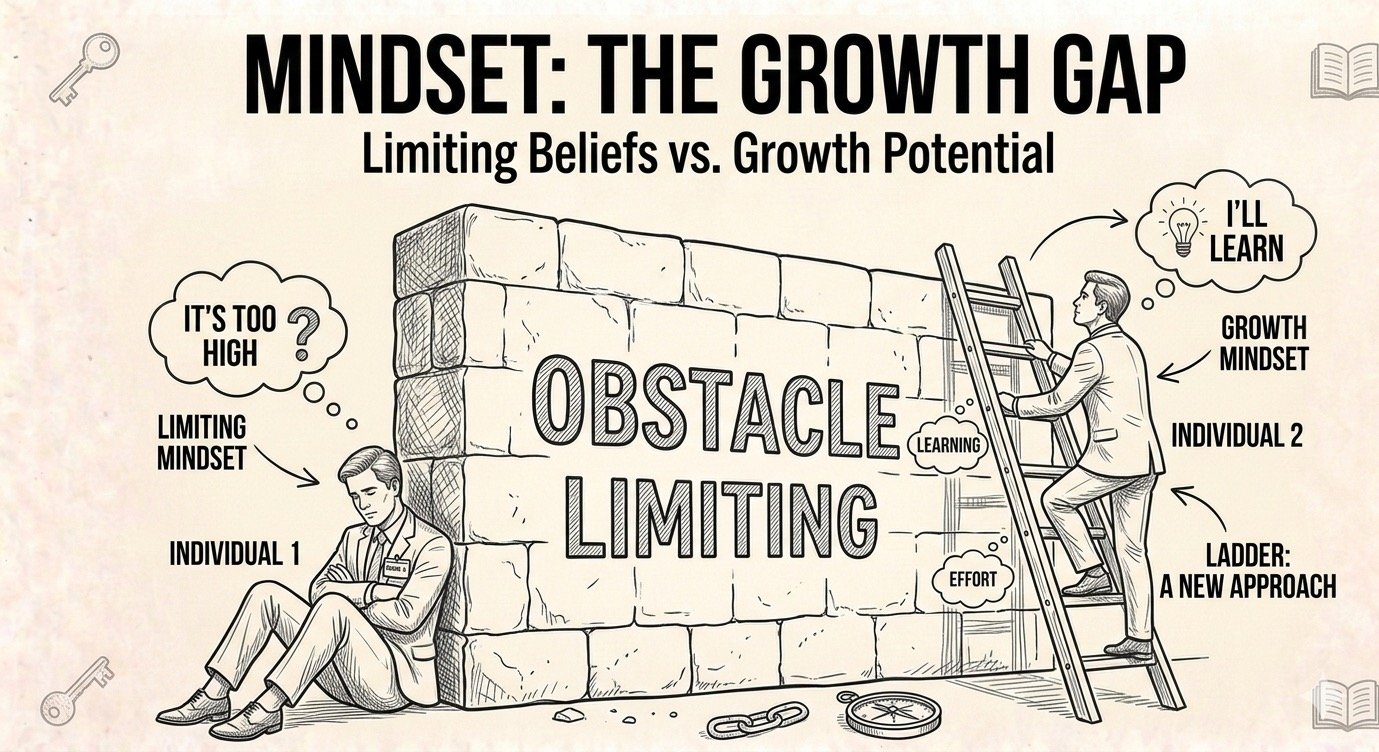
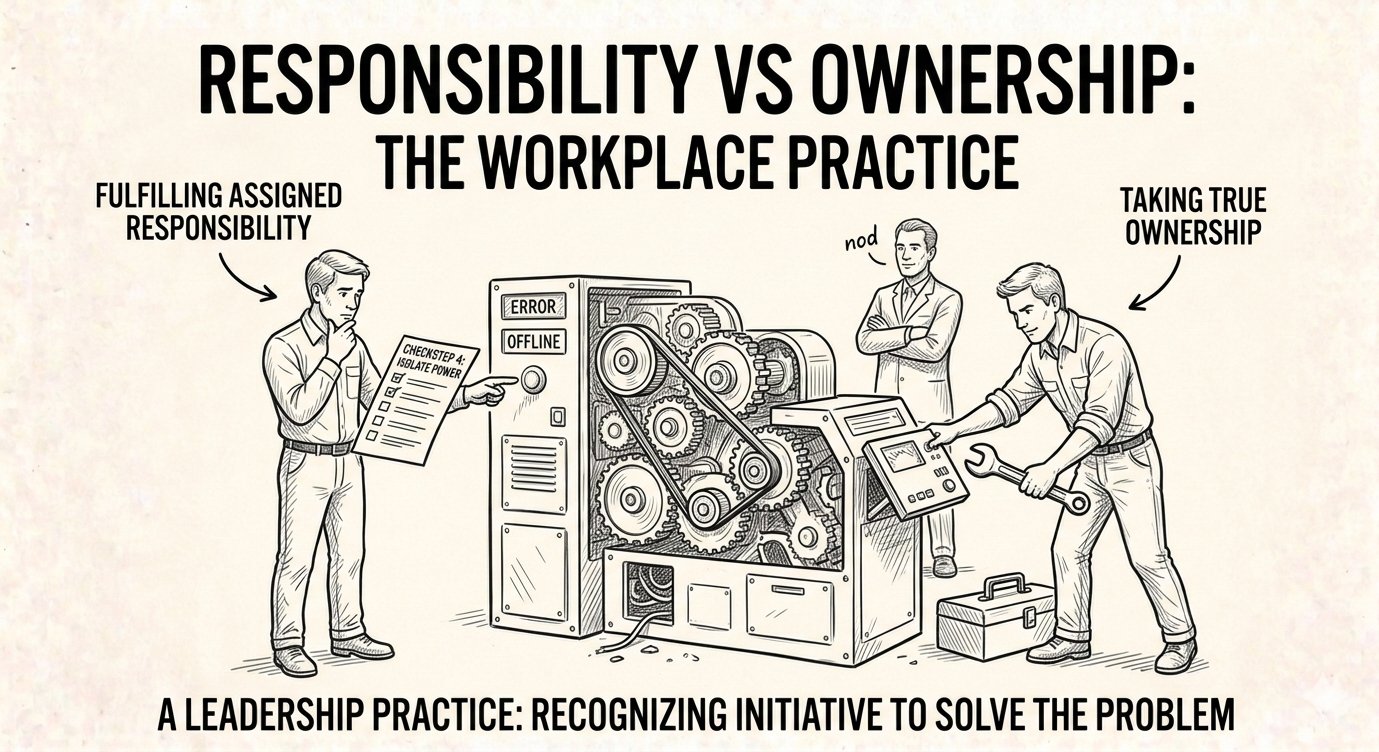
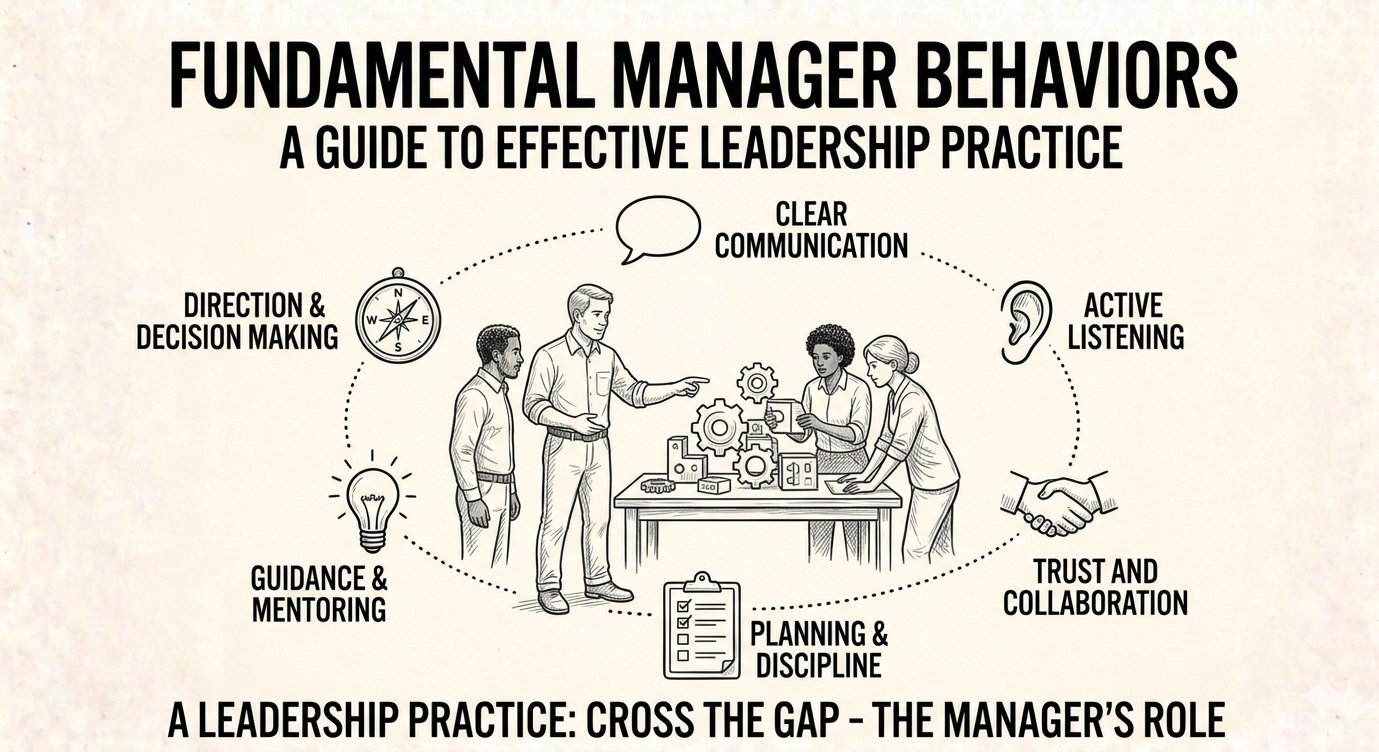
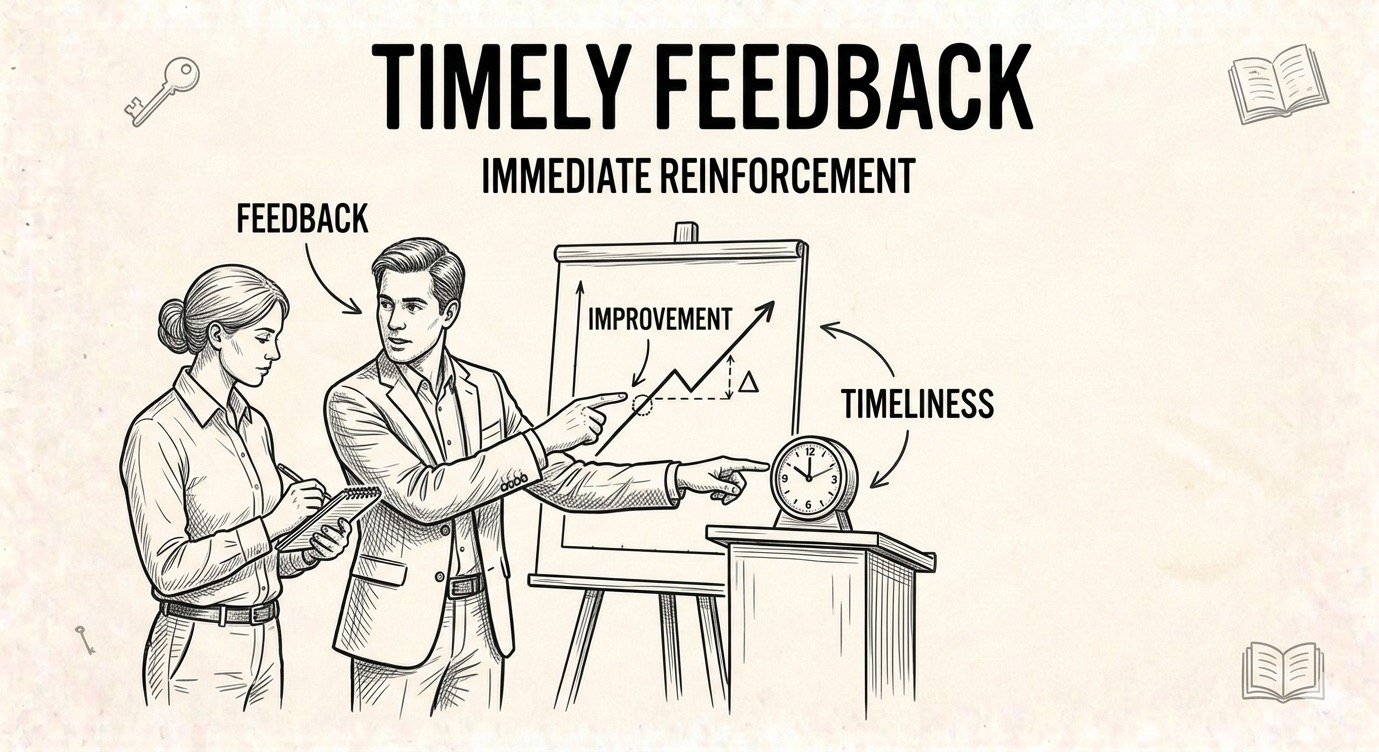
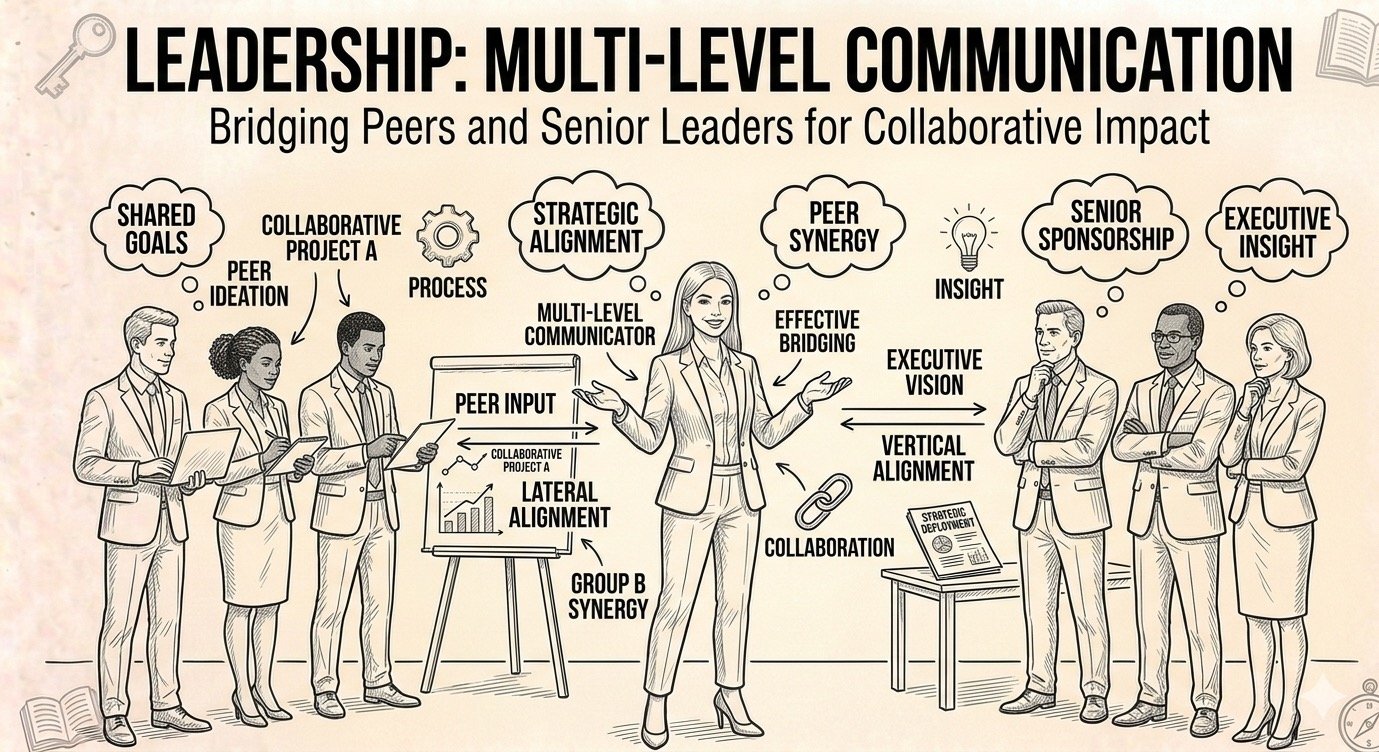
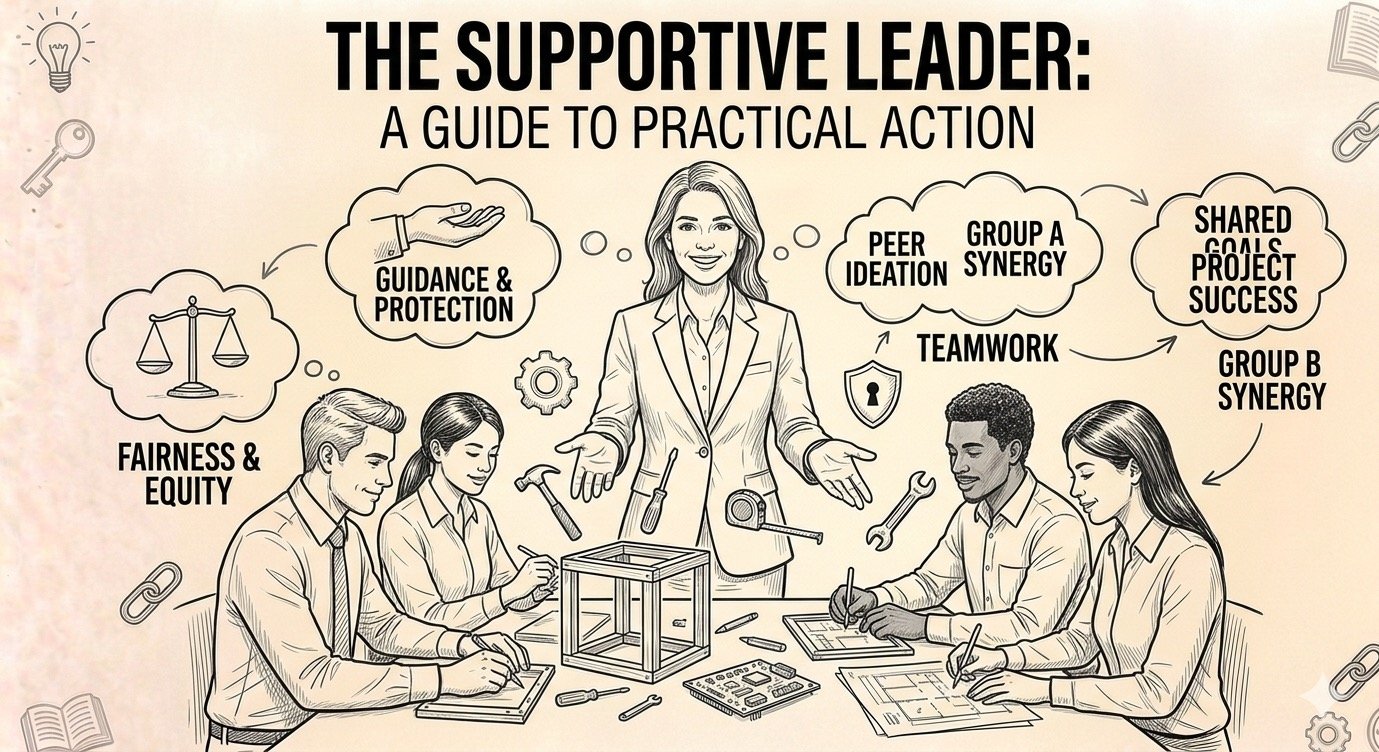
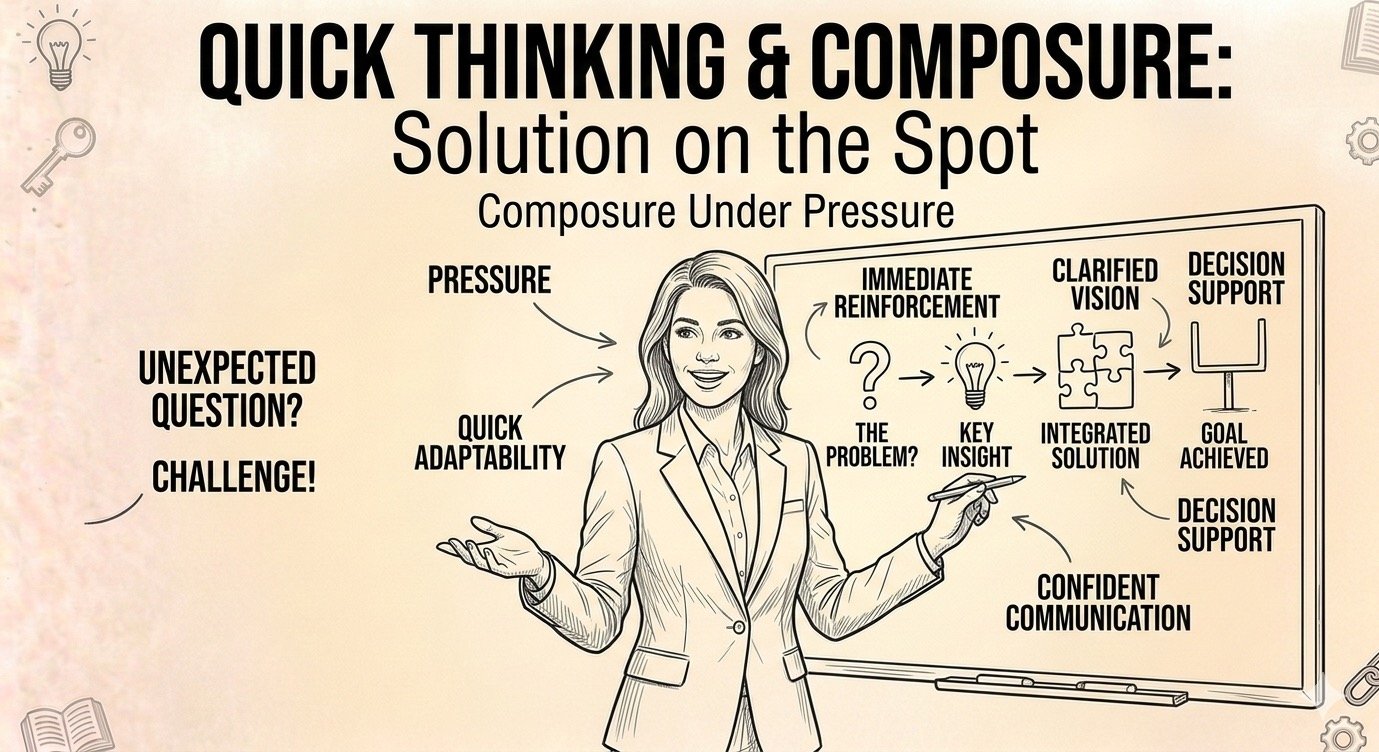
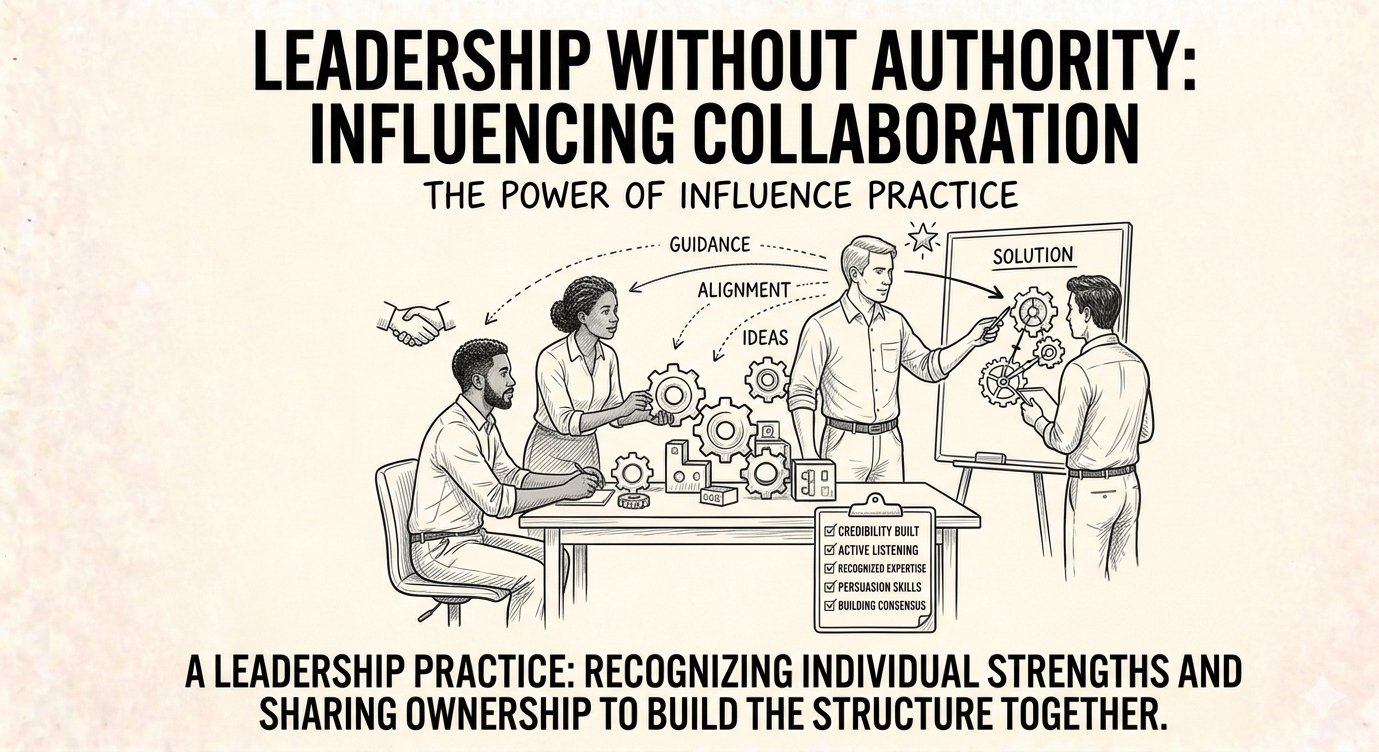
Y: 0%
Y: 10%
Y: 20%
Y: 30%
Y: 40%
Y: 50%
Y: 60%
Y: 70%
Y: 80%
Y: 90%
Y: 100%
X: 0%
X: 10%
X: 20%
X: 30%
X: 40%
X: 50%
X: 60%
X: 70%
X: 80%
X: 90%
X: 100%
Table of Contents
Part I - Foundations of Leadership
- Chapter 1: The Courage to Deal with Poor Performers
- Chapter 2: Extreme Ownership
- Chapter 3: Protecting the Culture of Excellence
- Chapter 4: Decisive Leadership
- Chapter 5: The Loneliness of Leadership
Part II - Building Great Teams
- Chapter 6: The Meritocracy Challenge
- Chapter 7: Mapping the Political Terrain
- Chapter 8: Talent Density Matters
- Chapter 9: Challenging the Team
- Chapter 10: The Discipline of Performance Assessment
Part III - Becoming a Strong Manager
- Chapter 11: The Art of Self-Marketing
- Chapter 12: Managing Perceptions
- Chapter 13: Understanding Employee Attrition
- Chapter 14: The Power of Mindset
- Chapter 15: Ownership vs Responsibility
- Chapter 16: Management Fundamentals
Part IV - Developing People
- Chapter 17: The Power of Timely Feedback
- Chapter 18: The Manager as Teacher
- Chapter 19: The Art of Delegation
- Chapter 20: Why Some Employees Never Grow
Part V - Execution Excellence
- Chapter 21: Discipline of Execution
- Chapter 22: Effective Presentation Skills
- Chapter 23: The Danger of Almost Done
Part VI - Leadership Wisdom
- Chapter 24: Coalition Building in Action
- Chapter 25: Managing Upward
- Chapter 26: Managing Peers and Senior Colleagues
- Chapter 27: What Managers Owe Their Employees
- Chapter 28: Think on Your Feet
- Chapter 29: Leadership Without Authority
Performance appraisal season often brings discomfort to managers, particularly when addressing the performance of bottom-tier employees. In many organizations, employees in the bottom 10 percentile receive no compensation increases, making these conversations even more challenging. However, before examining communication strategies, it is essential to understand the broader organizational impact of retaining underperformers.
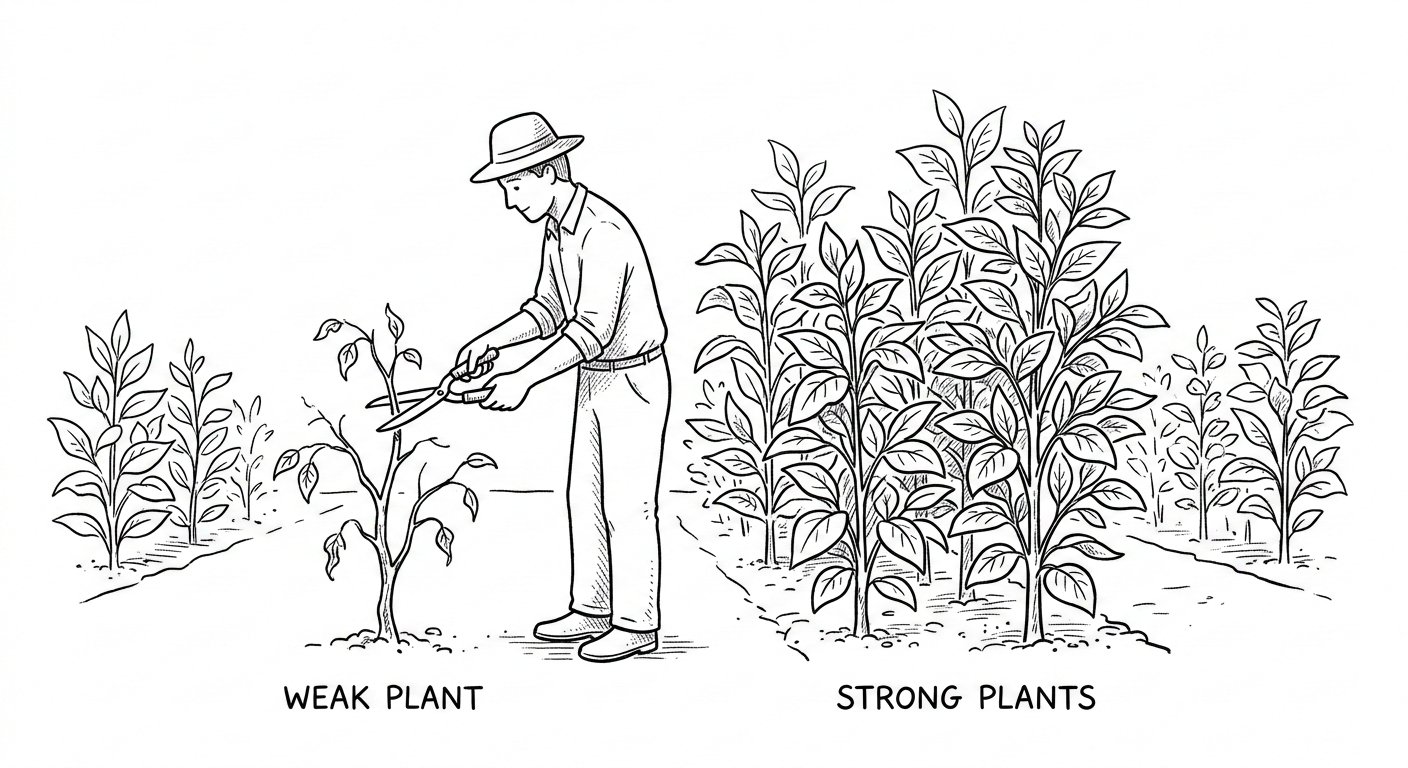
Failing to address poor performance negates the purpose of hiring exceptional talent. It is analogous to diluting a premium beverage with water - the quality diminishes for everyone. The weakest members of your team determine the pace and overall success of the entire unit. Ask yourself this critical question: "Would I rehire this person today if given the choice?"
If the answer is no, you have three options: TRAIN them to develop the necessary skills, TRANSFER them to a role better suited to their competencies, or TERMINATE their employment.
Retaining the wrong people erodes team morale and diminishes your credibility as a leader. Your best performers lose respect for you when you fail to address inadequate performance effectively. Address performance issues proactively when your team is performing well - do not wait for a crisis. As the saying goes, the best time to fix the roof is when the sun is shining.
It is important to recognize that no employee is inherently bad; they may simply not meet the expectations of their current role. Consider the engineering job market: not all companies hire exclusively from elite institutions, yet every engineer finds employment at a company whose expectations align with their capabilities. As a manager, letting go of a poor performer is not a failure - it is an acknowledgment that they do not meet your organization's standards. In fact, retaining them may harm their career trajectory. Year after year of below-average compensation increases compounds their disadvantage. By releasing them, you enable them to find organizations where their talents align with or exceed expectations. Throughout my career, I have witnessed bottom-tier employees who left my organization thrive elsewhere.
As a manager, you must care enough to confront poor performers directly. Confrontation, when done properly, is an act of tough love. Be polite yet firm in your feedback, explaining specifically why performance is inadequate. Support your assessment with data and focus on three to four critical issues to avoid overwhelming the employee. Most organizations have Performance Improvement Plans (PIPs). Implement this process by clearly redefining expectations and establishing specific deadlines for improvement. Provide regular feedback throughout the PIP period - never wait until the end to communicate progress. If improvement is not evident, be transparent with the employee and encourage them to seek opportunities elsewhere, using the remainder of the PIP period for their job search.
Terminating an employee for poor performance is never easy, but leadership was never meant to be easy.
Why This Matters
Tolerating poor performance destroys team morale and drives away your best people. Your team's weakest member sets the pace for everyone else. When you avoid difficult performance conversations, high performers lose respect for you and either leave or lower their own standards to match those around them. The temporary discomfort of addressing underperformance pales in comparison to the permanent damage of ignoring it.
Industry Story
A major streaming company famously instituted what they call a performance evaluation approach - managers regularly ask themselves, "If this person told me they were leaving, would I fight to keep them?" If the answer is no, the company expects managers to have that difficult conversation immediately and part ways with the employee, offering a generous severance package. This policy emerged from the CEO's experience watching talented employees become frustrated working alongside underperformers. In one notable case, after a round of layoffs during an economic downturn, the remaining team members reported being happier and more productive despite the increased workload. This counterintuitive result demonstrated that removing underperformers had actually improved team dynamics and effectiveness. The company's approach has enabled them to maintain one of the most talented workforces in the tech industry. While their methods may seem harsh, employees report appreciating the transparency and the consistently high caliber of their colleagues. This case demonstrates that addressing performance issues decisively, while difficult, ultimately benefits everyone - including the underperformer who moves to a better-fit environment.
Leadership Framework
The 3T Framework for Addressing Underperformance:
1. TRAIN - First, determine if the performance gap is due to a skills deficit. Provide specific training, mentorship, and resources. Set clear expectations and timeframes for improvement. Document all training provided.
2. TRANSFER - If training does not resolve the issue, assess whether the employee might excel in a different role within the organization. Sometimes a mismatch between role requirements and individual strengths is the root cause. Explore internal mobility options that better align with their capabilities.
3. TERMINATE - If training and transfer options have been exhausted or are inappropriate, make the decision to part ways. Do so respectfully, with dignity, and with appropriate notice or severance. Document the process thoroughly to protect both the individual and the organization.
Critical Success Factors:
- Act early when performance issues emerge
- Use data and specific examples, not generalizations
- Provide regular feedback throughout the process
- Maintain professional respect regardless of outcome
- Document all steps for legal and ethical protection
The Leadership Takeaway
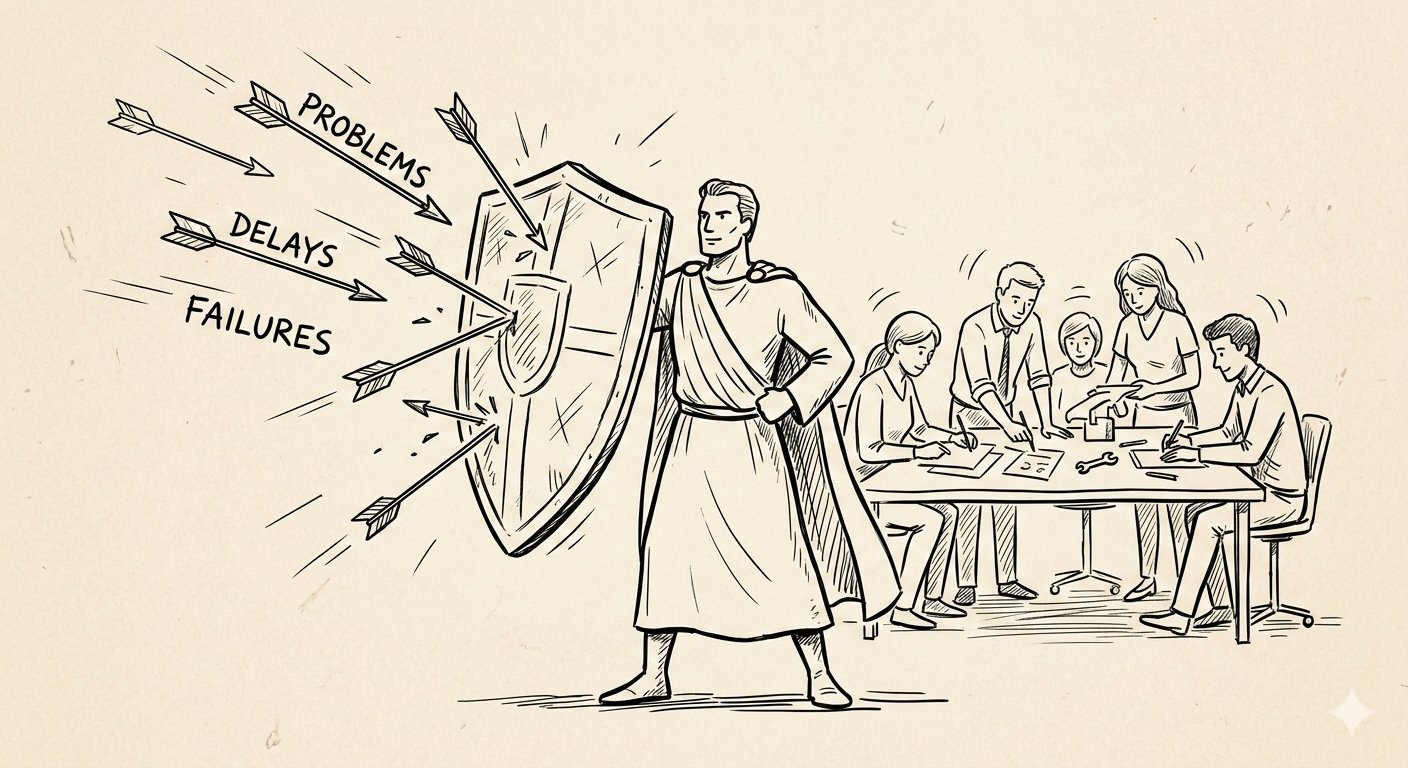
Your responsibility is to the mission and the team, not to individual comfort. Every day you keep an underperformer, you choose avoidance over excellence. Honest feedback benefits everyone - it helps underperformers find better-fit roles and shows your top performers that standards matter. As a leader, it's not what you preach, it's what you tolerate.
The truth does not cease to exist because it is ignored. - Aldous Huxley
Ramu Kaka's Wisdom
Remember: It is not what you preach as a leader, it is what you tolerate. The standards you walk past are the standards you accept. Your team is watching to see if excellence is truly valued or merely proclaimed. Your best people will not wait long for you to decide.
Reflection Questions for Managers
- If each of my team members told me today they were leaving, which ones would I genuinely fight to retain? What does this tell me about actions I need to take?
- What is the real cost to my team's morale and productivity of retaining my lowest performer? How much of my time do they consume versus my top performers?
- What specific fears or discomfort am I allowing to prevent me from having necessary performance conversations? What would become possible if I addressed this issue this month?
Leadership begins and ends with ownership. In every organization, on every team, all responsibility for success and failure rests squarely with the leader. There is no one else to blame, no external factors to cite, no subordinates to point fingers at. The leader must acknowledge mistakes, admit failures, take complete ownership, and develop a plan to win.
When subordinates underperform, leaders who practice extreme ownership cannot deflect blame. The leader bears full responsibility for explaining the strategic mission, developing effective tactics, and securing the training and resources necessary for the team to execute successfully. If a team member consistently fails to meet standards despite training and mentoring, the leader must prioritize the team and mission over any individual and make the difficult decision to replace that person.
Taking total responsibility for failure requires extraordinary humility and courage. Our natural instinct is to protect our ego and find external explanations for setbacks. However, accepting complete ownership is essential for learning, growing as a leader, and improving team performance. It transforms how teams operate - instead of wasting energy on blame, they focus that energy on solving problems and improving execution.
Extreme ownership demands that leaders examine organizational problems through the objective lens of reality, without emotional attachment to their own plans and agendas. It requires setting ego aside, accepting responsibility for failures, confronting weaknesses honestly, and working consistently to build a more effective team. True leaders do not take credit for their team's successes - they bestow that honor upon their subordinates. When this mindset permeates every level of an organization, it creates a culture where everyone focuses on solutions rather than excuses.
Why This Matters
When leaders blame circumstances, other departments, or their team members, they surrender their power to improve. Extreme ownership is the difference between teams that make excuses and teams that make progress. Organizations where leaders take complete responsibility create cultures of accountability where problems get solved rather than explained away. Without this foundation, even talented teams become mired in finger-pointing and defensiveness.
Industry Story
When the new CEO took over as CEO of a major technology company several years ago, the company was struggling with a toxic culture of internal competition and blame. Divisions wouldn't share information, teams protected their turf, and innovation suffered. The CEO's first major initiative wasn't a product launch - it was introducing a growth mindset and extreme ownership culture. He started by taking ownership of the company's failures himself, publicly acknowledging the company had missed mobile and failed to see cloud's importance early enough. Rather than blame his predecessors, he focused on what he and the current leadership team would do differently. This modeling of ownership from the top transformed the organization. The results speak for themselves: the company's market cap has increased significantly under the CEO's leadership. Teams that previously competed now collaborate. The company that was written off as irrelevant became a cloud computing powerhouse. The transformation began with one leader taking extreme ownership and insisting every leader do the same.
Leadership Framework
The Extreme Ownership Framework:
1. OWN EVERYTHING - Accept that if you are in charge, everything that happens under your leadership is your responsibility. No exceptions, no excuses.
2. NO BAD TEAMS - Recognize that poor team performance is a leadership problem. Leaders who take over underperforming teams and turn them around prove there are only bad leaders, not bad teams.
3. BELIEVE IN THE MISSION - You cannot effectively lead a mission you don't believe in. If you cannot support it, work to change it or step aside.
4. CHECK YOUR EGO - Set aside personal pride and defensiveness. Focus relentlessly on the mission and team success, not on being right.
5. LEAD UP AND DOWN - Practice ownership not just with your subordinates but with your superiors and peers. Help them succeed through your ownership mindset.
Critical Success Factors:
- Model ownership publicly before demanding it from others
- Replace blame language with solution language
- Analyze failures objectively without defensiveness
- Give credit down, take blame up
- Make ownership part of your culture, not just a slogan
The Leadership Takeaway
The moment you accept that everything happening under your leadership is your responsibility, you gain the power to change it. Stop waiting for others to step up. Stop explaining why things aren't working. Start owning every outcome - good or bad - and watch how quickly your team's performance transforms. As a leader, the question isn't 'Whose fault is this?' The question is 'What will I do about it?'
In the end, it is important to remember that we cannot become what we need to be by remaining what we are. - Max DePree
Ramu Kaka's Wisdom
A leader's power is directly proportional to the responsibility they accept. The more you own, the more you can change. The more you blame, the more powerless you become. Your team will never take more ownership than you do.
Reflection Questions for Managers
- When something goes wrong in my area, what is my immediate reaction - to find reasons why or to find solutions how? What does this tell me about my leadership?
- Can I name three recent failures where I publicly took complete ownership rather than explaining circumstances? If not, what's stopping me?
- When my team succeeds, do I consistently give them the credit? When they fail, do I consistently take the blame? What messages am I sending?
History repeatedly demonstrates a powerful truth: strong leaders transform losing teams into winners, while weak leaders take winning teams and destroy their performance. This pattern appears across business and sports with remarkable consistency. The decisive variable is never the team members - it's always the leader.
Consider two teams with similar talent levels, one winning consistently and one losing repeatedly. When you swap the leaders, something remarkable happens: the previously losing team starts winning, and the previously winning team's performance declines. This experiment has been replicated countless times in SEAL training, business environments, and sports teams. The evidence is undeniable - there are no bad teams, only bad leaders.
Ineffective leaders share common patterns. They make excuses for poor performance, attribute success to luck rather than capability, and adopt a victim mentality. This attitude prevents teams from looking inward at what they can improve. The focus shifts from the mission to individual discomfort and exhaustion. Without leaders setting and enforcing clear standards, teams become comfortable with mediocrity. They stop pushing for excellence because no one demands it.
Effective leaders operate differently. They face reality head-on, acknowledging poor performance without excuses or blame. They establish high standards and accept nothing less. Most critically, they believe winning is possible and focus their teams relentlessly on the mission. Rather than tolerating infighting, they unite the team around a common objective. They understand that as a leader, it's not what you preach that matters - it's what you tolerate. Whatever standard you accept becomes the new standard.
Why This Matters
The culture of your team is determined entirely by the standards you enforce, not the standards you espouse. Every time you tolerate mediocrity, you're teaching your team that excellence is optional. High performers watch to see if you hold low performers accountable. When you don't, your best people either leave or lower their standards to match everyone else. Protecting a culture of excellence isn't about being harsh - it's about respecting your top performers enough to maintain the standards that attracted them.
Industry Story
When management researcher Jim Collins researched companies for "Good to Great," he discovered the "First Who, Then What" principle - great companies first get the right people on the bus before deciding where to drive it. A successful airline embodies this philosophy. The CEO built the airline on a foundation of protecting its culture fiercely. The airline industry is brutally competitive, yet the airline has been profitable for decades - unheard of in the industry. How? By being ruthless about culture fit. The CEO famously said he'd fire someone with perfect job skills but wrong attitude, while keeping someone with right attitude and imperfect skills. The airline receives over an extremely competitive hiring ratio. They don't just screen for skills - they screen intensively for culture fit. In interviews, they assess whether candidates will protect and enhance their fun-loving, customer-obsessed culture. This isn't soft management - it's strategic clarity about what drives success. By protecting their culture relentlessly, they've created sustained competitive advantage in a notoriously difficult industry.
Leadership Framework
The Culture Protection Framework:
1. DEFINE EXPLICIT STANDARDS
- Articulate specific behaviors that define your culture
- Make standards observable and measurable
- Ensure everyone knows what excellence looks like
2. ENFORCE RUTHLESSLY
- Address violations immediately, every time
- Apply standards consistently across all levels
- Remember: what you walk past, you endorse
3. CELEBRATE EXEMPLARS
- Publicly recognize those who embody standards
- Tell stories about culture carriers
- Make heroes of those who protect the culture
4. EXIT VIOLATORS
- Remove toxic high performers quickly
- Don't compromise culture for short-term results
- Show the team that culture is non-negotiable
5. RECRUIT FOR FIT
- Hire for attitude, train for skill
- Screen new hires against cultural standards
- Remember: every hire either strengthens or weakens culture
Warning Signs of Culture Erosion:
- High performers leaving
- Increasing tolerance of poor behavior
- "That's just how [person] is" becoming accepted
- Standards applied inconsistently
- More complaining, less accountability
The Leadership Takeaway
Your culture is not what you say in meetings or write in values statements. Your culture is what you tolerate in practice. Every time you ignore poor behavior, miss a standard, or make an exception, you're redefining your culture downward. Protecting excellence isn't about perfection - it's about consistency. Your best people are watching to see if standards matter. Show them.
Culture eats strategy for breakfast. - Peter Drucker
Ramu Kaka's Wisdom
A culture of excellence is like a garden - it must be tended constantly. Weeds (mediocrity) grow naturally; flowers (excellence) require deliberate cultivation. Your job as a leader is to pull weeds quickly, water flowers consistently, and never let the garden go untended.
Reflection Questions for Managers
- If I listed my team's actual behavioral norms versus our stated values, where would the biggest gaps appear? What does this tell me about what I'm tolerating?
- Can I name someone on my team whose poor behavior I've been tolerating? What message does keeping them send to my high performers?
- When was the last time I removed someone specifically because they didn't fit our culture, even though their technical performance was acceptable? What stopped me?
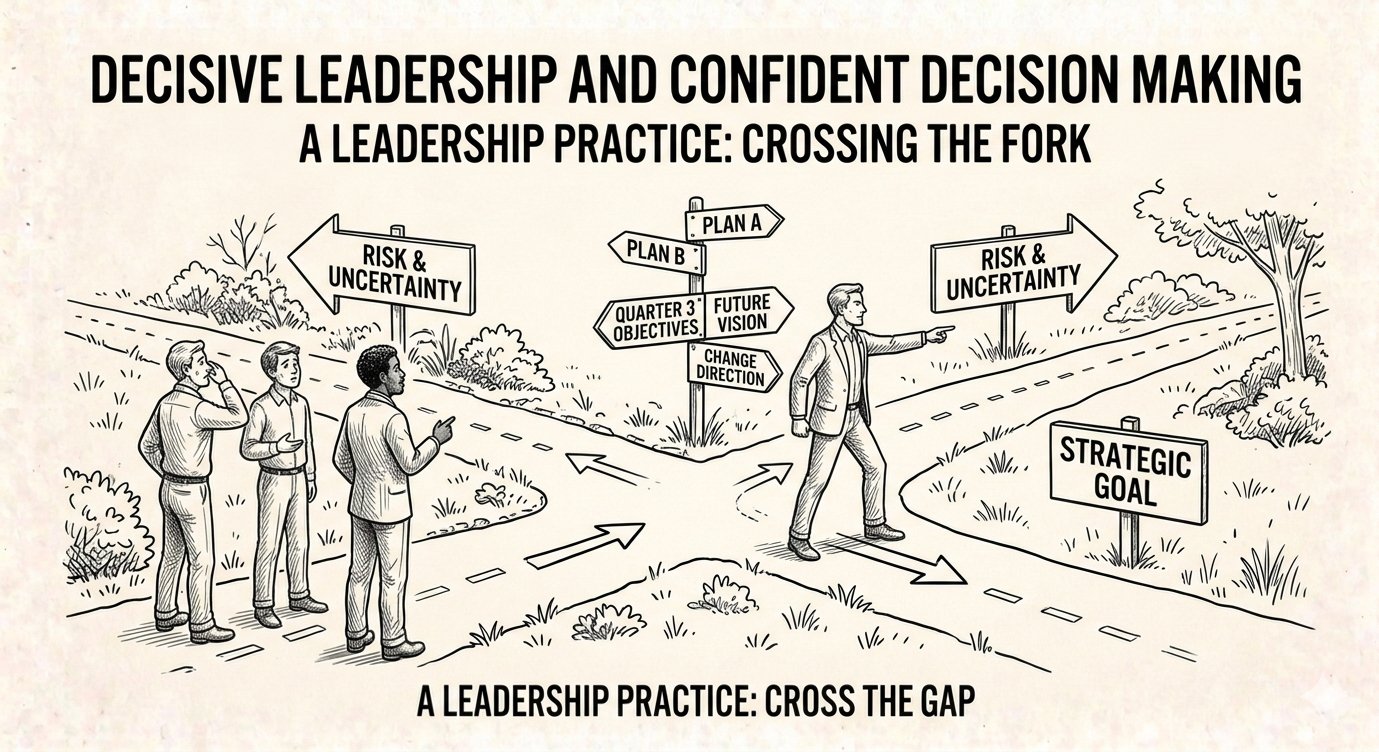
Respect in leadership isn't a title bestowed-it's a reputation built through the quality and courage of your decisions. The most defining characteristic separating exceptional leaders from mediocre managers is their ability to make sound decisions consistently, especially when the path forward remains unclear. Many leaders stumble not from lack of intelligence or experience, but from decision paralysis rooted in fear of being wrong.
Effective decision-making rests on four foundational principles. First, gather essential facts before deciding, but recognize that waiting for perfect information is itself a decision-often the wrong one. When facing incomplete data, ask yourself whether the cost of delay exceeds the risk of acting now. Second, abandon the myth of infallibility. Leaders who aim for perfection make fewer decisions and move slower than competitors. A 60-70% success rate in strategic decisions places you among the top performers; waiting for certainty guarantees irrelevance. Third, understand that difficult decisions often involve choosing between relatively balanced alternatives. In these situations, the velocity of your decision frequently matters more than selecting the theoretically optimal path. Momentum beats perfection.
The fourth principle requires the most courage: decisiveness will sometimes displease people. Give stakeholders a fair hearing, consider diverse perspectives, and weigh the evidence-but when it's time to decide, decide clearly and commit fully. Seeking universal approval is a fool's errand that breeds weak compromises and erodes respect. Your team doesn't need you to make everyone happy; they need you to make the call and provide clear direction.
When facing ambiguous choices, apply these decision filters: Does this action drive progress or enable procrastination? Is it transparent and ethical? Does it align with established precedent, and if not, is the departure justified by compelling circumstances? These questions cut through complexity and illuminate the principled path forward. Leaders who master this discipline don't just make decisions-they build organizational cultures where decisive action becomes the norm, where teams move with confidence, and where respect flows naturally to those who shoulder the burden of choice.
Why This Matters
Indecisive leadership costs organizations far more than occasional wrong decisions. When leaders fail to decide, projects stall, teams lose momentum, top performers grow frustrated, and competitors seize opportunities. Research shows that prolonged decision paralysis erodes team confidence faster than a decisively wrong choice that's quickly corrected. In fast-moving markets, the ability to make timely, well-reasoned decisions with incomplete information isn't just a leadership skill-it's a competitive advantage that determines whether your organization leads or follows.
Industry Story
When the founder and CEO of a leading e-commerce and cloud company decided to launch Web Services (their cloud services division) in the early 2000s, the path was far from clear. The company was primarily an online retailer with no expertise in enterprise cloud computing, and the move would require massive capital investment in infrastructure with uncertain returns. Internal skeptics questioned whether the company should distract itself from its core retail business. The founder didn't have complete information about market demand or competitive response, but he had enough data points: the company had built robust internal infrastructure to handle peak loads, other companies faced similar challenges, and waiting for certainty meant competitors would capture the opportunity. The founder made the call in the mid-2000s to launch their cloud services division publicly, despite incomplete market validation and resistance from those who wanted the company to focus exclusively on retail. The decision wasn't universally popular internally, and it stepped on toes of those invested in the status quo. Yet the founder applied his famous "two-way door" principle-if it failed, the company could retreat. More importantly, he understood that the cost of delayed action exceeded the risk of being wrong. Today, their cloud services division generates over billions of dollars in annual revenue and accounts for the majority of the company's operating profit. The decision that seemed risky in the mid-2000s became obvious in hindsight-but only because the founder had the courage to decide when the outcome remained uncertain. His willingness to make a consequential decision with incomplete information, communicate it clearly, and execute decisively transformed the company from an online bookstore into a technology infrastructure giant.
Leadership Framework
**The RAPID Decision Framework**
Implement this five-element structure to accelerate decision quality and build leadership respect:
**1. Recognize the Decision Type**
Categorize each decision as reversible (two-way door) or irreversible (one-way door). Reversible decisions require 70% confidence and rapid action; irreversible decisions justify deeper analysis but still demand a deadline. Most decisions are more reversible than leaders assume.
**2. Assemble Essential Facts, Not All Facts**
Identify the 3-5 critical data points that genuinely matter, then set a hard deadline for gathering them. Distinguish between information that changes your decision and information that merely confirms what you already know. Stop researching when additional data yields diminishing returns.
**3. Process Diverse Perspectives**
Create explicit space for dissent and alternative viewpoints, but timebox it. Use "disagree and commit" protocols: everyone gets heard, but once decided, everyone aligns. This builds psychological safety while preventing consensus-seeking paralysis.
**4. Implement Decisively With Clear Communication**
Announce decisions unambiguously with supporting rationale, expected outcomes, and success metrics. Assign clear ownership and timelines. Ambiguous decisions create confusion; clear decisions enable execution even when people initially disagreed.
**5. Document and Learn**
Track your decisions and outcomes systematically. Review both successes and failures quarterly to calibrate your judgment. Leaders who learn from their decision patterns improve their accuracy rate significantly over time.
**Critical Success Factor:** The greatest danger isn't making wrong decisions-it's creating a culture where people avoid deciding. Model comfort with uncertainty, reward thoughtful risk-taking even when outcomes disappoint, and address decision paralysis more firmly than decision errors.
The Leadership Takeaway
Tomorrow, identify one decision you've been postponing and apply the 70% rule: if you have 70% of the information and reasonable confidence, make the call. Communicate your decision clearly, explain your reasoning, and commit to learning from the outcome regardless of results. Your team will respect the clarity and forward momentum far more than they'll critique an imperfect choice. Leadership authority comes not from always being right, but from consistently having the courage to decide, the wisdom to learn, and the integrity to own the outcomes.
"In any moment of decision, the best thing you can do is the right thing, the next best thing is the wrong thing, and the worst thing you can do is nothing." — Theodore Roosevelt
Ramu Kaka's Wisdom
A captain who cannot choose a direction will never catch favorable winds. Better to sail boldly toward the wrong island and correct course than to drift endlessly in the harbor debating which destination might prove perfect.
Reflection Questions for Managers
- What decision have I been avoiding, and what's the real reason—lack of information or fear of being wrong?
- When I look at my last five significant decisions, did I wait too long, decide too quickly, or find the right balance—and what pattern do I notice?
- Do my team members see me as someone who makes clear, timely decisions and owns the outcomes, or as someone who hedges, delays, and shifts responsibility?
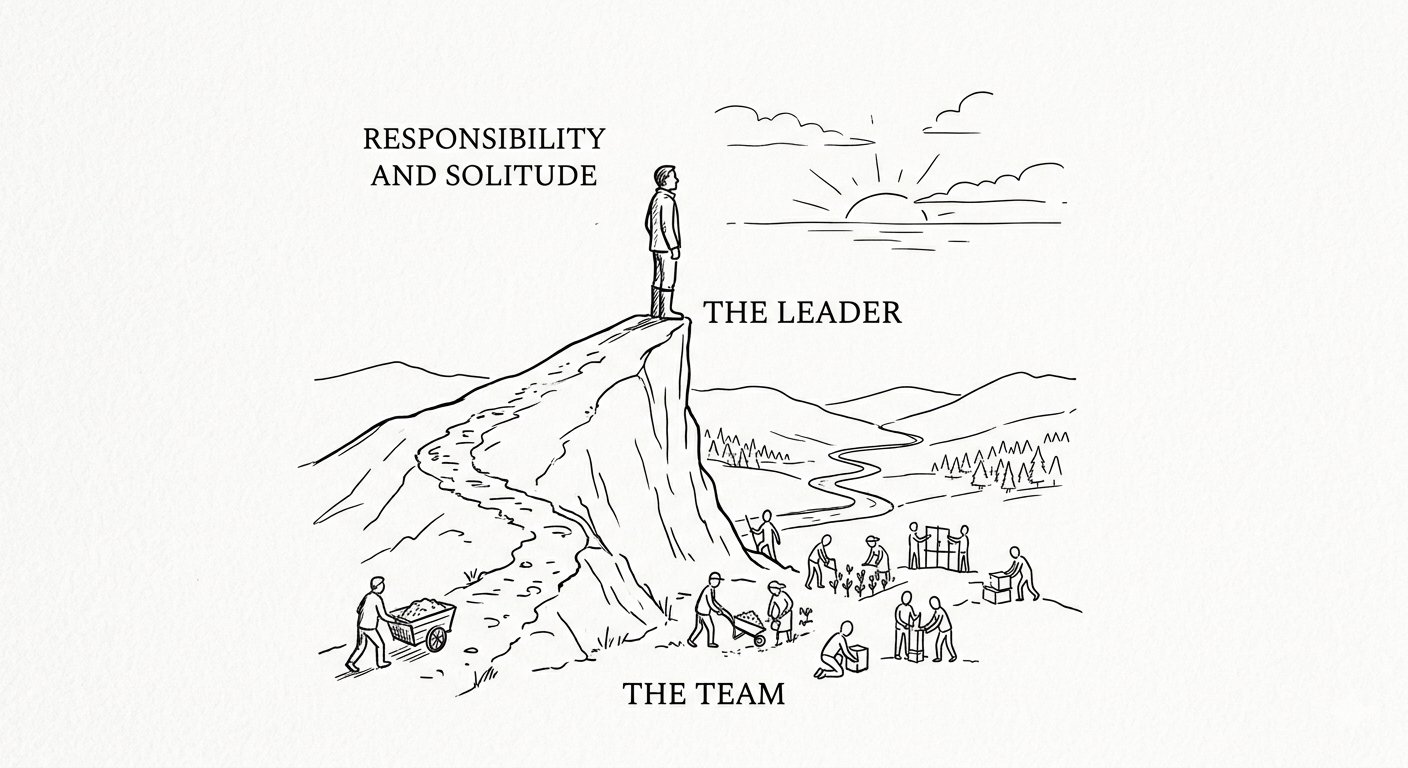
Leadership isn't just lonely at the top-it's stressful throughout the journey. The anxiety of unmet expectations, unreasonable deadlines, and workplace politics creates a persistent pressure that follows leaders regardless of title or company. Many emerging leaders fall into the trap of believing that the next role, the next organization, or the next team will somehow eliminate these stressors. This is a fundamental misunderstanding of leadership reality.
The truth is that stress is not a problem to be solved but a condition to be managed. Research consistently shows that identical situations produce vastly different stress responses depending on the individual's mindset and coping mechanisms. The differentiator isn't the absence of pressure-it's the presence of effective stress management practices. Leaders who master this distinction don't wait for their environment to change; they change their relationship with the environment.
Three principles form the foundation of effective stress management in leadership. First, practice acceptance: Stop fighting reality. When you commit to an aggressive timeline or challenging goal, dwelling on your initial reservations only amplifies stress. Accept the commitment and redirect that mental energy toward execution. Second, maintain perspective: Remember you are not indispensable. a major technology company didn't collapse when a transformative CEO departed. Your project, regardless of its importance, will continue without you. This isn't about diminishing your contribution-it's about maintaining healthy perspective on what truly matters. Third, maintain temporal awareness: Embrace the wisdom of "this too shall pass." The presentation that feels career-defining today will barely register in your memory six months from now. Stress peaks before critical moments, then dissipates regardless of outcome.
The most effective leaders don't eliminate stress-they metabolize it. They develop what psychologists call "stress tolerance," the capacity to function optimally under pressure without allowing that pressure to degrade decision quality or personal wellbeing. This skill isn't innate; it's developed through deliberate practice and mindset cultivation. Leaders who build this capacity create a competitive advantage: they think clearly when others panic, they maintain relationships when others withdraw, and they model resilience when others falter.
Ultimately, managing leadership stress requires a fundamental shift from external to internal locus of control. You cannot control market conditions, board expectations, or competitive threats. You can control your response, your preparation, and your perspective. This shift from victim to agent, from reactive to proactive, transforms stress from a liability into information-a signal about what matters, what requires attention, and where you need to grow as a leader.
Why This Matters
Unmanaged leadership stress doesn't just affect individual wellbeing-it cascades through organizations, degrading decision quality, eroding team morale, and creating toxic cultures. Leaders under chronic stress make more reactive decisions, communicate less effectively, and model unsustainable work patterns that their teams replicate. Organizations led by stress-burdened leaders experience higher turnover, lower innovation, and diminished financial performance. In an era where adaptability and resilience determine competitive advantage, leaders who cannot manage their own stress become organizational liabilities.
Industry Story
When the new CEO took over a major technology company in several years ago, he inherited a company suffocating under competitive pressure and internal politics. The organization was known for its brutal stack-ranking system and cutthroat culture where leaders operated in constant fear of failure. The CEO could have perpetuated this high-stress environment, but instead he recognized that sustainable performance required a fundamentally different approach to pressure. The CEO introduced a "growth mindset" philosophy throughout the company's leadership ranks, explicitly teaching executives to reframe challenges as learning opportunities rather than existential threats. He modeled this himself, publicly discussing his own uncertainties and emphasizing learning over perfection. He eliminated stack ranking, reduced the political infighting that created chronic stress, and encouraged leaders to accept vulnerability as strength rather than weakness. He famously told executives: "Don't be a know-it-all, be a learn-it-all." The results speak volumes. The company's market capitalization increased from $300 billion to over $2 trillion under the CEO's leadership. Employee satisfaction scores improved dramatically, and the company regained its reputation for innovation. By teaching leaders to manage stress through acceptance, perspective, and growth orientation rather than denial and perfectionism, the CEO didn't just reduce pressure-he channeled it into sustainable high performance. The transformation demonstrates that leadership stress management isn't soft skills-it's a hard business imperative.
Leadership Framework
**The STAR Framework for Leadership Stress Mastery**
**S - Situational Acceptance:** Begin by conducting a weekly "reality audit." List your current stressors and categorize them as controllable or uncontrollable. For uncontrollable stressors, practice explicit acceptance through written acknowledgment: "This deadline is aggressive and I have concerns, AND I am committed to meeting it." This linguistic shift from "but" to "and" eliminates the internal resistance that amplifies stress.
**T - Temporal Perspective:** Implement the "six-month test" before major decisions or stressful moments. Ask yourself: "Will this matter in six months?" For most leadership stressors, the answer is no. Keep a "stress journal" where you record high-anxiety moments, then review them quarterly to build evidence that "this too shall pass" isn't just philosophy-it's pattern.
**A - Agency Focus:** Create a daily "control inventory." Each morning, identify three things within your control today (your preparation, your communication, your attitude) and three things outside your control (market conditions, others' reactions, past decisions). Invest energy only in the former. This practice builds the internal locus of control essential for stress resilience.
**R - Relational Support:** Establish a confidential peer advisory group of 3-4 leaders facing similar challenges. Meet monthly to share stressors and strategies. Leaders often suffer alone because they believe they should have all the answers. This isolation amplifies stress. Structured peer support provides perspective, normalizes leadership challenges, and creates accountability for stress management practices.
**Critical Success Factor:** The STAR framework only works with consistent practice. Stress management is not an event; it's a discipline. Leaders who apply these principles sporadically during crises see minimal benefit. Those who build them into daily routines develop genuine stress tolerance that becomes a leadership superpower.
The Leadership Takeaway
Starting tomorrow, implement the "control inventory" practice: each morning, write down three things within your control and three things outside it. This five-minute exercise rewires your brain from reactive stress to proactive agency. Over 30 days, you'll notice a fundamental shift-not in your circumstances, but in your relationship with them. Leadership stress doesn't disappear; your capacity to metabolize it expands, and that expansion is what separates sustainable high performers from burnout casualties.
"You have power over your mind—not outside events. Realize this, and you will find strength." — Marcus Aurelius
Ramu Kaka's Wisdom
The banyan tree doesn't grow taller by complaining about the wind; it grows deeper roots to withstand it. Stress is your wind-you cannot stop it, but you can choose to grow roots instead of branches.
Reflection Questions for Managers
- When I face a stressful situation, do I spend more energy trying to change the external circumstances or developing my internal capacity to respond effectively?
- What would change in my leadership if I truly believed that my organization could succeed without me—would this free me to take better risks and make clearer decisions?
- Looking back at my highest-stress moment from one year ago, how significant does it feel today, and what does this reveal about my current anxieties?
The defining characteristic of high-performing organizations isn't their strategy, technology, or market position-it's their relentless commitment to meritocracy. Yet most leaders unknowingly cultivate cultures of entitlement, where tenure trumps talent, effort is assumed rather than earned, and yesterday's achievements provide indefinite cover for today's mediocrity. This organizational entropy happens gradually: performance reviews lose their edge, standards drift downward to accommodate the comfortable middle, and managers confuse popularity with effectiveness. The result is a slow organizational death where top performers grow frustrated and eventually leave, while mediocre players entrench themselves behind the fortress of familiarity.
Transitioning from entitlement to merit requires surgical precision and unwavering resolve. Start by setting expectations so ambitious that success rates hover around fifty percent-if everyone is easily clearing the bar, you've set it too low. For tenured employees particularly, this recalibration proves critical: experience should deepen capability, not justify coasting. The veteran who once revolutionized your product line must prove themselves as hungry and relevant today as they were a decade ago. This isn't cruelty; it's respect for their potential and protection of your organization's future.
The mechanics of meritocracy demand three non-negotiable elements: immediate feedback, transparent accountability, and swift recognition. When performance conversations happen quarterly or annually, you're managing history rather than shaping outcomes. Elite teams operate with ruthless velocity-achievements are celebrated within days, course corrections happen within hours, and accountability is so deeply embedded that it becomes self-enforcing. This creates what behavioral economists call "optimal pressure"-that productive zone between complacency and panic where human beings perform at their peak.
However, expect resistance. When you introduce genuine meritocracy into an entitled culture, you're fundamentally renegotiating the psychological contract between organization and individual. Some will call it unfair, others will claim it's unsustainable, and a vocal minority will weaponize stress and wellbeing concerns to preserve the status quo. This is where leadership spine matters most. The best people on your team-those secretly frustrated by carrying underperformers-will lean in with renewed energy. The weakest will self-select out. And the middle, that vast ambiguous territory of untapped potential, will rise or fall based entirely on whether you maintain the new standard or buckle under pressure to retreat to comfortable mediocrity.
Creating a culture of merit isn't about cruelty or creating a gladiatorial workplace. It's about building an environment where excellence is expected, effort is honored, and every person understands that their position is earned daily through contribution, not granted permanently through contract. When people arrive each day knowing they must prove their value, something remarkable happens: they discover capabilities they didn't know they possessed, they innovate out of necessity rather than mandate, and they derive genuine satisfaction from achievement that was truly difficult to attain. This is discretionary effort in its purest form-not extracted through fear, but unleashed through the deep human need to test ourselves against worthy challenges and emerge victorious.
Why This Matters
Cultures of entitlement are silent killers of organizational competitiveness, slowly eroding your talent advantage while competitors build teams of hungry, high-performers. Leaders who tolerate mediocrity don't just fail to optimize performance-they actively repel their best people, who will always gravitate toward environments where excellence is recognized and rewarded. The cost isn't merely underperformance; it's the compounding effect of losing your top twenty percent while retaining your bottom thirty, creating a death spiral where declining standards accelerate further talent exodus. In today's war for talent, your culture is either a magnet for the exceptional or a refuge for the adequate-there is no neutral ground.
Industry Story
When a new CEO took over at a major technology company in the mid-2000s, the organization had become comfortable with mediocrity. Engineers with decades of tenure coasted on past achievements, middle managers protected underperformers, and innovation had stalled. The CEO recognized that a culture rewarding longevity over contribution was diluting the company's greatest asset - its talented people.
The transformation began with a controversial decision: implementing a rigorous performance calibration system where managers ranked their teams and identified the bottom 10% performers annually. This wasn't about arbitrary quotas - it was about honest conversations that had been avoided for years. Long-tenured employees receiving "meets expectations" ratings despite minimal contribution suddenly faced clear feedback: improve significantly or find opportunities elsewhere.
The resistance was immediate and vocal. Senior engineers with 15-20 years at the company argued that institutional knowledge and loyalty should count for something. The CEO held firm: experience was valuable only when coupled with current contribution and continued growth. The company would honor past achievements with fair severance but would no longer pay premium salaries for coasting.
Within the first year, approximately 15% of the workforce turned over. Critics predicted disaster. Instead, the remaining employees reported higher satisfaction, faster decision-making, and renewed energy. Top performers who had been quietly interviewing elsewhere decided to stay, energized by finally working in an environment that matched their ambition.
The company implemented "feedback velocity" - performance conversations happened monthly, not annually. Achievements were recognized within days, problems addressed immediately. This created a culture where everyone knew exactly where they stood, eliminating annual review anxiety while maintaining constant pressure to perform.
Five years later, the results were undeniable. The company's market position had strengthened significantly, employee engagement scores among high performers reached all-time highs, and they became a destination for top talent. The lesson was clear: meritocracy isn't about being harsh - it's about being honest enough to build a team where everyone can genuinely respect each other's contribution.
Leadership Framework
**THE MERIT ACCELERATION FRAMEWORK: Five Sequential Steps to Transform Performance Culture**
**Step 1: Recalibrate Expectations (The 50/50 Principle)**
Set performance bars where success probability is genuinely fifty percent-ambitious enough to require stretch, achievable enough to maintain motivation. If your team consistently hits 90%+ of targets, you're measuring activity, not impact. Apply this especially to experienced team members, where tenure often masks declining relative performance. Critical warning: Distinguish between ambitious goals and impossible ones; the former energizes, the latter demoralizes.
**Step 2: Implement Real-Time Performance Visibility**
Replace quarterly reviews with continuous feedback loops. Institute weekly one-on-ones focused exclusively on results, obstacles, and accountability. Make performance data transparent-not to shame, but to eliminate ambiguity about where people stand. Success factor: Ensure feedback is specific and behavioral, not vague and personal. "Your proposal lacked financial rigor" beats "You need to be more detail-oriented" by miles.
**Step 3: Create Immediate Consequence Connections**
Collapse the time between performance and outcome. Exceptional work should be recognized within days, not months. Course corrections should happen in real-time, not during annual reviews. Rewards must be meaningfully differentiated-top performers should earn 2-3x what adequate performers receive. Warning: Failure to differentiate rewards while increasing pressure is the fastest path to top-talent exodus.
**Step 4: Conduct Systematic Talent Pruning**
Quarterly, apply the Keeper Test to every team member: Would you fight to keep this person if they resigned today? If not, provide generous severance and free them to succeed elsewhere. This isn't cruelty; it's honesty. Keeping people in roles where they're struggling serves no one. Critical success factor: Make cuts decisively and respectfully, never letting performance conversations become surprises.
**Step 5: Defend the Standard Through Resistance**
Anticipate and prepare for pushback-it's inevitable and actually signals you're creating real change. Some will claim the new standards are unreasonable; others will invoke stress and mental health concerns to resist accountability. Stand firm while remaining humane: High standards and genuine care for people aren't contradictory. Your best people are watching to see if you'll buckle. Warning: Caving to the loudest resistors teaches everyone that the new standard was theater, not transformation.
The Leadership Takeaway
Beginning tomorrow, identify your three highest-performing team members and ask yourself this hard question: Are these exceptional people working in an environment worthy of their talent, or are they carrying underperformers while you avoid difficult conversations? The single most powerful action you can take is to have one honest performance conversation you've been postponing-not in anger or frustration, but with clarity about expectations and genuine respect for the person. Remember: The kindest thing you can do for someone struggling in a role beyond their capability is to free them to find success elsewhere, and the cruelest thing you can do to a high performer is ask them to perpetually compensate for those who won't carry their weight.
"We need to systematically fire all of our B players. They cost too much and they prevent the A players from getting their jobs done." — A technology industry leader
Ramu Kaka's Wisdom
A garden where every plant is watered equally, regardless of what it yields, soon becomes overgrown with weeds that choke the fruit-bearing trees. The wise gardener knows that true kindness sometimes means clearing space so the strongest can flourish-benefiting both the garden and even the transplanted seedlings that find better soil elsewhere.
Reflection Questions for Managers
- If I could only keep half my current team, would I genuinely struggle to decide who stays, or do I already know exactly which performers are truly indispensable versus merely adequate?
- What difficult performance conversation have I been avoiding, and what is my avoidance costing my high performers who are silently compensating for others' mediocrity?
- When was the last time I delivered feedback so direct that it made me uncomfortable, and does my discomfort with candor reveal that I'm prioritizing my own comfort over my team's growth?
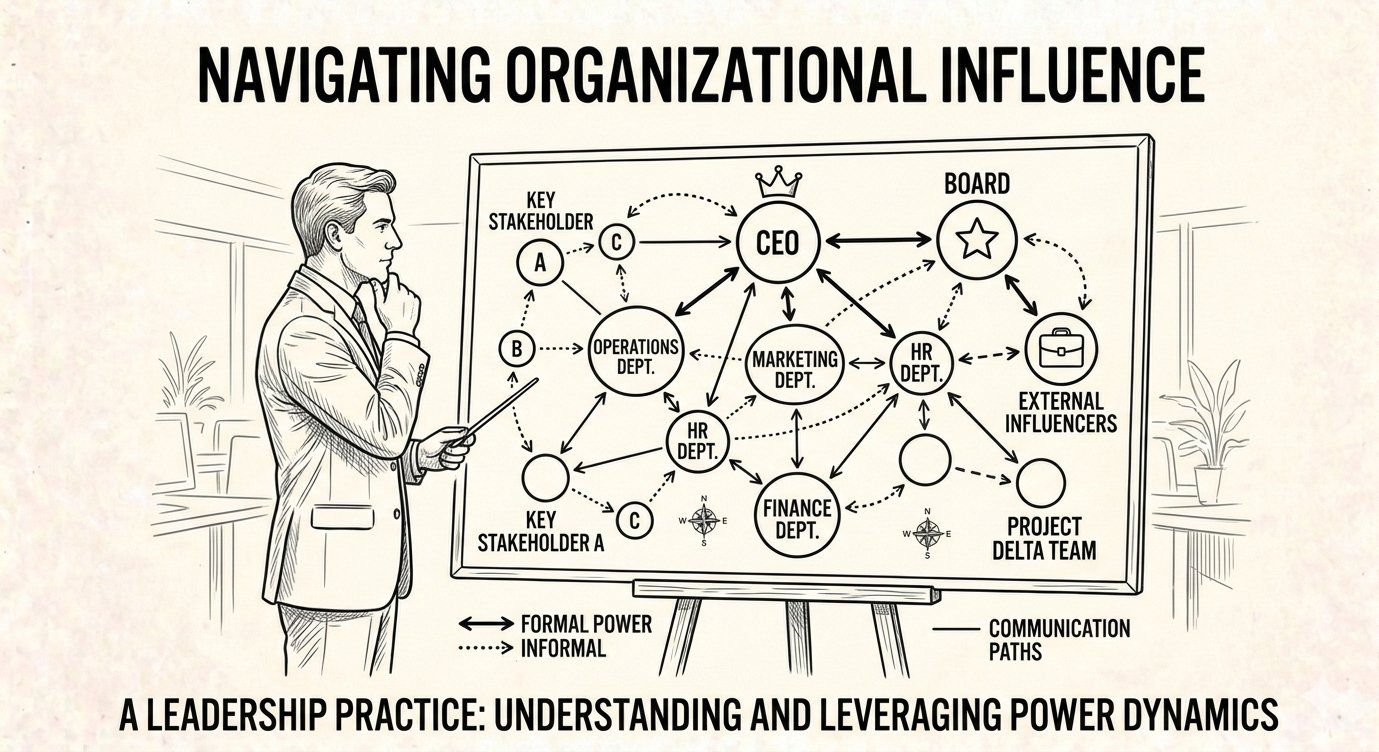
The most brilliant strategy dies in committee rooms, not because it lacks merit, but because its champions lack political competence. As Samuel Bacharach argues in 'Get Them On Your Side,' technical expertise and innovative thinking represent only half the leadership equation. The other half-often the determining half-is your ability to navigate the complex web of interests, agendas, and relationships that define every organization. Political competence isn't about manipulation or office intrigue; it's about situational awareness, coalition-building, and the sophisticated understanding that every stakeholder views your initiative through a fundamentally different lens.
Consider this uncomfortable truth: your transformative idea exists in competition with dozens of other priorities, each championed by leaders who believe just as fervently in their vision as you do in yours. Resources are finite. Attention is scarce. Organizational capital depletes quickly. In this environment, the leader who can map the political terrain-identifying natural allies, anticipating resistance, finding common ground, and building coalitions-doesn't just have an advantage. They have the only sustainable path to implementation. Political competence means recognizing what you can control versus what requires influence, knowing when to advance and when to consolidate support, and understanding that resistance to your idea often has nothing to do with its quality and everything to do with competing interests you haven't yet addressed.
The framework Bacharach presents centers on a deceptively simple 2x2 matrix analyzing stakeholders across two dimensions: their goals (aligned or misaligned with yours) and their approaches (compatible or incompatible with your methods). This model reveals four distinct stakeholder categories, each requiring different engagement strategies. Your natural allies share both your goals and approaches-nurture these relationships actively. Fence-sitters share your goals but question your methods-they need reassurance and involvement in shaping implementation. Opponents disagree with your objectives entirely-understand their concerns and seek compromise where possible, or prepare to work around them. The most dangerous group? Those who agree with your goals but fundamentally disagree with how you'll achieve them-these relationships require the most sophisticated political navigation.
Ultimately, building the team that will execute your vision requires you to first build the coalition that will approve and support it. This demands moving beyond the comfortable confines of like-minded supporters to engage skeptics, address legitimate concerns, and demonstrate that your initiative serves broader organizational interests. The leader who dismisses this work as 'office politics' and expects ideas to succeed on merit alone will find themselves consistently frustrated, wondering why lesser initiatives gain traction while theirs languish. Political competence isn't a nice-to-have soft skill-it's the hard skill that separates leaders who propose change from leaders who actually deliver it.
Why This Matters
Organizations don't fail because they lack good ideas-they fail because good ideas never gain sufficient support to be implemented effectively. Research shows that up to 70% of strategic initiatives fail not due to flawed strategy, but due to poor execution rooted in inadequate stakeholder alignment. When leaders lack political competence, they waste months developing perfect plans that die in their first meeting, they alienate potential allies through tone-deaf engagement, and they allow small pockets of resistance to derail transformative initiatives. In an era where speed and adaptability determine competitive advantage, the ability to rapidly build coalitions and mobilize support isn't optional-it's the difference between leading change and watching it happen around you.
Industry Story
When the new CEO assumed the CEO role at a major technology company several years ago, he inherited a company fracturing along divisional lines, where product groups actively undermined each other to protect their territories. The Windows division had famously torpedoed promising mobile initiatives that threatened their dominance, while Office and their cloud platform pursued incompatible strategies. The CEO recognized that his vision of a cloud-first, mobile-first the company would face resistance not because it was wrong, but because it threatened established power structures and deeply held beliefs about what made the company successful. Rather than forcing his agenda top-down, the CEO demonstrated exceptional political competence by systematically mapping the terrain and building coalitions. He identified natural allies in the cloud platform team who shared his cloud vision. He engaged fence-sitters in Windows by showing how cloud services enhanced rather than cannibalized their platform. He addressed the concerns of Office traditionalists by demonstrating that cross-platform availability expanded rather than diminished their market. Most critically, he reframed the company's culture around a 'growth mindset,' making it psychologically safe for leaders to embrace change without admitting their previous strategies were failures. Within five years, the company's value increased substantially, not because the CEO had better ideas than his predecessors, but because he built the coalitions necessary to execute them. He understood that the team you build-and how you build it-ultimately defines what you can accomplish.
Leadership Framework
**The Political Terrain Navigation Framework**
**Step 1: Stakeholder Mapping (Goals × Approaches Matrix)**
Before launching any initiative, create a comprehensive stakeholder map using the 2x2 matrix: Plot each key stakeholder based on whether they share your goals (yes/no) and whether they support your approaches (yes/no). This creates four quadrants: Champions (shared goals + shared approaches), Scouts (shared goals + different approaches), Opponents (different goals + different approaches), and Saboteurs (different goals + shared approaches). Update this map regularly as positions shift.
**Step 2: Coalition Architecture**
Start with your Champions-secure their active, vocal support early. Then focus disproportionate energy on Scouts, as they represent your highest-ROI opportunity. Invite them into your planning process, genuinely incorporate their methodological concerns, and transform them into co-creators rather than critics. Document how their input shaped your approach. For Opponents, seek to understand their underlying interests-sometimes what appears as opposition to your goal is actually protection of a competing priority that could be addressed differently.
**Step 3: Resistance Anticipation**
For each major stakeholder group, explicitly write out the three most likely criticisms they'll raise about your initiative-both substantive concerns about your idea and personal concerns about you or your motives. Prepare responses that acknowledge legitimate concerns while demonstrating you've thought beyond surface-level solutions. This preparation prevents you from becoming defensive when criticism emerges and allows you to respond with empathy and evidence.
**Step 4: Sequential Engagement Strategy**
Don't treat all stakeholders equally or simultaneously. Engage Champions first to refine your message, then Scouts to broaden your coalition, then carefully selected Opponents to demonstrate openness and identify possible compromises. Each conversation should reference previous support you've gained, creating momentum and social proof. Time your wider organizational launch only after you've secured sufficient coalition strength to weather initial resistance.
**Step 5: Coalition Maintenance**
Political terrain constantly shifts-allies leave, priorities change, new information emerges. Schedule regular check-ins with coalition members, share credit generously for early wins, and remain genuinely open to course corrections. The leader who builds a coalition and then ignores it will find support evaporating precisely when it's needed most.
**Critical Success Factor:** Political competence requires authentic relationship-building, not manipulation. Leaders who view this framework as a way to trick people into supporting bad ideas will ultimately fail. The goal is to genuinely understand diverse perspectives, find legitimate common ground, and build something stronger through collaboration than you could have achieved alone.
The Leadership Takeaway
Starting tomorrow, before you pitch your next initiative, invest equal time in mapping the political terrain as you did in developing the idea itself. Identify three key stakeholders who share your goals but question your approach, and schedule conversations focused on listening rather than convincing. The quality of your ideas matters far less than your ability to build coalitions around them-and coalition-building is a skill you can develop systematically. Remember: you're not defined by the initiatives you propose, but by the teams you build to bring them to life.
"If I have seen further, it is by standing on the shoulders of giants." — Isaac Newton, reminding us that even history's greatest breakthroughs required building on the work and support of others
Ramu Kaka's Wisdom
The farmer who plants seeds without preparing the soil shouldn't be surprised when nothing grows. Similarly, the leader who launches initiatives without cultivating relationships shouldn't wonder why nothing takes root. Great ideas need fertile ground-and that ground is made of the people who'll help you succeed.
Reflection Questions for Managers
- When was the last time a great idea of yours failed to gain traction—and how much of that failure was due to inadequate coalition-building rather than flaws in the idea itself?
- Who are the three most influential stakeholders who share your goals but question your methods, and what would happen if you genuinely invited them to shape your approach rather than just support it?
- If you were completely honest, do you spend more time perfecting your ideas in isolation or building relationships with the people who'll determine whether those ideas ever see daylight?
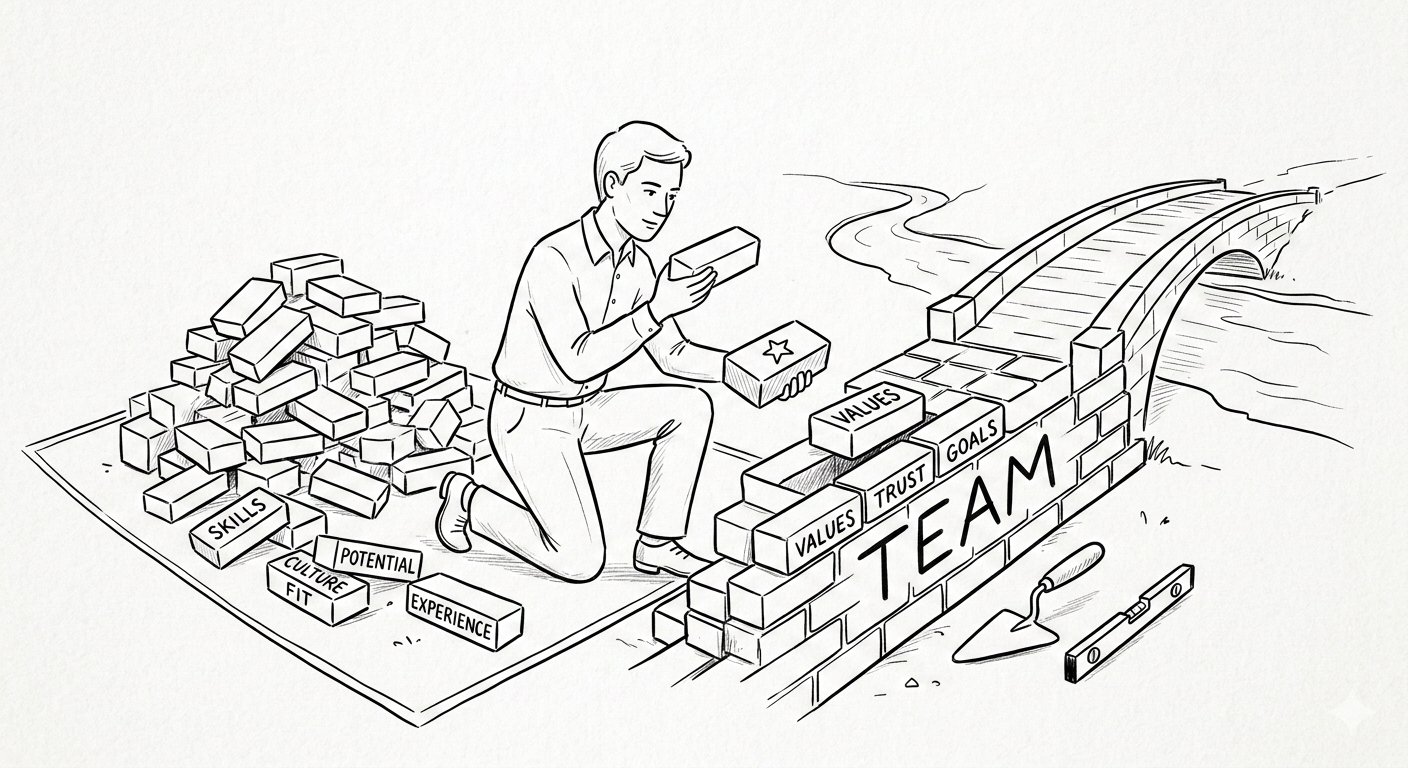
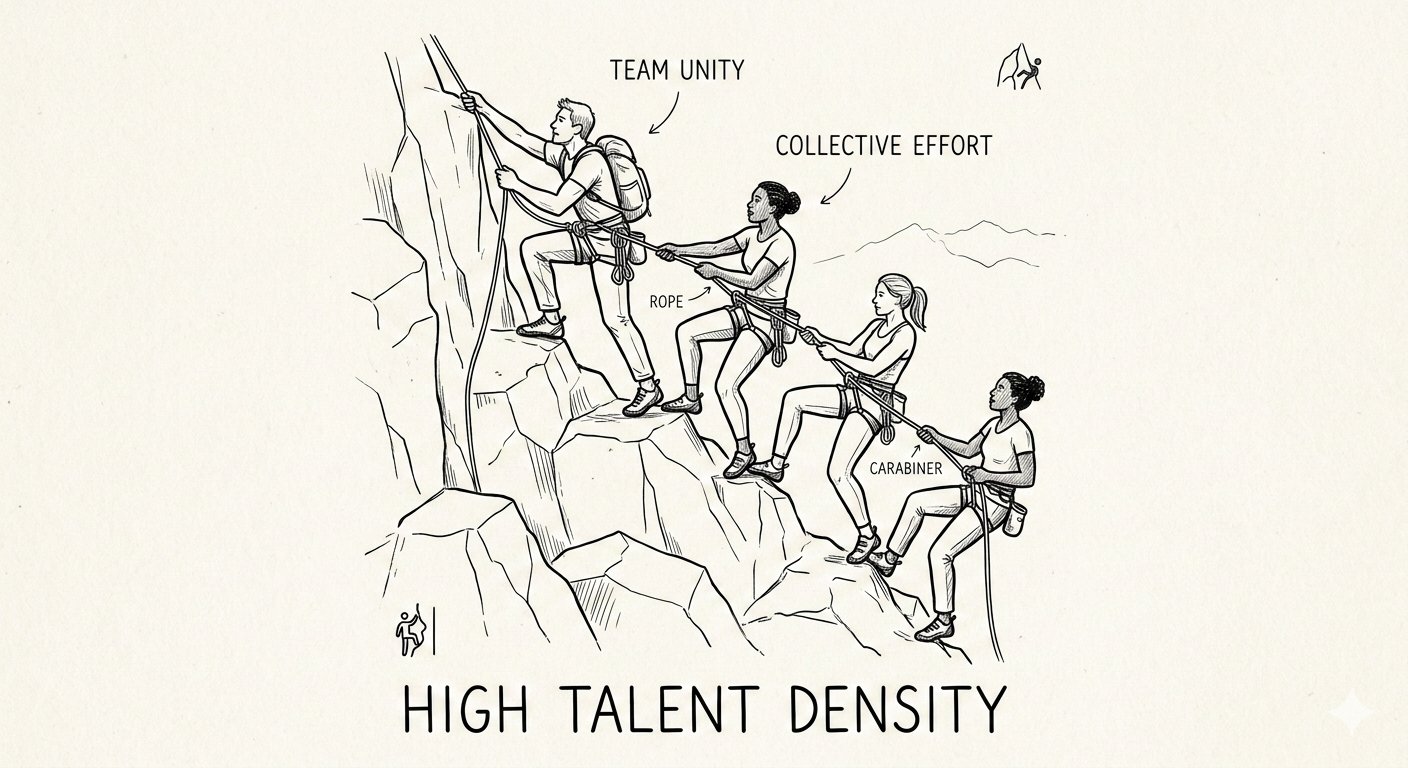
Building exceptional teams isn't about accumulating headcount-it's about maximizing talent density. The principle is deceptively simple: one outstanding performer doesn't just outperform an average one by a modest margin; they often deliver 10x the impact. This isn't hyperbole. When you examine the characteristics that separate extraordinary contributors from the merely competent, patterns emerge that every leader should internalize.
Extraordinary talent exhibits a relentless work ethic paired with insatiable curiosity. These individuals don't clock in and out-they're genuinely energized by challenges and immerse themselves in continuous learning. They read voraciously, ask penetrating questions, and connect disparate ideas in novel ways. But their intelligence isn't merely academic; it's applied. They build extensive networks across diverse fields, understanding that breakthrough insights often come from unexpected intersections. Their rolodex isn't a vanity metric-it's a strategic asset they cultivate through authentic relationship-building and consistent value creation.
What truly distinguishes high-density talent is their ownership mentality and creative problem-solving approach. They view constraints as design parameters, not roadblocks, constantly asking "Why not?" instead of accepting "That's how it's always been done." When setbacks occur, they don't waste energy on blame or excuses; they extract lessons and iterate rapidly. This self-reliance extends to personal development-they treat their own capabilities as perpetually improvable, addressing weaknesses with the same rigor they apply to business problems. They understand that sustainable success requires working on yourself as diligently as you work on your projects.
Perhaps most critically, elite performers maintain equanimity under pressure. While others panic during turbulence, they slow down, ask clarifying questions, and make sound decisions. This composure isn't detachment-it's confidence born from preparation and perspective. They know that timing matters, that not every problem requires immediate action, and that preserving judgment during chaos is a competitive advantage. For leaders, the imperative is clear: one exceptional team member who embodies these traits will outperform three adequate ones while consuming fewer resources and creating less management overhead. The mathematics of talent density should fundamentally reshape how you approach hiring, development, and team composition.
Why This Matters
Talent density directly impacts your organization's speed, innovation capacity, and competitive positioning. In an era where execution velocity determines market winners, having teams diluted with mediocre performers creates drag that compounds across every initiative. Conversely, concentrating exceptional talent creates a multiplier effect-high performers elevate those around them, establish higher standards, and accomplish in weeks what average teams struggle with for quarters. Ignore talent density, and you'll find yourself outmaneuvered by leaner competitors who do more with dramatically fewer people.
Industry Story
A major streaming company provides the definitive case study in talent density. In 2001, facing post-dot-com contraction, the company laid off a third of its workforce. CEO the company's CEO and his leadership team expected productivity to plummet. Instead, something remarkable happened: the remaining employees became more creative, collaborative, and productive. The reason? They'd inadvertently created extraordinary talent density by retaining only their strongest performers. This experience crystallized into the company's now-famous a performance evaluation approach-managers regularly ask themselves: "Which of my people, if they told me they were leaving for a similar role at another company, would I fight hard to keep?" Those who don't pass this test receive generous severance packages, regardless of adequate performance. The company discovered that one outstanding engineer could accomplish what three average ones struggled to deliver, and that adequate performance, while not bad, actively diluted the team's overall capability. This philosophy enabled the company to transform from DVD rentals to streaming dominance to original content production-multiple industry disruptions accomplished with remarkably lean teams. The results speak volumes: the company maintains significantly lower employee-to-revenue ratios than competitors while consistently out-innovating them. By recently, they generated approximately $2.8 million in revenue per employee-roughly double the media industry average. More importantly, their talent density approach created a self-reinforcing culture where top performers wanted to work because they were surrounded exclusively by other exceptional contributors. The lesson isn't about being ruthless-it's about being honest that team composition isn't neutral; it either multiplies or divides your organization's effectiveness.
Leadership Framework
**The Talent Density Optimization Framework**
**Step 1: Implement Rigorous Hiring Thresholds**
Raise your bar dramatically. Institute a "must be exceptional at something" standard for every hire-not well-rounded adequacy, but genuine distinction in at least one critical dimension. Use diverse interview panels and require unanimous enthusiasm, not consensus compromise. One toxic or mediocre hire doesn't simply underperform; they reset your team's standards downward and consume extraordinary management energy.
**Step 2: Apply the Keeper Test Quarterly**
For each team member, honestly answer: "If this person resigned tomorrow, would I fight to keep them, or would I feel secretly relieved?" This isn't about likability-it's about impact and density. Those who don't clear this bar should receive honest feedback and, if improvement doesn't materialize within a defined period, generous transition support. Retaining adequate performers is expensive compassion that penalizes your best people.
**Step 3: Create Density-Reinforcing Conditions**
High performers need context, not control. Provide extraordinary clarity on objectives and constraints, then grant significant autonomy in execution. Eliminate administrative friction, political gamesmanship, and approval bottlenecks that frustrate top talent. Pay at the top of market-exceptional people are not 10% better than average; they're 10x better, so 2x compensation is still a bargain. Create environments where excellence is the norm, mediocrity is conspicuous, and A-players attract other A-players.
**Step 4: Develop Your Density Assets**
Talent density isn't static. Invest disproportionately in developing your keepers-premium training, executive coaching, stretch assignments, and sabbaticals. Create explicit expectations that everyone continuously works on themselves. Make learning from failure and iteration speed cultural hallmarks. The highest-density teams are learning machines that compound their advantages over time.
**Step 5: Measure Density Outcomes, Not Just Inputs**
Track output-per-person metrics across teams and projects. Measure decision speed, innovation rate, and quality of execution-not just hours worked or processes followed. Identify your highest-density teams and study what makes them exceptional. Make talent density a regular topic in leadership reviews, with the same rigor you apply to financial metrics.
**Critical Success Factor:** This framework fails if applied mechanistically without genuine care for people. The goal isn't cruelty-it's creating teams where everyone can do their best work surrounded by other exceptional contributors. Approach this with transparency, honesty, and generosity, or you'll simply create fear and politics.
The Leadership Takeaway
Tomorrow, conduct an honest talent audit of your team using the keeper test-not to immediately act, but to gain clarity on your current density. Identify your true A-players and ask yourself what would make them even more effective, then remove one obstacle they face this week. Simultaneously, have one difficult but honest conversation with someone performing adequately but not exceptionally. Building high-density teams requires courage to make uncomfortable decisions, but the alternative-managing mediocrity-is far more exhausting and produces far worse outcomes. Your best people are watching to see if you'll protect the team's standards.
"The best thing you can do for your employees is to hire only 'A' players to work alongside them. 'B' and 'C' players drag everybody down." — a transformative CEO
Ramu Kaka's Wisdom
A basket of mangoes is only as good as its ripest fruit can inspire, and as poor as its rotting ones can spoil. Choose your fruit carefully, tend to it diligently, and don't be afraid to remove what no longer serves the harvest.
Reflection Questions for Managers
- If you could rebuild your team from scratch with only your current top 50% of performers, would your organization actually become more effective—and what does that tell you about your current talent density?
- What systemic factors in your organization make it difficult to maintain high talent density—hiring pressures, political sensitivities, compensation constraints, or your own discomfort with difficult conversations?
- Are your best performers staying because they're surrounded by other exceptional contributors, or despite being frustrated by inadequate teammates—and how long until they leave if it's the latter?
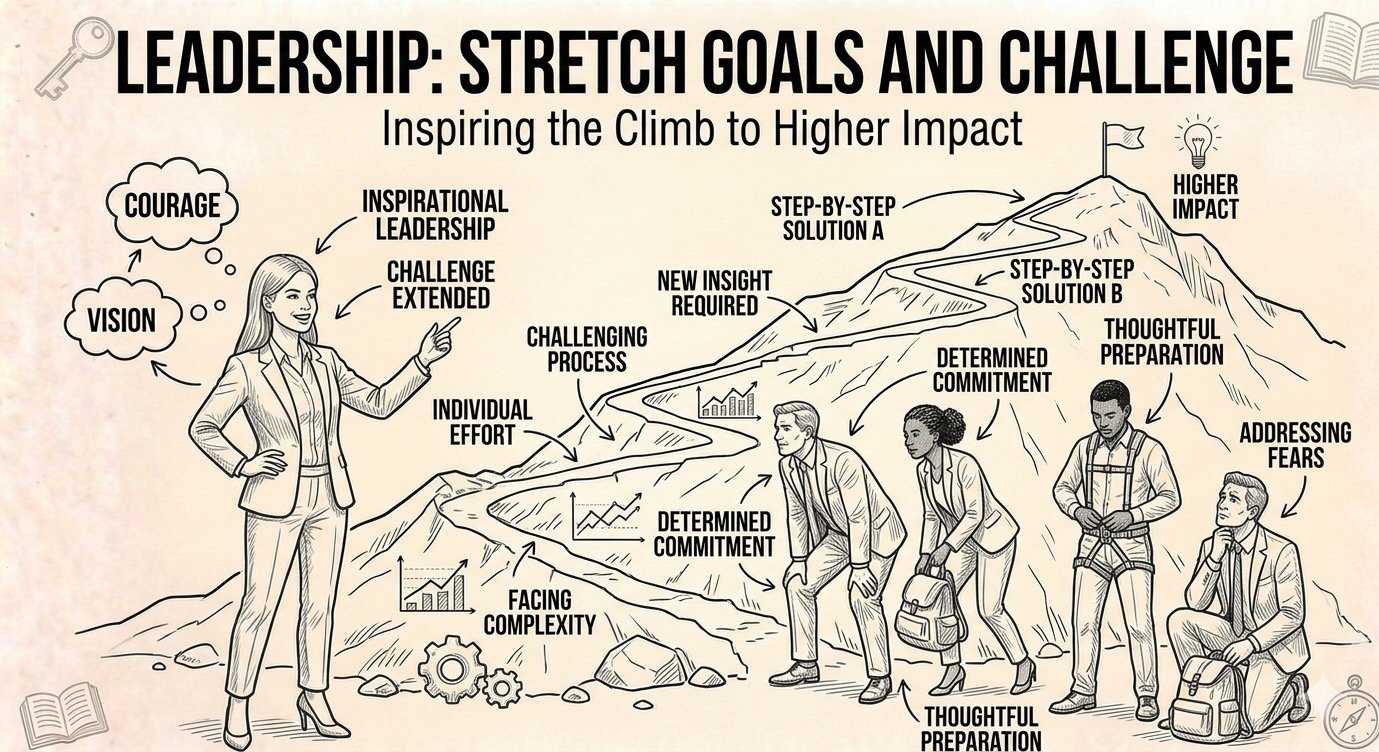
As a middle manager, you often receive feedback from senior leadership that you are not challenging your team enough to achieve ambitious goals. You are closer to your team than your manager, giving you intimate knowledge of their capacity and constraints. This creates a leadership dilemma: you want to be seen as someone who pushes for excellence, yet you do not want to appear unreasonable or out of touch with ground realities.
This catch-22 situation is common in organizations. How should you navigate it effectively?
**Challenge Assumptions, Not Commitment**
When your team estimates a task will take four weeks, simply demanding they complete it in two or three weeks accomplishes nothing positive. This approach signals distrust in their judgment and undermines credibility.
The superior strategy is to challenge the underlying assumptions that led to their estimate. Go several levels deeper in your assessment. Perhaps the sequencing of tasks could be optimized. Maybe the scope could be refined. Could different resources be assigned? Should other project commitments be reprioritized? Would additional support accelerate progress?
As a leader, question assumptions recursively until you have exhausted all options. This demonstrates respect for their expertise while pushing for optimal solutions.
**Challenge the Norm and Status Quo**
Teams often default to established patterns with the justification "this is the way it has always been done." Repeating the same approach while expecting different results is the definition of futility.
Consider a recent example: a quality team required 4,000 hours of qualification for a chip because certain components lacked prior qualification. When challenged, the team engaged with the process group to explore alternatives. By conducting specific component simulations, they reduced the qualification requirement significantly without compromising quality standards.
Had the challenge not been issued, the team would have blindly followed standard procedures, severely impacting the product schedule. Effective leaders question established norms when circumstances warrant fresh thinking.
**Create "Push to the Corner" Situations**
When people operate in comfort zones, they are not challenged sufficiently. By creating situations where comfort zones are disrupted, you force creative problem-solving and out-of-the-box thinking.
In one project with an aggressive schedule, a new design task arose that did not require highly experienced resources. Under normal circumstances, this would be assigned to a junior engineer to avoid challenging senior team members' egos. However, the schedule pressure demanded optimal resource allocation.
The task was assigned to a senior engineer, which proved to be the right strategy. The engineer's professionalism and the project's urgency aligned to produce excellent results. The "corner" situation enabled a decision that would not have been made in a comfort zone environment.
These three techniques - challenging assumptions, questioning norms, and creating constructive pressure - allow you to push your team toward higher performance without becoming the unreasonable leader everyone resents. The goal is not to add pressure for pressure's sake, but to unlock potential that conventional thinking leaves untapped.
Why This Matters
Organizations that fail to distinguish between productive challenge and destructive pressure systematically underperform and hemorrhage talent. When middle managers simply transmit executive pressure without adding analytical value, they create cultures where teams pad estimates defensively, hide problems proactively, and optimize for appearing busy rather than achieving breakthroughs. The business cost is profound: slower innovation cycles, higher employee turnover, and the gradual calcification of 'safe' thinking that prevents organizations from adapting to market disruption. Leaders who master assumption-based challenge unlock discretionary effort while building organizational resilience.
Industry Story
A leading e-commerce and cloud company's famous 'two-pizza team' structure emerged from the founder and CEO challenging a fundamental assumption about how software development scaled. In the early 2000s, the company's growth was slowing as teams expanded and communication overhead exploded. The conventional wisdom suggested that bigger, more complex challenges required proportionally larger teams. The founder questioned this assumption relentlessly, asking why coordination costs had to increase exponentially with team size. His team discovered that small, autonomous teams with clear ownership could actually move faster on complex problems than large, coordinated groups. This insight led to a complete restructuring of the company's engineering organization around small, independent teams-each small enough to be fed with two pizzas. But the breakthrough wasn't just about team size; it was about challenging the assumptions around dependencies, communication protocols, and decision rights. By questioning why teams needed extensive coordination, the company identified architectural changes (service-oriented architecture, API-first design) that enabled true autonomy. The result wasn't just faster delivery; it was a competitive advantage that powered the company's expansion from e-commerce into their cloud services division, devices, media, and beyond. This transformation didn't happen by telling teams to 'work harder'-it happened by systematically challenging the assumptions that made their work difficult.
Leadership Framework
**The Assumption Excavation Framework**
**Step 1: Separate Commitment from Constraints**
When receiving an estimate or assessment, explicitly acknowledge the team's expertise and effort before exploring assumptions. Begin with: 'I trust your judgment and commitment. Help me understand the constraints you're working within.' This framing establishes psychological safety for the exploration ahead.
**Step 2: Map the Assumption Layers**
Systematically identify assumptions at multiple levels:
- Scope assumptions: What must be included versus what could be phased?
- Sequence assumptions: What dependencies are technical versus conventional?
- Resource assumptions: What skills are truly required versus traditionally assigned?
- Quality assumptions: What standards are regulatory versus preferential?
- Process assumptions: What steps are value-adding versus inherited practice?
**Step 3: Test Each Assumption with 'What Would Have to Be True?'**
For each assumption, ask: 'What would have to be true to do this differently?' This question shifts from defending the status quo to exploring possibilities. Document which assumptions are immovable constraints versus challengeable conventions.
**Step 4: Co-Create Alternative Scenarios**
With assumptions exposed, collaborate on alternatives: 'If we reduced scope by X, how does that change the timeline? If we sequenced differently, what becomes possible?' Generate multiple scenarios rather than forcing a single 'stretch goal.'
**Step 5: Commit with Transparency**
Choose a path forward with clear visibility into which assumptions you're changing and what risks you're accepting. Document learning for future estimates.
**Critical Success Factor**: This framework fails if used manipulatively to get predetermined answers. It succeeds when leaders genuinely seek understanding and accept that some constraints are real. **Warning**: Never use this approach in crisis mode when time pressure prevents proper analysis-that erodes trust in the method.
The Leadership Takeaway
This week, when your team provides estimates or proposes approaches, challenge their underlying assumptions rather than their commitment. Ask "what would need to be true for us to accomplish this faster?" and explore those assumptions systematically.
"The quality of a leader is reflected in the standards they set for themselves." - Ray Kroc
Ramu Kaka's Wisdom
A wise farmer doesn't yell at the ox to pull harder; he examines the cart for stones that don't need carrying and checks if the wheels need greasing. The load becomes lighter not through louder commands, but through smarter questions about what makes it heavy.
Reflection Questions for Managers
- When was the last time I challenged my team's assumptions versus simply accepting or rejecting their proposals?
- What norms or established practices in my area have gone unquestioned for too long?
- Am I creating enough productive discomfort to drive breakthrough thinking, or am I letting my team stay too comfortable?
- How do I balance pushing for higher performance with maintaining team morale and trust?
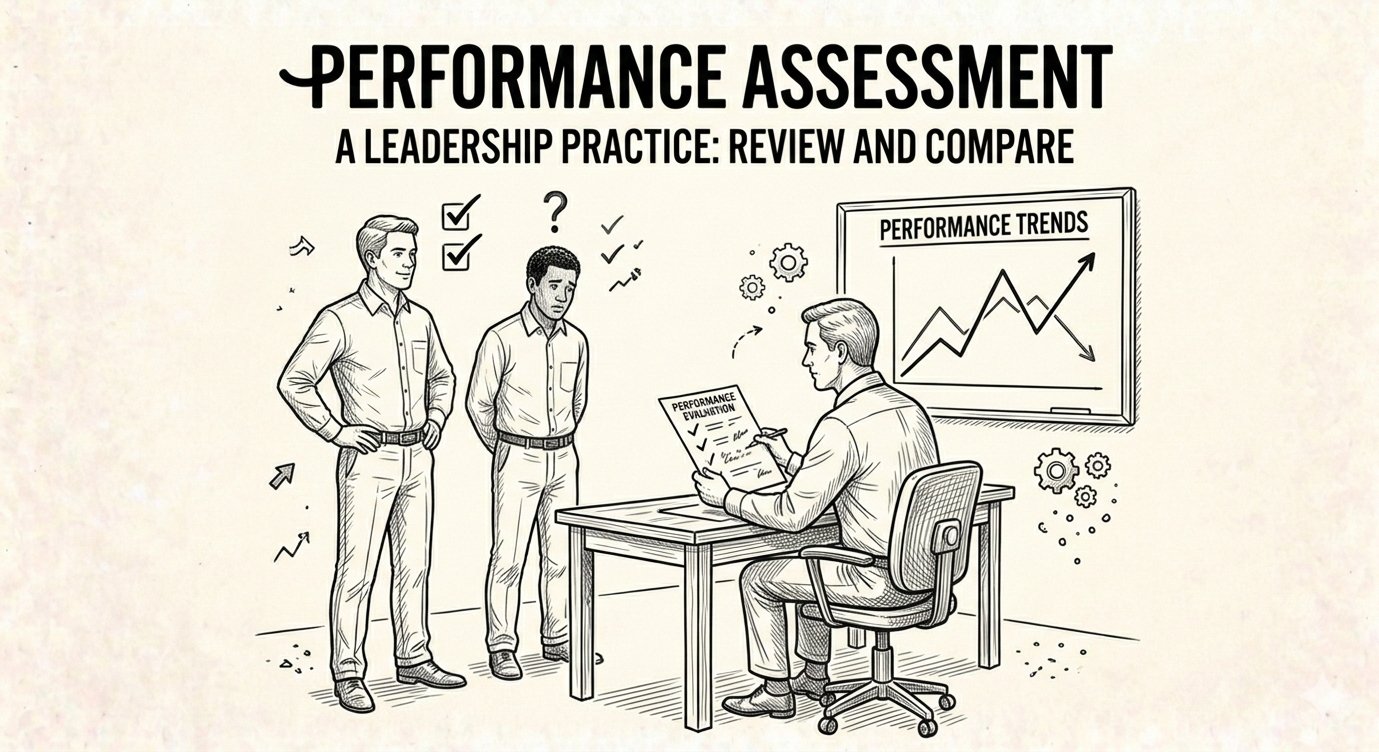
Performance assessment represents one of the most consequential responsibilities in a manager's portfolio, yet it remains one of the most frequently mishandled. The foundation of effective performance evaluation begins with structured self-appraisal-not as a bureaucratic formality, but as a critical mechanism for capturing the full spectrum of an employee's contributions throughout the evaluation period. While managers maintain continuous oversight of their teams, no leader possesses perfect visibility into every accomplishment, innovation, or challenge their reports navigate. Self-appraisal bridges this gap, ensuring that significant contributions don't disappear into the memory void that plagues annual review cycles.
Effective performance assessment extends far beyond measuring technical deliverables. High-performing organizations evaluate employees across three distinct dimensions: technical execution, adjacent professional skills (innovation capability, quality standards, project management acumen, mentoring effectiveness, knowledge transfer), and essential soft skills (initiative, autonomy, communication proficiency). The weighting of these dimensions should shift based on seniority-junior contributors require heavier emphasis on technical competence and learning agility, while senior professionals must demonstrate leadership influence and strategic thinking. This multi-dimensional framework prevents the reductionist trap of evaluating complex human performance through a single lens.
Yet even with robust frameworks, cognitive biases systematically distort performance assessments, creating organizational injustice and strategic misalignment. The Halo Effect-or 'broad brush bias'-causes managers to allow one dominant trait to color their perception of all others. An employee who excels at client presentations may receive inflated ratings for project management skills they haven't demonstrated. Conversely, a brilliant engineer with poor communication skills may be underrated on technical dimensions where they genuinely excel. Recency bias anchors evaluations to the last quarter's performance, rewarding or punishing employees based on timing rather than sustained contribution. The promotion bias proves particularly insidious: newly promoted employees often receive inflated ratings despite performing at merely adequate levels in their new grade, creating a dangerous precedent that confuses promotion with performance.
The most problematic bias-the tension between individual and group accomplishment-demands particular vigilance. In our increasingly collaborative work environments, managers must distinguish between employees who contribute meaningfully to team success versus those who simply benefit from proximity to high-performing colleagues. This requires moving beyond outcome-based assessment to evaluate the quality of contribution: Did this employee drive the result, contribute proportionally, or merely participate? The answers fundamentally shape talent decisions, succession planning, and the cultural signals leaders send about what truly earns recognition.
Mastering performance assessment isn't about eliminating human judgment-it's about making that judgment more systematic, fair, and strategically aligned. Leaders who implement structured evaluation processes, actively counter their cognitive biases, and invest time in understanding the full scope of their employees' contributions build organizations where performance standards remain credible, top talent stays engaged, and mediocrity finds no place to hide. In an era where talent represents the primary competitive differentiator, assessment discipline isn't administrative overhead-it's strategic necessity.
Why This Matters
Flawed performance assessments corrupt every downstream talent decision-compensation equity, promotion choices, succession planning, and retention of top performers. When bias distorts evaluations, organizations systematically reward the wrong behaviors, promote the wrong people, and watch their best talent leave for competitors who recognize their true contribution. A recent study found that 95% of managers express dissatisfaction with their performance review process, yet the consequences extend far beyond dissatisfaction: biased assessments cost companies millions in lost productivity, wrongful termination litigation, and the replacement costs of talent who leave when they're undervalued or watch lesser performers advance.
Industry Story
A major software company's transformation of performance management in 2012 provides a compelling case study in assessment discipline. The company eliminated annual performance reviews and stack rankings-the forced distribution system that required managers to rate employees on a curve regardless of actual performance. The company's research revealed that their traditional process consumed tens of thousands of manager hours annually while generating minimal value and significant resentment. More critically, they discovered that recency bias and the halo effect were systematically distorting ratings, with Q4 performance disproportionately determining annual assessments and employees skilled at self-promotion receiving inflated evaluations. The company replaced annual reviews with "Check-In" conversations-ongoing discussions between managers and employees focused on feedback, development, and expectations. Critically, they trained managers extensively on cognitive biases and required structured documentation of specific contributions across multiple dimensions throughout the year. They separated compensation decisions from developmental conversations and implemented calibration sessions where leadership teams collectively reviewed assessments to identify and correct bias patterns before finalizing ratings. The results validated their approach: voluntary attrition decreased significantly following implementation, particularly among high performers who previously felt underrecognized. Manager satisfaction with the performance process increased dramatically, and exit interview data showed that departing employees cited performance management concerns far less frequently. Most significantly, the company found that by eliminating the recency and halo biases through structured ongoing assessment, they made better promotion decisions-tracking data showed that employees promoted under the new system performed substantially better in their new roles compared to those promoted under the old annual review system, suggesting more accurate identification of true capability.
Leadership Framework
**The BIAS-FREE Performance Assessment Framework**
**Step 1: Document Continuously, Not Retrospectively**
Implement a system where you log significant contributions, challenges, and observations throughout the evaluation period-monthly at minimum. Use a structured template that captures technical delivery, professional skills, and soft skills separately. This practice defeats recency bias by creating a contemporaneous record and provides concrete examples that prevent vague, impression-based assessments.
**Step 2: Demand Multi-Dimensional Evidence**
For each evaluation dimension (technical, professional skills, soft skills), require at least three specific examples with measurable outcomes. Force yourself to answer: "What concrete evidence supports this rating?" If you cannot cite specific instances, your rating reflects impression rather than performance. Apply the "courtroom test"-could you defend this assessment with evidence if challenged?
**Step 3: Calibrate Against Role Expectations, Not Peers**
Evaluate each employee against the defined competencies and expectations of their current grade level, not against team members. Newly promoted employees must be assessed against their new grade's standards, even if this means rating them as "developing" in their elevated role. This eliminates promotion bias and sets honest expectations. Create explicit competency matrices for each level to remove ambiguity.
**Step 4: Conduct Pre-Assessment Bias Audits**
Before finalizing ratings, systematically review your assessments for patterns. Are ratings clustered around one dominant trait? Do recent achievements disproportionately influence overall ratings? Have you rated individual contributions in team accomplishments, or simply rewarded everyone equally? Challenge yourself: "If this person's most visible quality were removed, would my assessment change across other dimensions?" If yes, you're experiencing halo effect.
**Step 5: Implement Structured Calibration**
Before finalizing performance ratings, conduct calibration sessions with peer managers or your leadership team. Present your assessments with supporting evidence and invite challenge. Calibration exposes inconsistent standards, reveals hidden biases, and ensures organizational fairness. The goal isn't consensus-it's consistency in how evidence translates to ratings.
**Critical Success Factors:** Self-appraisal must precede manager assessment; assessment conversations must separate performance evaluation from development planning; and organizations must train managers explicitly on cognitive bias recognition, not just evaluation mechanics. **Warning:** Without ongoing documentation, even well-intentioned frameworks collapse into recency-biased, impression-driven assessments during review season.
The Leadership Takeaway
Your performance assessments shape your organization's culture more powerfully than your mission statement ever will-they signal what you truly value versus what you merely claim to prioritize. Starting tomorrow, implement a simple practice: spend 15 minutes weekly documenting specific observations about each direct report across technical, professional, and interpersonal dimensions. This single discipline will transform your assessment accuracy, eliminate recency bias, and ensure your best performers receive the recognition that keeps them engaged. Remember: in talent management, your assessment credibility directly determines your retention effectiveness.
"If you can't measure it, you can't manage it, but if you measure it badly, you'll manage it badly." — Peter Drucker
Ramu Kaka's Wisdom
The wise gardener knows each plant by watching it through all seasons, not just at harvest time. Those who judge the tree by its last fruit alone will mistake a strong year for a strong tree, and wonder why their orchard fails.
Reflection Questions for Managers
- When I review my last performance evaluation cycle, can I identify specific examples where recency bias or halo effect influenced my ratings—and more importantly, what concrete system will I implement to prevent this next cycle?
- If I were to anonymize my team's performance assessments and present only the evidence without names, would my ratings remain consistent, or would I discover that personal affinity and visibility are influencing my judgment more than actual contribution?
- How effectively do I distinguish between employees who drive team accomplishments versus those who benefit from being on successful teams—and what specific behavioral evidence do I use to make this critical distinction?
Self-marketing often carries uncomfortable connotations-boasting, showing off, or worse, narcissism. Yet in today's competitive professional environment, the ability to effectively market your contributions is not optional; it's essential. The distinction lies in approach: ethical self-marketing isn't about fabricating accomplishments or inflating your importance. It's about ensuring that genuine contributions don't go unnoticed because you're too hesitant or uncomfortable to share them.
Consider how engineers view technical publication. When professionals publish research papers in technical journals, they don't perceive it as showing off-they see it as professional responsibility, knowledge contribution, and advancing their field. The same principle applies to smaller, daily opportunities that may not merit formal publication but certainly deserve visibility. A clever solution to a tricky problem, a process improvement that saves team time, a mentoring conversation that unlocks someone's potential-these moments represent ideal opportunities for knowledge sharing and professional recognition.
Yet many capable professionals let these opportunities pass. Some feel embarrassed, believing that marketing their work seems boastful. Others simply find it easier not to bother, assuming their manager will naturally notice and promote their contributions. This passivity creates risk: not all managers actively scan for such opportunities, and relying entirely on others to recognize and market your work means important contributions often go unacknowledged. These small moments of visibility accumulate over time into internal recognition, reputation building, and career advancement opportunities.
The reality is straightforward: your work creates value, but value unseen is value lost. When you solve a problem, document the solution and share it through appropriate channels-brown bag sessions, team wikis, technical forums. When you develop expertise in an area, volunteer to mentor others or present at team meetings. When you achieve something noteworthy, share the approach and lessons learned, not just the outcome. This isn't self-promotion for ego gratification; it's professional responsibility to ensure organizational knowledge doesn't remain locked in one person's head.
Beyond internal recognition, external visibility increasingly matters for career development. Writing articles for industry publications, contributing to technical forums like Stack Overflow, presenting at conferences or user groups, publishing thoughtful analysis on LinkedIn, answering questions on platforms like Quora-these activities build professional reputation beyond your immediate organization. They position you as someone who doesn't just do good work but contributes to the broader professional community. They create opportunities you cannot access through internal visibility alone.
The fundamental mindset shift required is this: self-marketing isn't about convincing people you're better than you are. It's about ensuring people know what you actually contribute. When done ethically, self-marketing benefits not just you, but your organization and your profession. It spreads knowledge, inspires others, and elevates collective standards. Make self-marketing a habit-dedicate a portion of your career planning to visibility efforts. Set specific goals: "This year I'll publish two blog posts about lessons learned" or "I'll present at three internal knowledge-sharing sessions." Treat visibility as seriously as you treat execution, because in the long run, what people know about your contributions matters as much as the contributions themselves.
Why This Matters
Organizations promote people they know contribute value. But knowledge of your contributions requires visibility, and visibility rarely happens accidentally-especially in distributed, fast-paced work environments where managers oversee large teams and attention is fragmented. Research consistently shows that professionals who actively manage their visibility advance faster than equally talented peers who assume quality work speaks for itself. This isn't because evaluators are superficial; it's because they can only recognize contributions they know about. In an era where career advancement increasingly depends on reputation and network effects, the professional who treats self-marketing as distasteful or unnecessary will consistently lose opportunities to peers who understand that communicating value is part of creating value. The ability to ethically market your contributions isn't a personality trait-it's a learnable skill that directly impacts career trajectory.
Industry Story
A senior engineer at a major technology company consistently delivered exceptional technical work but rarely shared insights beyond immediate team interactions. Meanwhile, a peer with comparable technical skills regularly wrote internal blog posts explaining complex problems they'd solved, presented at brown-bag sessions, and actively participated in cross-functional technical forums. When a high-profile project required selecting a technical lead, the more visible engineer was chosen despite both having similar expertise. The selection wasn't bias or politics-it was information asymmetry. Leadership knew the visible engineer could handle complex problems because they'd repeatedly demonstrated problem-solving approaches in public forums. The quieter engineer's capabilities remained largely unknown beyond their immediate team.
This experience prompted the overlooked engineer to fundamentally change their approach. They began documenting solutions in the company wiki, volunteering to present at architecture review meetings, and writing detailed post-mortems after major initiatives. Within eighteen months, they'd become one of the most respected technical voices in the organization-not because their work improved (it was always strong), but because their contributions became visible. They were invited to join strategic initiatives, asked to mentor junior engineers, and ultimately promoted ahead of the peer who'd initially advanced faster.
The insight they gained: "I thought quality work spoke for itself. I was wrong. Quality work speaks for itself within the room where it happens. Everywhere else, you need to speak for it. That's not ego-that's professional responsibility."
Leadership Framework
**The Strategic Visibility Framework**
Effective self-marketing requires systematic approach across multiple channels:
**1. Internal Knowledge Sharing**
Identify three to five significant learnings or solutions each quarter and package them for sharing: Document clever solutions in team wikis with searchable titles. Volunteer to present lessons learned at team meetings or brown-bag sessions. Participate actively in technical forums and internal Q&A platforms. Offer to mentor others in areas where you've developed expertise. Each interaction builds your reputation as someone who doesn't just execute but contributes to collective intelligence.
**2. Cross-Functional Visibility**
Break out of your immediate team bubble: Participate meaningfully in cross-functional meetings-ask insightful questions, share relevant experiences. Volunteer for initiatives that expose you to other parts of the organization. Build relationships with managers and leaders outside your direct reporting chain. This broader visibility creates career opportunities your immediate team cannot provide.
**3. External Professional Presence**
Extend your reputation beyond organizational boundaries: Write articles or blog posts about industry challenges you've tackled. Present at local user groups, meetups, or conferences. Contribute to technical forums like Stack Overflow with thoughtful answers. Publish analysis or commentary on platforms like LinkedIn or Medium. Each external touchpoint builds professional capital that transcends your current role.
**4. Strategic Documentation**
Make your contributions discoverable: Maintain a personal achievement log documenting significant contributions. Keep a portfolio of work products-designs, analyses, presentations. Write project post-mortems that capture not just outcomes but approaches and lessons. This documentation becomes invaluable during review cycles, role transitions, and opportunity discussions.
**5. Manager Partnership**
Help your manager market you: In one-on-ones, proactively share significant accomplishments and impacts. When receiving praise from others, forward it to your manager with context. Ask explicitly: "Are there opportunities for me to gain visibility with senior leadership?" Your manager wants you to succeed but cannot promote contributions they don't know about.
**6. Quality Over Volume**
Self-marketing isn't about constant self-promotion: Choose moments that represent genuine learning, innovation, or impact. Focus on sharing insights that benefit others, not just celebrating yourself. Let the value of your contributions speak through the usefulness of what you share. One thoughtful technical deep-dive generates more credibility than ten shallow status updates.
**Critical Success Factor**: The professionals who advance fastest aren't necessarily those who do the best work-they're those who do excellent work AND ensure key stakeholders know about it. This isn't cynicism; it's reality. Treat visibility as a professional skill requiring the same systematic attention you give to technical execution.
The Leadership Takeaway
Starting this quarter, set two specific self-marketing goals: one internal (present at a team meeting, write a technical wiki article) and one external (write a blog post, present at a meetup, contribute meaningfully to a professional forum). Track these goals with the same discipline you track project deliverables. Remember: if you feel uncomfortable marketing yourself, reframe it-you're not promoting yourself, you're sharing knowledge that helps others. Your contributions create value, but unrealized value is wasted value. Make visibility a habit, not an afterthought.
"Your work speaks for itself-but only to people who can see it." - Wisdom from countless professionals who learned visibility matters
Ramu Kaka's Wisdom
The farmer who grows the finest crops but never brings them to market will starve while lesser farmers prosper. It's not enough to do excellent work-you must ensure the right people know about it. This isn't boasting; it's the professional responsibility to help your organization recognize and leverage the value you create.
Reflection Questions for Managers
- What significant contribution have you made in the past three months that your manager's manager does not know about-and what does that invisibility cost you?
- If you tabulated all the meaningful problems you have solved or innovations you have created, what percentage has been documented or shared beyond your immediate team?
- What specifically makes you uncomfortable about self-marketing, and is that discomfort protecting your career or limiting it?
As you advance in your career, evaluation increasingly shifts from purely objective measures of what you accomplish to subjective assessments of how you accomplish it and how your work is perceived by key stakeholders. This reality makes perception management not a superficial political game, but a critical professional competency. People with skills to influence how their work is perceived have significantly greater control over career trajectory than equally capable professionals who assume quality work speaks for itself.
The challenge intensifies in distributed work environments where key stakeholders-your boss, peer managers, senior leaders-aren't co-located with you. Without regular face-to-face interaction, perceptions form through limited touchpoints: email responsiveness, meeting contributions, and secondhand reports. In this context, actively managing how your work is perceived requires conscious, systematic effort across multiple channels.
Consider the manager overseeing a critical technical issue that one team member spent two weeks debugging. The manager knew about the effort because of regular discussions, but their manager remained unaware until it was explicitly mentioned in a weekly call. This information asymmetry is common: you have rich context about your team's efforts and challenges, but stakeholders outside your immediate circle operate with fragmentary information. What they don't know, they fill in with assumptions-and assumptions rarely favor you.
Managing perceptions isn't about manipulation or creating false impressions. It's about ensuring that stakeholders' understanding of your work aligns with reality rather than forming through information gaps. This requires proactive communication across multiple dimensions: regular status updates that highlight accomplishments and challenges, rapid response times that signal engagement and support, strategic visibility at key moments that demonstrate competence, and transparent information sharing that builds trust.
The fundamental principle is simple: unmanaged perceptions become reality. If you don't actively shape how stakeholders understand your contributions, circumstances, and intentions, they'll construct their own narrative from incomplete information. That narrative may be unfair, inaccurate, or damaging-but once formed, perceptions are difficult to change. The time to manage perception is before problems emerge, not after misunderstandings have solidified into reputational damage.
Why This Matters
Research in organizational psychology consistently demonstrates that performance evaluations are heavily influenced by subjective perception, not just objective metrics. Two employees with identical productivity can receive dramatically different evaluations based solely on how visible, responsive, and competent they appear to stakeholders. This isn't organizational dysfunction-it's human nature operating under information constraints. Leaders make decisions based on available information, and in complex organizations, available information is always incomplete. The professional who actively manages perception isn't being political; they're ensuring decision-makers have accurate rather than fragmentary understanding. In an era where careers increasingly depend on reputation and sponsor relationships, perception management isn't optional-it's fundamental professional competence that directly determines access to opportunities, projects, and advancement.
Industry Story
A development team at a major technology company worked on a complex technical issue for three weeks. The local manager tracked progress through daily discussions, but remote stakeholders grew increasingly concerned about the prolonged timeline. Email updates provided status but not context, and the perception formed that the team was struggling or perhaps not prioritizing the issue appropriately.
Rather than continue ineffective email updates, the manager scheduled a comprehensive technical review with all stakeholders. The team walked through their systematic debug approach, the hypotheses tested, the tools developed, and the narrowing path to resolution. The review fundamentally shifted perception. Stakeholders who'd questioned the team's capability left impressed by their methodical rigor. Questions about timeline vanished. What had been viewed as worrisome delay reframed as appropriately complex investigation.
The manager reflected: "Before the review, remote teams didn't have a good feel that we were on top of the issue. The review changed perception completely. I learned that sometimes the problem isn't your work-it's stakeholders' understanding of your work. When email isn't working, change the medium." From that point forward, the manager treated perception management as core responsibility, particularly when issues dragged or complexity wasn't visible from outside the team.
Leadership Framework
**The Strategic Perception Management System**
**1. Regular Stakeholder Calls**
Establish weekly touchpoints with key stakeholders-your manager, peer managers, cross-functional leaders. Use these conversations to discuss team accomplishments and challenges, not just project status. Share specific examples: "Sarah spent two weeks debugging a critical performance issue-let me tell you about her systematic approach." This contextualizes effort and builds appreciation for work that might otherwise remain invisible.
**2. Response Time Management**
Treat email and message response time as perception signal: Even if you can't fully address an issue immediately, acknowledge receipt and provide timeline for detailed response. Consistently slow responses create perception of unsupportiveness or lack of engagement, even if you're simply focused on deep work. Assess which communications require rapid response and prioritize accordingly.
**3. Strategic Travel and Face Time**
In distributed environments, periodic in-person visits build relationships that remote communication cannot: Use visits to gather feedback about team perception and address concerns. Share innovations, process improvements, and team achievements. Face-to-face interaction builds trust and understanding that transcends what virtual communication can achieve.
**4. Dynamic Review Scheduling**
When issues drag or get repeatedly discussed via email, schedule a live review: Walk stakeholders through your approach, analysis, and path forward. Visual presentations and interactive discussion shift perception far more effectively than written status updates. This is particularly critical when you sense stakeholder confidence eroding.
**5. Transparent Information Sharing**
Establish systematic processes for information transparency: Use collaboration tools (wikis, dashboards, shared repositories) to make information continuously accessible. Replace attachment-heavy emails with links to central repositories. Transparency prevents information hoarding perceptions and demonstrates confidence in your work.
**6. Pre-Managing Bad News**
Senior leaders especially dislike surprises: When problems emerge, contact key stakeholders before formal reviews. Provide context, acknowledge the issue honestly, and present your mitigation plan. This prevents reviews from becoming "beating sessions" and demonstrates that you're on top of the situation even when outcomes aren't ideal.
**7. Strategic Visibility**
Be actively present during key moments: In project reviews and town halls, participate meaningfully-ask relevant questions, offer insights, contribute to discussions. Silence doesn't project confidence or competence; it creates vacuum that others fill with their own interpretations.
**8. Communication Channel Selection**
Match medium to message: Complex technical issues may require synchronous discussion, not email threads. Urgent matters might warrant instant messaging for faster resolution. Status updates belong in structured reports. Using appropriate channels signals professionalism and respects stakeholders' time.
**Critical Success Factor**: Perception is reality in organizational contexts. What stakeholders believe about your work, your team's capabilities, and your professional judgment matters more than what's objectively true. This isn't cynicism-it's organizational reality. Manage perception proactively and systematically, or accept that others will construct their own narratives from incomplete information.
The Leadership Takeaway
This week, audit your perception management practices: Are you proactively communicating accomplishments and challenges to key stakeholders, or waiting for them to ask? Do remote leaders have accurate understanding of your team's capabilities and workload? When was your last face-to-face interaction with critical stakeholders? Have you responded to emails promptly, or do inbox delays create unsupportiveness perception? Remember: you can be technically excellent and still fail if key decision-makers don't understand your contributions. Perception management isn't political manipulation-it's professional responsibility.
"It's been said that perception is reality. Unmanaged perceptions become a reality that wasn't intended, so manage them effectively." - Common wisdom in organizational leadership
Ramu Kaka's Wisdom
The farmer with the finest crops who never speaks to buyers at market will sell nothing while lesser farmers prosper. Similarly, the leader who does excellent work but fails to ensure stakeholders understand that excellence will watch opportunities flow to more visible peers. Managing perception isn't vanity-it's ensuring reality and reputation align.
Reflection Questions for Managers
- What do your key stakeholders truly know about your current priorities, challenges, and accomplishments-and how much are they filling gaps with assumptions?
- When was the last time you proactively shaped a stakeholder's understanding before problems emerged, rather than reactively managing perception after misunderstandings formed?
- If your career depended on your manager's manager accurately understanding your contributions, how confident would you be in their current perception?
The psychology of employee departure follows a predictable yet often invisible trajectory that most leaders fail to recognize until it's too late. Understanding this journey-from discontent to decision-is one of the most critical skills a manager can develop, yet it remains one of the most overlooked aspects of leadership.
The departure process unfolds in three distinct stages, each with unique characteristics and intervention opportunities. Stage one begins when an employee experiences sustained dissatisfaction with their current role, whether stemming from compensation misalignment, cultural friction, poor management, or blocked career progression. During this critical phase, the employee remains psychologically tethered to the organization. They haven't yet committed to leaving; instead, they're hoping for conditions to improve. External factors-company performance, team stability, market uncertainty-create natural friction that delays action. This is your golden window for retention, when relatively modest interventions can dramatically shift outcomes. The tragedy is that most managers miss this stage entirely because the employee continues performing adequately while privately wrestling with their future.
Stage two marks a fundamental shift: the employee actively explores external opportunities. Life events-marriage, children, housing costs-can accelerate financial pressures that justify the search. A single toxic interaction with leadership can trigger immediate action for those dealing with cultural misalignment. For career-focused employees, organizational restructuring or the realization that their goals are unattainable internally serves as the catalyst. By this stage, the employee has mentally begun separating from the organization. While not impossible, retention becomes significantly more difficult and expensive. Astute managers may notice behavioral signals-unexplained absences, reduced engagement in long-term projects, or decreased participation in team activities-but in today's hybrid work environment, these clues are increasingly difficult to detect.
Stage three is closure: the employee has accepted an external offer and submits their resignation. At this juncture, counter-offers rarely succeed and often backfire, creating a temporary fix that leads to departure within six to twelve months. The relationship has fundamentally changed. The hard truth is that effective retention happens long before this moment-it's built through continuous connection, proactive career conversations, and organizational responsiveness to employee needs. Leaders who treat retention as a crisis response rather than a continuous practice will consistently find themselves reacting to resignations they should have prevented months earlier. The cost isn't just recruitment and training; it's institutional knowledge, team morale, and competitive advantage walking out the door.
Why This Matters
Employee attrition directly impacts your bottom line through recruitment costs averaging 50-200% of annual salary, productivity losses during transition periods, and the erosion of institutional knowledge that takes years to rebuild. More critically, high-performing employees rarely leave in isolation-their departure often triggers cluster resignations that can destabilize entire teams. Leaders who fail to recognize early-stage dissatisfaction don't just lose individual contributors; they lose their pipeline of future leaders and signal to remaining employees that the organization doesn't invest in retention until it's too late.
Industry Story
When the new CEO became a major technology company CEO several years ago, he inherited an organization hemorrhaging top talent, particularly among engineers and product managers who felt stifled by internal politics and stack-ranking performance systems. The company's attrition rate among high performers had reached crisis levels, with many leaving for competitors like a major tech company and the company. The CEO recognized that exit interviews revealed symptoms, not causes-employees were leaving long before they submitted resignations. He implemented "connection" as a core leadership metric, requiring managers to conduct monthly career conversations separate from performance reviews. These weren't checkbox exercises but substantive discussions about individual aspirations, skill development, and organizational fit. The CEO personally modeled this behavior, holding skip-level meetings focused exclusively on employee growth rather than project updates. He eliminated the forced-curve ranking system that had created internal competition and replaced it with collaborative goals. Critically, he empowered managers to make retention decisions at the team level, providing budget flexibility for compensation adjustments, role redesigns, and lateral moves before employees entered the job market. The results were measurable: over the following years, the company's regrettable attrition rate among high performers dropped by 35%, and the company's reputation on employer review sites dramatically improved. More importantly, the culture shift enabled the company to retain the engineering talent necessary for their successful cloud transformation. The CEO's approach demonstrated that retention isn't about counter-offers; it's about creating conditions where employees never reach the decision to explore alternatives.
Leadership Framework
**The Early Detection Retention Framework (EDRF)**
**Stage 1: Establish Continuous Connection**
Schedule monthly 30-minute career conversations completely separate from performance discussions or project updates. Use the ACE structure: Aspirations (where does the employee want to be in 2-3 years?), Challenges (what obstacles do they face currently?), and Enablers (what resources or changes would accelerate their growth?). Document these conversations and track progress on commitments you make. Critical success factor: These cannot be delegated to HR or treated as optional during busy periods-inconsistency signals that you don't genuinely care.
**Stage 2: Monitor Leading Indicators**
Track behavioral patterns that signal stage-one dissatisfaction: decreased participation in voluntary activities, reduced contribution in meetings, withdrawal from social interactions, increased focus on task completion over innovation, or subtle changes in communication patterns. Create a simple monthly reflection: "Which team members am I worried about, and what specific evidence supports that concern?" Warning: Don't confuse introversion or personal life challenges with disengagement-verify your concerns through direct conversation, not assumption.
**Stage 3: Conduct Proactive Stay Interviews**
Quarterly, ask high-performers and critical team members: "What would make you leave?" and "What makes you stay?" This isn't about creating anxiety; it's about surfacing issues while you can still address them. The key is responding with action, not justification. If an employee expresses concerns about compensation, career path, or team dynamics, your response timeline matters-waiting for the next review cycle often means waiting too long.
**Stage 4: Build Retention Authority at the Manager Level**
Advocate for budget flexibility that allows spot bonuses, off-cycle raises, role adjustments, or project reassignments without requiring three layers of approval. Retention decisions made in days succeed; those requiring weeks of bureaucracy fail. Equip yourself with competitive market data so you can make informed decisions quickly.
**Stage 5: Create Graceful Exit Pathways**
Paradoxically, organizations that make internal mobility easy-allowing employees to explore different teams, functions, or locations-reduce external attrition. An employee who changes roles internally is a retention success, not a failure. Remove the stigma around internal exploration; the alternative is external exploration.
The Leadership Takeaway
The most expensive retention strategy is the counter-offer; the most effective is the conversation that prevents the job search from ever beginning. Starting tomorrow, schedule 30-minute career conversations with each direct report focused exclusively on their growth, not your projects. Ask one question: "What would need to change for you to see your next three career moves happening here?" Then listen without defensiveness and commit to one specific action within two weeks. Retention is won in moments of connection, not crisis.
"People don't leave companies, they leave managers. But more accurately, they leave managers who never asked what they needed to stay." — Marcus Buckingham, leadership researcher and author
Ramu Kaka's Wisdom
The wise gardener doesn't wait for the plant to wilt before watering it. By then, the roots have already begun searching for moisture elsewhere. Tend to your people before they thirst, and they'll never need to look beyond your garden.
Reflection Questions for Managers
- When was the last time I had a conversation with each direct report focused exclusively on their career aspirations rather than current project deliverables, and what did I learn about their long-term satisfaction?
- If my three highest performers resigned tomorrow, would I be genuinely surprised, or have I noticed warning signs that I've been too busy or uncomfortable to address?
- What organizational barriers prevent me from making rapid retention decisions when I identify at-risk talent, and what specific actions can I take this month to increase my autonomy in this area?
A simple belief about yourself guides a large part of your life. Much of what you think of as your personality actually grows out of this fundamental mindset-your core belief about whether your qualities are fixed or developable.
In one worldview, your qualities were carved in stone. You're smart or you're not. You have talent or you don't. Success means proving you have these favorable traits, and failure means you don't. This belief creates what psychologists call a "fixed mindset"-the conviction that intelligence, talent, and character are fundamentally unchangeable. If you don't succeed, you probably lack the requisite ability. If tasks require too much effort, that's evidence you're not naturally capable. In this mindset, you constantly need to prove yourself because each situation becomes a referendum on your fundamental worth and capability.
The alternative mindset recognizes that traits aren't simply a hand you're dealt and must accept. Your starting point matters, certainly, but it's just that-a starting point for development, not a permanent ceiling. This "growth mindset" is founded on the belief that basic qualities can be cultivated through effort, learning, and persistence. Rather than viewing challenges as threats that might expose inadequacy, the growth mindset treats them as opportunities to develop new capabilities. Effort isn't evidence of insufficient talent; it's the mechanism through which talent develops.
These competing worldviews create dramatically different approaches to work and life. In the fixed mindset world, success is about proving you're smart or talented-demonstrating you have what it takes. Failure becomes devastating because it suggests fundamental inadequacy rather than temporary setback. Effort is something to avoid or hide because needing to work hard implies you lack natural ability. When things become too challenging or you start feeling less than competent, you lose interest and disengage to protect your self-image.
In the growth mindset world, success is about stretching yourself and learning something new-becoming more capable than you were. Failure isn't about exposure but about not growing, not fulfilling potential. Effort is what makes you smart or talented; it's the price of mastery, not evidence of inadequacy. Everything is fundamentally about learning and development, not outcome-based validation. You can give your best regardless of immediate results because the process itself has intrinsic value. When challenges intensify, you don't retreat-you engage more deeply because difficulty signals opportunity for significant learning.
Consider Alfred Binet, inventor of the IQ test. His assessment wasn't designed to identify and label children's permanent capabilities-it was created to identify students not benefiting from standard instruction so appropriate interventions could be developed. Binet explicitly argued that with practice, training, and proper engagement, students could increase attention, memory, and judgment-becoming more intelligent than before. Intelligence wasn't fixed prior ability but something cultivated through purposeful engagement and effective instruction.
The question becomes: What is your mindset? Do you fundamentally believe your intelligence, talents, and character are fixed traits to be demonstrated, or developing capacities to be cultivated? The honest answer matters because it shapes everything-how you respond to challenges, how you interpret failures, how you view effort, how you react to others' success, how you approach learning opportunities.
The liberating insight is this: mindsets are just beliefs. They're powerful beliefs with profound consequences, but they're just something in your mind-and you can change your mind. The mindset you adopt for yourself profoundly affects how you lead your life, but it's a choice, not destiny. You can decide today to view your capabilities as developable rather than fixed, and that single decision fundamentally changes your relationship with challenge, effort, failure, and growth.
Why This Matters
Research across education, business, sports, and personal development consistently demonstrates that mindset shapes outcomes independent of initial ability. Two people with identical starting capabilities but different mindsets will diverge dramatically over time-the fixed mindset person stagnates or declines when facing challenges, while the growth mindset person continues developing through those same challenges. Organizations increasingly recognize that hiring for growth mindset matters as much as hiring for current skills, because growth mindset individuals continuously expand their capabilities while fixed mindset individuals plateau regardless of talent. In rapidly changing industries where what you know becomes obsolete quickly, the willingness and ability to continuously learn matters more than any particular expertise. Mindset isn't soft psychology-it's the fundamental factor determining whether you'll adapt, grow, and thrive in a changing professional landscape, or stagnate while protecting the illusion of fixed competence.
Industry Story
A major technology company hired two software engineers with comparable technical skills and academic credentials. Over five years, their trajectories diverged dramatically. The first engineer consistently sought the most challenging projects, viewing difficulty as opportunity for learning. When stuck on problems, they'd spend hours researching, experimenting, and seeking advice. They openly discussed mistakes in code reviews, treating each as a learning moment. When technologies they'd mastered became obsolete, they'd invest evenings and weekends learning replacement technologies. After five years, they'd become one of the most versatile and valuable engineers on the team, capable of solving problems across multiple domains.
The second engineer, equally talented initially, gravitated toward familiar technologies and well-defined problems where they could demonstrate existing expertise. When projects ventured into unfamiliar territory, they'd express doubt about fit rather than enthusiasm for learning. Mistakes in code reviews were defended or minimized rather than explored for lessons. When their primary technology became less central to company strategy, they resisted learning new approaches, arguing their existing expertise was being underutilized. After five years, their skillset had become progressively less relevant, and what had been confidence had transformed into defensiveness.
The difference wasn't initial ability or even work ethic-both worked hard. The difference was mindset. One viewed capabilities as fixed traits to be demonstrated; the other viewed them as qualities to be developed. That single difference compounded over time into entirely different career trajectories. The company eventually promoted the first engineer to technical leadership while the second engineer left, frustrated by lack of advancement they attributed to politics rather than their own stagnation.
Leadership Framework
**The Growth Mindset Cultivation Framework**
**1. Reframe Challenge as Opportunity**
When facing difficult situations, consciously reframe your internal dialogue: Replace "This is too hard" with "This is hard-that means there's something valuable to learn." Replace "I can't do this" with "I can't do this YET." The simple addition of "yet" transforms fixed limitation into temporary status on a development path.
**2. Embrace Effort as Growth Mechanism**
Stop viewing effort as evidence of inadequacy: High performers in any field invest enormous effort mastering their craft. Effort isn't the opposite of talent; it's how talent develops. When you find yourself working hard, remind yourself: "This effort is making me more capable." Celebrate struggle as evidence of growth, not failure.
**3. Extract Learning from Failure**
Systematically mine setbacks for lessons: After failures or mistakes, ask explicitly: "What can I learn from this?" Document those lessons. Share them with others. Treat failure as expensive education that you should extract maximum value from. The person who learns from failure grows; the person who avoids examining failure repeats it.
**4. Seek Challenge Actively**
Don't wait for growth opportunities to find you: Volunteer for projects at the edge of your comfort zone. Ask for feedback on weaknesses, not just strengths. Take on stretch assignments that will expose gaps in your capabilities. Each challenge accepted is an investment in future capability.
**5. View Others' Success as Information**
When colleagues succeed, especially at things you struggle with, resist the fixed mindset urge to feel threatened: Instead ask: "What's their approach? What can I learn from how they tackled this?" Others' success isn't evidence of your inadequacy; it's a curriculum for your development.
**6. Provide Growth-Mindset Feedback**
When leading others, emphasize effort, strategy, and learning rather than just praising talent: Replace "You're so smart!" with "Your systematic approach really paid off." Replace "You're naturally good at this" with "Your practice and persistence built this skill." This cultivates growth mindset in your team.
**7. Embrace "Not Yet" Culture**
In your team or organization, replace language of permanent limitation with language of development: Replace "I'm not technical" with "I haven't developed technical skills yet." Replace "That's not my strength" with "I'm still developing that capability." Language shapes belief, and belief shapes action.
**Critical Success Factor**: Mindset isn't just optimistic thinking-it's fundamental belief that shapes how you interpret experiences and what actions you take. You can't simply decide to have growth mindset in one area while maintaining fixed mindset in others. The transition requires examining your core beliefs about intelligence, talent, and capability, then consciously choosing to view them as developable. This is uncomfortable because it means accepting that your current limitations reflect current development status, not permanent capacity. But that discomfort is liberating-it means there's always potential for growth.
The Leadership Takeaway
This week, audit your mindset honestly: When you face a difficult challenge, do you think "Can I do this?" (fixed) or "How can I figure this out?" (growth)? When you see talented colleagues, do you feel threatened or curious? When you work hard, do you feel inadequate or engaged in growth? Where you identify fixed mindset patterns, consciously reframe them using growth mindset language. Remember: you have a choice. Mindsets are powerful beliefs, but they're beliefs-and beliefs can change. The mindset you adopt profoundly affects how you lead your life. Choose growth.
"The mindset that you adopt for yourself profoundly affects the way you lead your life." - Carol Dweck, whose research established the science of mindset
Ramu Kaka's Wisdom
The farmer who believes soil fertility is fixed will plant the same crops year after year until the land is exhausted. The farmer who understands soil can be enriched will continuously improve it through composting, rotation, and care-and the land becomes more productive over time. Your mind is like soil-it grows what you cultivate. Believe it's fixed, and it becomes so. Believe it develops, and it does.
Reflection Questions for Managers
- When you encounter something difficult or unfamiliar, is your first thought "Can I do this?" or "How will I learn to do this?"-and what does that reveal about your mindset?
- Looking back at your career, where did you avoid challenges because you feared exposing inadequacy-and what capabilities did that avoidance cost you?
- If you truly believed your intelligence, skills, and talents were fundamentally developable through effort, what would you attempt that you are currently avoiding?
The distinction between ownership and responsibility represents one of the most critical leadership differentiators in modern organizations. While responsibility defines what you must do, ownership defines who you choose to become. Responsible employees complete assigned tasks; owners transcend boundaries to ensure collective success. This difference manifests in three revealing scenarios that separate exceptional leaders from merely competent managers.
Consider the functional lead who views success solely through departmental metrics. When engineering hits its sprint goals but the product launch fails, was engineering successful? True ownership demands a panoramic view. Leaders with genuine ownership instincts recognize that individual brilliance means nothing if the orchestra produces discord. They proactively reach across organizational silos, influencing peer functions and volunteering resources when bottlenecks threaten collective outcomes. This isn't about heroics-it's about understanding that your success is inextricably linked to the success of the whole.
The second scenario reveals ownership in its most uncomfortable form: the willingness to do work "beneath" your level. When a senior technical architect picks up mundane documentation tasks during a resource crisis, they're not diminishing their value-they're multiplying it. Corporate hierarchies often create invisible barriers where professionals refuse tasks outside narrow job descriptions, waiting for "appropriate" resources while projects languish. Contrast this with startup environments where titles become fluid and everyone does whatever accelerates progress. The difference isn't company size; it's ownership mentality. Leaders who truly own outcomes never invoke job descriptions as shields against urgent needs.
The third scenario-completing the original example-might involve discretionary decisions during business travel. When your flight gets delayed and you face a choice between an expensive same-day alternative or waiting until tomorrow, do you optimize for policy compliance or business impact? An owner asks: "What decision serves the project best?" They may absorb personal inconvenience or navigate policy exceptions because they're accountable to outcomes, not just procedures. This ownership mindset transforms how leaders approach every decision, replacing "Is this my job?" with "What does success require?" The shift from responsibility to ownership isn't semantic-it's the foundation upon which exceptional leadership is built.
Why This Matters
Organizations with ownership cultures outperform responsibility-focused competitors by significant margins because they eliminate the coordination tax that plagues siloed operations. When leaders wait for perfect role clarity or hide behind functional boundaries, opportunities evaporate and crises escalate while everyone points to someone else's responsibility. The cost isn't just delayed projects-it's the innovation that never happens, the customers who defect during cross-functional failures, and the talented employees who leave because they're tired of bureaucratic finger-pointing. Companies either cultivate ownership or they cultivate excuses; there is no middle ground.
Industry Story
When a leading e-commerce and cloud company Web Services experienced a major outage in 2011 affecting companies like Reddit, Quora, and Foursquare, the response revealed ownership culture in action. Rather than having only the responsible network operations team address the crisis, engineers from completely different their cloud services division services voluntarily joined the war room. Senior principal engineers who typically architected future services spent hours manually rerouting traffic and restoring data. The founder and CEO had long established a culture where "Leaders are owners" was a core leadership principle-meaning leaders thought long-term, acted on behalf of the entire company, and never said "that's not my job." The critical moment came when a database specialist noticed that the restore process would take days using standard procedures. Without being asked, he rewrote replication scripts overnight-work far below his principal engineer level-cutting recovery time by 60%. This wasn't in his quarterly objectives or job description. When asked later why he did it, he simply said, "Our customers needed their data back." their cloud services division not only recovered faster than competitors would have but documented and shared their learnings publicly, further cementing customer trust. That single outage, handled with genuine ownership rather than defensive responsibility-shirking, became a case study in how ownership culture transforms crisis into competitive advantage. Today, their cloud services division's leadership principles explicitly state that owners "never say 'that's not my job,'" and this cultural pillar has been instrumental in their cloud services division growing to a $90 billion annual revenue business.
Leadership Framework
**The Ownership Activation Framework: From Responsible to Accountable**
**Step 1 - Expand Your Success Metrics:** Stop measuring yourself solely by functional KPIs. Define three critical metrics outside your direct control that impact overall success. Meet weekly with peer leaders to understand their constraints and offer proactive support before they ask. Success means the project wins, not just your piece.
**Step 2 - Eliminate "Not My Job" from Your Vocabulary:** Conduct a personal audit over two weeks. Each time you think "that's not my responsibility," note it. Then ask: "If I owned the company, what would I do?" Commit to taking one action weekly that falls outside your formal role but advances organizational goals. Make this visible to your team to model the behavior.
**Step 3 - Practice Discretionary Judgment Over Policy Compliance:** When facing decisions, apply the "Owner's Test": If you owned the company with your own capital at risk, what would you decide? This doesn't mean violating policies-it means understanding that policies serve outcomes, not the reverse. Document when ownership thinking leads you to challenge or navigate processes, and share the reasoning with leadership.
**Step 4 - Build Ownership Depth in Your Team:** Stop solving every problem yourself. Instead, give your team real ownership by transferring authority, not just tasks. When someone raises an issue, ask "What do you think we should do?" and "What support do you need to own this?" Celebrate when team members cross boundaries to drive results, even if execution isn't perfect.
**Critical Success Factor:** Ownership without boundaries becomes martyrdom. The goal isn't working 80-hour weeks doing everyone's job-it's creating a culture where everyone thinks like an owner within sustainable limits. Set the example by taking ownership decisively, then scaling through others.
**Warning:** In dysfunctional organizations, ownership can be exploited. If you consistently take ownership while peers hide behind responsibility, and leadership doesn't recognize or address the imbalance, you're not in an ownership culture-you're being taken advantage of. True ownership cultures reward and expect this behavior from everyone.
The Leadership Takeaway
Starting tomorrow, replace the question "Did I complete my responsibilities?" with "Did I do everything possible to ensure our collective success?" This single cognitive shift transforms how you prioritize time, navigate organizational politics, and measure your contribution. The most powerful career accelerator isn't technical brilliance or charisma-it's consistently demonstrating that you think and act like an owner regardless of your title. Leaders who embrace genuine ownership don't wait for executive roles to behave like executives; they behave like executives until the organization has no choice but to recognize them as such.
"There is no limit to the amount of good you can do if you don't care who gets the credit." — Ronald Reagan (often cited in leadership contexts, originally attributed to various sources including Harry S. Truman)
Ramu Kaka's Wisdom
A gardener who only waters the plants in his assigned section will watch the entire garden wither during a drought. The wise gardener knows that a dying garden means his section dies too, so he tends to whatever needs tending, wherever it grows.
Reflection Questions for Managers
- In the past month, when did I avoid taking action on a critical issue because it fell outside my formal responsibilities, and what was the ultimate cost to the organization?
- If I were promoted two levels tomorrow, what would I suddenly start caring about that I'm currently ignoring—and why am I waiting for the title to demonstrate that level of ownership?
- Which of my team members demonstrates ownership beyond their role, and how have I visibly recognized and rewarded that behavior to reinforce the culture I want to build?
Drawing from timeless principles in "The Unwritten Laws of Business," certain behaviors and techniques distinguish effective managers from merely adequate ones. These are not abstract leadership philosophies but concrete practices that directly impact your effectiveness.
**Every Manager Must Know What Goes On in Their Domain**
This applies primarily to major developments and significant events - not obsessive tracking of minor details assigned to subordinates. Micromanagement becomes a vice when it impedes operations.
Nevertheless, the fundamental truth remains: the more informed you are, the more effectively you can manage. Strategic awareness of your domain is non-negotiable for leadership effectiveness.
**Do Not Try to Do It All Yourself**
This tendency represents bad business on multiple levels: bad for you, bad for the work, and bad for your employees.
You must delegate responsibility even when you could handle everything yourself. Part of your job is developing your staff's initiative, resourcefulness, and judgment. The most effective way to accomplish this is loading them with all the responsibility they can carry without risk of serious failure or embarrassment.
Your role is not to be the best individual contributor on your team. Your role is to multiply effectiveness through others.
**Put First Things First in Applying Yourself to Your Job**
Since there is rarely time for everything, form the habit of concentrating on important matters first. The important things are those for which you are held directly responsible and accountable.
Assign these responsibilities top priority when budgeting your time. Then delegate as many secondary items as possible that will not fit into your schedule. The discipline of prioritization is what separates effective executives from perpetually overwhelmed ones.
**Cultivate the Habit of Boiling Matters Down to Their Simplest Terms**
The ability to reduce apparently complicated situations to their basic, essential elements is a form of wisdom usually derived from experience. Make it a practice to integrate, condense, summarize, and simplify your facts rather than expand, complicate, and fragment them.
The mental discipline that instinctively compels you to get at the heart of the matter is among the most valuable qualities of effective executives. Complexity is often a mask for unclear thinking.
**Cultivate the Habit of Making Brisk, Clean-Cut Decisions**
Decisions become easier and more frequently correct when you have essential facts at hand. The application of judgment can be facilitated by formulating principles and policies in advance.
You do not need to be right every time, but you must take definite positions and see them through. It is futile to try to keep everyone happy when deciding issues involving incompatible viewpoints.
By all means, give everyone a fair hearing. But after all parties have had their say and all facts are on the table, dispose of the matter decisively - even if someone's toes get stepped on. Prolonged indecision is often more damaging than an imperfect decision executed with commitment.
These five disciplines - knowing your domain, delegating effectively, prioritizing ruthlessly, simplifying complexity, and deciding decisively - form the operational foundation of managerial excellence. Master them, and you master the fundamentals of your craft.
Why This Matters
Organizations led by managers who fail to prioritize and delegate effectively experience cascading dysfunction: decision bottlenecks, underdeveloped talent, missed strategic opportunities, and eventual leadership burnout. When leaders drown in operational details, they abdicate their primary responsibility-setting direction and building capability. The cost isn't just personal exhaustion; it's organizational stagnation. Companies don't fail because their leaders work too little-they fail because their leaders focus on the wrong work, creating cultures where busyness substitutes for progress and activity masquerades as achievement.
Industry Story
When the new CEO assumed the company's CEO role in several years ago, he inherited an organization paralyzed by competing priorities and a culture where executives hoarded information and responsibilities. A major technology company had become a confederation of fiefdoms, with senior leaders personally involved in granular product decisions that should have been delegated five levels down. The CEO's transformation began not with strategy pronouncements, but with a fundamental reset of leadership priorities. He instituted a ruthless simplification protocol: every initiative had to connect clearly to one of three strategic pillars, and leaders were evaluated not on how much they controlled but on how effectively they developed their teams. The CEO personally modeled the discipline of "boiling things down," replacing verbose strategy documents with clear, simple frameworks that every employee could understand and apply. He pushed decision-making authority downward, making it clear that his role wasn't to approve every product feature but to ensure the company had the right people empowered to make those decisions. Over the following years, the company's market capitalization had doubled, but more importantly, employee engagement scores showed dramatic increases in autonomy, clarity of purpose, and leadership trust. The transformation wasn't about working harder-it was about 150,000 employees finally working on the right things, led by managers who had learned to prioritize, delegate, and simplify.
Leadership Framework
**The Priority-Driven Leadership Framework**
**Step 1: Establish Your Non-Negotiables**
Identify the 3-5 outcomes for which you are directly accountable-not activities, but results. These become your priority filter for every decision about time allocation. Write them down, share them with your team, and review them weekly. Critical success factor: Ensure these align with what your organization actually rewards and measures.
**Step 2: Create Visibility Without Interference**
Design information systems that provide early warning of significant developments without requiring your involvement in execution. This might include weekly scorecards, skip-level conversations, or structured pulse checks. The goal is intelligent awareness, not control. Warning: If your team is spending more time reporting to you than doing the work, you've crossed the line into micromanagement.
**Step 3: Delegate with Intent**
For every responsibility outside your non-negotiables, systematically transfer ownership to the lowest competent level. Provide context, establish boundaries, define success criteria, then step back. This isn't abdication-it's investment in organizational capability. Critical success factor: Create safety for responsible failure; punishing mistakes after delegation destroys trust and initiative.
**Step 4: Practice Radical Simplification**
Before every meeting, presentation, or decision, force yourself to articulate the core issue in one sentence. If you can't, you don't understand it well enough to lead others through it. Train yourself and your team to strip away tangential information and focus on essential elements. Warning: Simplification requires deep understanding; superficial leaders confuse simplicity with simplemindedness.
**Step 5: Protect Your Priority Time**
Schedule your non-negotiable priorities first, treating them as immovable commitments. Everything else fits around them or doesn't happen. This requires saying "no" frequently and comfortably. Critical success factor: Your calendar is a moral document-it reveals your true priorities regardless of what you say they are.
The Leadership Takeaway
This week, select one area where you are trying to do too much yourself. Identify one substantial responsibility you can fully delegate to a team member, including the authority to make decisions without seeking your approval first.
"The art of being wise is the art of knowing what to overlook." - William James
Ramu Kaka's Wisdom
The wise farmer doesn't water every plant himself-he builds irrigation channels and tends to what only he can nurture. A leader who carries every stone never builds the temple; the one who teaches others to lay bricks creates monuments that outlast them.
Reflection Questions for Managers
- What major developments in my domain might I be unaware of because I am too focused on minor details?
- What responsibilities am I holding onto that I should delegate to develop my team's capabilities?
- Am I spending my time on what I am directly accountable for, or am I distracted by less important matters?
- When faced with complex situations, do I instinctively simplify to essentials or add layers of analysis?
- Am I making decisions decisively, or am I prolonging decisions to avoid discomfort?
Performance improvement isn't an annual event—it's a continuous process that depends on two critical elements: timeliness and candor. While most organizations mandate performance reviews twice a year, this approach fundamentally misses how learning actually happens. By the time formal review season arrives, the context that makes feedback meaningful has evaporated. The specific situations that revealed performance gaps have faded from memory, and what should be actionable guidance becomes abstract criticism. The most effective leaders understand that feedback derives its power not from its eloquence, but from its immediacy.
Consider the supervisor who discovers a quality issue—perhaps a design bug introduced by a team member. The severity might be low since the project remains incomplete, but this moment represents what we might call a "coachable instant." Address it immediately, and you can explore root causes while the context remains vivid: Was it a process gap? An oversight? A knowledge deficit? This real-time investigation allows immediate course correction, whether by refining processes or reinforcing standards. The conversation happens while the work is fresh in the employee's mind, making the feedback concrete and memorable. More importantly, it signals that standards matter now, not just at review time.
Delay this same conversation by weeks or months, and you've transformed a learning opportunity into a performance complaint. The employee has moved on to other projects. The details have blurred. The chance to investigate root causes has passed. Accumulating such feedback points until a scheduled review doesn't make them more impactful—it makes them less credible. The employee legitimately wonders: "If this was really important, why didn't you mention it when it happened?" When feedback arrives months after the fact, it feels less like coaching and more like building a case.
But timeliness alone isn't sufficient. The second essential element is candor—the willingness to be direct and honest even when it feels uncomfortable. Sugar-coating feedback or hedging your assessment does the employee no favors, particularly if that same watered-down feedback will ultimately influence their performance rating. If you're uncomfortable being candid because you fear being disliked or creating tension, remember this: leaders who genuinely care about their people are willing to have difficult conversations. Parents love their children, yet this doesn't stop them from being firm when mistakes occur. The same principle applies to professional relationships. Your job isn't to be popular; it's to develop your team.
Effective feedback also requires what we might call "feedforward"—setting clear expectations for advancement. It's not enough to point out current performance gaps. The employee needs to understand what success looks like at the next level: What skills need development? What responsibilities must they demonstrate? What behaviors need to change? This forward-looking guidance transforms feedback from judgment into a development roadmap.
The fundamental insight is this: feedback loses value as time passes. Context fades. Relevance diminishes. The opportunity for real-time correction evaporates. Leaders who wait for formal review cycles to provide substantive feedback aren't being thorough—they're being ineffective. Performance improvement happens in the moment, when the work is fresh, the context is clear, and the path forward can be discussed immediately. The power of timely feedback lies not in its convenience for the manager, but in its utility for the employee. Make it immediate. Make it honest. Make it count.
Why This Matters
Organizations invest heavily in formal performance management systems—rating scales, calibration sessions, multi-level approvals—while often ignoring the fundamental requirement that makes feedback work: timeliness. Research consistently shows that delayed feedback has minimal impact on behavior change. By the time annual reviews occur, employees have already internalized their work patterns, both productive and problematic. The manager who waits six months to address a recurring issue has effectively sanctioned that behavior for half a year. Meanwhile, the manager who addresses issues within days creates a culture where standards are real, not theoretical. In fast-moving environments where adaptability matters, the ability to provide immediate, candid feedback isn't just good leadership practice—it's a competitive advantage.
Industry Story
A major streaming company's approach to feedback exemplifies the power of radical timeliness combined with candor. When the company's CEO built the organization's performance culture, he rejected the traditional annual review model entirely. Instead, the company instituted what they called "real-time 360-degree feedback"—a system where feedback isn't saved for scheduled reviews but woven into daily interactions. Managers are explicitly expected to provide candid, immediate feedback, and the culture deck states plainly: "Adequate performance gets a generous severance package."
This might sound harsh, but it's paired with extraordinary transparency and respect. When an engineer ships code with performance issues, their manager addresses it immediately—not in vague terms, but with specific technical discussion. They explore whether it's a skills gap, a process problem, or a misunderstanding of priorities. If it's a skills gap, the company provides training or adjusts responsibilities. If it's consistently inadequate performance despite support, they part ways respectfully with generous severance.
What makes this approach work isn't the threat of termination—it's the predictability and fairness that comes from immediate feedback. No employee is blindsided during a review by accumulated criticisms they never heard. Everyone knows where they stand at all times. When someone receives a generous severance, they're not shocked—they've had multiple candid conversations acknowledging the misalignment. The company maintains one of the highest performance bars in the industry not through fear, but through a culture where feedback flows constantly and honestly. Employees know that silence doesn't mean satisfaction—it means you're not being honest with them.
The result? The company consistently attracts top-tier talent who value clarity over comfort, and maintains industry-leading employee engagement despite—or perhaps because of—its culture of radical candor delivered in real time.
Leadership Framework
**The Timely Feedback System**
Effective performance feedback requires a systematic approach that prioritizes immediacy and honesty. This framework provides practical structure:
**1. The 24-48 Hour Rule**
Address performance issues within 24-48 hours while context remains fresh. When you observe a performance gap—a missed deadline, a quality issue, a problematic interaction—schedule a brief conversation immediately. Don't wait for a "better time" or accumulate multiple issues for efficiency. Each delay reduces the feedback's impact and signals that the standard wasn't really that important.
**2. Context-Rich Conversations**
When providing feedback, reconstruct the specific situation: "In yesterday's code review, the function you submitted had three critical bugs that should have been caught in unit testing." This specificity allows genuine discussion of root causes. Avoid vague generalizations like "your code quality needs improvement" that leave the employee guessing what specifically needs to change.
**3. Root Cause Analysis, Not Blame Assignment**
Move quickly from what happened to why it happened. Ask before telling: "Walk me through your testing process" or "What obstacles did you encounter?" Understanding root causes allows you to distinguish between one-time errors, skills gaps, and systemic issues. The solution for insufficient knowledge (training) differs dramatically from the solution for insufficient attention (reinforcing standards).
**4. Radical Candor Without Cruelty**
Being direct doesn't mean being harsh. State observations factually: "The proposal you submitted didn't include the financial analysis we discussed" rather than "You never listen to requirements." Candor means clarity about standards and gaps, not personal attacks. The goal is to make the issue undeniable while preserving the employee's dignity.
**5. Immediate Course Correction**
Don't just identify problems—establish clear next steps before ending the conversation. "For the next design review, I expect to see unit test results demonstrating you've covered edge cases" gives the employee a specific target. Vague directives like "be more careful next time" don't provide actionable guidance.
**6. Feedforward, Not Just Feedback**
Beyond addressing current performance, set expectations for advancement. "To be ready for a senior role, you'll need to demonstrate the ability to catch these issues in your own work before review" tells the employee what growth looks like. This transforms feedback from criticism into a development roadmap.
**7. Document Immediately**
After delivering feedback, write a brief summary for your records: date, situation, feedback provided, agreed-upon next steps. If the issue recurs, you have clear documentation showing you addressed it immediately rather than letting it slide. This protects both you and the employee from later disputes about whether standards were communicated.
**8. Follow Up to Reinforce**
When the employee corrects the behavior, acknowledge it specifically: "I noticed your last three submissions had comprehensive unit tests—exactly what we discussed." This closes the feedback loop and reinforces that the change mattered. Feedback without follow-up suggests the issue wasn't important enough to track.
**Critical Success Factor**: The effectiveness of feedback is inversely proportional to the time between the event and the conversation. Every day you delay providing feedback is a day the employee continues potentially problematic behavior, believing it's acceptable. The manager who "documents everything for the annual review" isn't being thorough—they're being ineffective. Real-time feedback isn't about catching people doing things wrong; it's about preventing problems from becoming patterns.
The Leadership Takeaway
Starting tomorrow, commit to the 24-48 hour rule: when you observe a significant performance gap, schedule the conversation before the day ends. Don't accumulate feedback points for efficiency. Don't wait for the "right moment." The right moment is now, while the context is fresh and the learning potential is highest. Combine this timeliness with genuine candor—not cruelty, but clear, direct communication about standards and gaps. Your team doesn't need you to be comfortable; they need you to be honest. Remember: the leader who delays difficult conversations believing they're being kind is actually being cruel, allowing employees to continue behaviors that will ultimately limit their success. Timely, candid feedback is the foundation of genuine development.
"Feedback is the breakfast of champions." — Ken Blanchard, reminding us that high performers crave timely, honest feedback rather than comfortable silence
Ramu Kaka's Wisdom
The farmer who waits until harvest to tell the farmhand about problems with their planting technique will reap a poor harvest. The wise farmer corrects the technique in the moment, while the soil is still fresh and the lesson can be applied immediately. The same holds true for leaders—feedback given today shapes tomorrow's performance, but feedback delayed until review season merely documents missed opportunities.
Reflection Questions for Managers
- How much feedback have you accumulated about your team members that they don't yet know about—and what message does that delay send about whether those issues really mattered?
- When was the last time you delayed a difficult performance conversation because you felt uncomfortable, and how did that delay serve the employee's development?
- If you were brutally honest, what percentage of your feedback is delivered in real-time versus saved for scheduled review sessions—and what would change if you committed to the 24-48 hour rule?
The most effective managers understand that their role transcends task delegation and performance monitoring-they are fundamentally teachers shaping the capabilities of their teams. Drawing from ancient philosophical wisdom adapted for modern leadership, three disciplines form the foundation of managerial excellence: Concentration, Consistency, and Cooperation. These aren't abstract virtues but practical tools that determine whether your team executes with precision or drifts toward mediocrity.
Concentration represents the intellectual discipline to anchor attention in the present moment. In today's hyperconnected workplace, the average knowledge worker toggles between applications over 1,200 times daily, fragmenting focus into ineffective micro-moments. As a manager-teacher, your first responsibility is modeling and instilling singular focus-helping your team resist the seductive pull of multitasking that research consistently shows reduces productivity by up to 40%. This means establishing clear priorities, protecting your team from conflicting directives, and creating environments where deep work flourishes. When organizations chase too many metrics simultaneously-revenue growth, cost reduction, innovation, and market share-they create cognitive overload that paralyzes decision-making. Great manager-teachers cut through this noise, translating enterprise strategy into clear, focused objectives that direct daily action.
Consistency forms the second pillar-the unwavering alignment between stated values and daily behaviors. Your team watches not what you say in meetings, but what you reward, tolerate, and model when pressure mounts. Consistency builds the psychological safety necessary for learning, as team members understand expectations remain stable even as circumstances shift. This doesn't mean rigidity; it means your core principles remain anchored while tactics adapt. When you consistently invest time in coaching conversations, your team learns that development matters. When you consistently make data-driven decisions, your team internalizes analytical rigor. Inconsistency, conversely, breeds cynicism and learned helplessness-why invest effort when priorities shift with each quarterly review?
Cooperation completes the triad, recognizing that individual excellence means nothing without collective achievement. The manager-teacher cultivates cooperation not through team-building exercises, but by designing work that requires interdependence, establishing shared goals that supersede individual metrics, and modeling collaborative problem-solving. This means publicly crediting others, openly seeking input, and demonstrating that collective success outweighs personal recognition. When these three disciplines converge-concentrated effort, consistent principles, and cooperative execution-you create teams capable of sustained high performance. Your role as teacher isn't to have all the answers, but to develop the thinking patterns and behavioral disciplines that enable your team to generate their own solutions.
Why This Matters
Organizations promote talented individual contributors into management roles, yet 60% of new managers fail within the first two years-primarily because they never transition from doer to teacher. When managers fail to develop their people through focused, consistent, collaborative coaching, companies face cascading costs: higher turnover, lower engagement, stalled innovation, and ultimately competitive disadvantage. In knowledge economies where human capital drives value creation, your effectiveness as a manager-teacher directly determines whether your organization builds capability faster than competitors. Ignore this teaching imperative, and you'll perpetually scramble to hire external talent while your best people leave for organizations that invest in their growth.
Industry Story
When the new CEO assumed the company's CEO role in several years ago, he inherited a culture characterized by internal competition, siloed thinking, and inconsistent priorities that had cost the company mobile and cloud leadership. The CEO recognized that transforming a major technology company required transforming managers from taskmasters into teachers. He personally modeled the three disciplines: concentration (laser focus on cloud-first, mobile-first strategy, shutting down pet projects that diluted focus), consistency (every leadership meeting began with customer stories, embedding customer-centricity into decision-making), and cooperation (replacing stack-ranking performance systems that pitted employees against each other with collaborative team metrics). The CEO invested heavily in manager development, requiring leaders to read Carol Dweck's work on growth mindset and practice coaching conversations rather than directive management. He created the "Manager Excellence" program, teaching managers to conduct regular one-on-ones focused on learning and development, not just status updates. The measurable results validated the approach: the company's market capitalization grew from $300 billion to over $2 trillion within seven years, their cloud platform became the second-largest cloud platform, and employee engagement scores increased by 23 percentage points. The transformation wasn't driven by brilliant strategy alone-it succeeded because thousands of the company managers learned to teach their teams to think differently, focus intensely on customer problems, and collaborate across traditional boundaries.
Leadership Framework
**The 3C Manager-Teacher Framework**
**Step 1: Establish Concentration Through Clarity**
- Translate organizational strategy into 3-5 clear team priorities (no more)
- Block 2-hour focus periods on team calendars for deep work
- Eliminate low-value meetings and cascade only essential information
- Shield your team from organizational noise that doesn't impact their objectives
**Step 2: Build Consistency Through Visible Patterns**
- Schedule recurring 1-on-1 coaching conversations (never cancel these)
- Document decision-making principles and reference them when making choices
- Publicly recognize behaviors that align with stated values
- Address misalignment immediately-don't let exceptions become norms
**Step 3: Design Cooperation Into Work Structure**
- Create shared team goals that require interdependence to achieve
- Implement peer teaching-rotate who leads learning sessions
- Make collaboration visible through shared documentation and transparent progress tracking
- Reward collective achievement more than individual heroics
**Step 4: Practice Deliberate Development Conversations**
- Use the 70-20-10 model: 70% learning through challenging assignments, 20% through coaching/feedback, 10% through formal training
- Ask more questions than you answer-develop thinking, don't just transfer knowledge
- Connect daily tasks to skill development: "This project will build your stakeholder management capabilities"
**Critical Success Factor**: Manager-teachers must first master these disciplines personally before teaching others. Your team learns more from observing your behaviors under pressure than from listening to your words in calm moments.
**Warning**: Avoid the "teaching trap" of believing development happens only in formal sessions. The most powerful teaching occurs in real-time coaching during actual work-the hallway conversation after a client meeting, the quick debrief following a presentation, the collaborative problem-solving when obstacles emerge.
The Leadership Takeaway
Starting tomorrow, shift one recurring meeting from status updates to learning conversations-ask your team members what challenges are stretching their capabilities and how you can support their growth. The manager-teacher mindset begins with recognizing that every interaction is either building capability or wasting potential. Your legacy as a leader won't be the work you personally accomplished, but the capabilities you developed in others that continue creating value long after you've moved on. Make teaching your primary work, and execution will follow naturally from capable, focused, collaborative teams.
"Before you are a leader, success is all about growing yourself. When you become a leader, success is all about growing others." — Jack Welch, former CEO of General Electric
Ramu Kaka's Wisdom
A good manager solves today's problems; a great manager teaches others to solve tomorrow's. The tree that provides shade didn't grow in a day-neither does a team that thinks independently.
Reflection Questions for Managers
- When was the last time you canceled a one-on-one coaching conversation with a team member because something "more urgent" emerged—and what message did that cancellation send about your actual priorities?
- If you observed yourself managing under pressure this past week, what would your team conclude about what you truly value based on your behaviors rather than your stated intentions?
- Which team member has the potential to exceed your own capabilities in a specific area, and what deliberate steps are you taking to accelerate their development in that domain?
Delegation remains one of leadership's most misunderstood competencies. Many leaders intellectually grasp its importance yet struggle to practice it effectively, trapped by the paradox that the activities consuming their time are often the very ones they should be transferring to others. The root cause isn't lack of knowledge-it's fear. Fear of loss of control, fear of failure by proxy, and perhaps most insidiously, fear of facing the ambiguous strategic work that only they can do.
The solution lies in strategic categorization. Effective leaders segment their responsibilities into three distinct tiers: "Just Delegate," "Delegate and Monitor," and "Cannot Delegate." The first tier-low-risk, low-complexity tasks like routine documentation, standard bug logging, or non-critical meeting attendance-should be handed off immediately and completely. These are leadership table stakes; holding onto them signals either insecurity or poor time judgment. The real leadership testing ground exists in the second tier: moderately complex, moderately risky activities where failure carries consequences but not catastrophic ones. This is where leader development happens.
This middle tier represents your organization's leadership development laboratory. When you delegate a challenging customer presentation, a cross-functional negotiation, or a technical architecture decision to a high-potential team member, you're not simply offloading work-you're creating what organizational psychologists call "stretch assignments." These experiences, where the difficulty level slightly exceeds current capability, generate the most powerful professional growth. The critical requirement? Active monitoring without micromanaging. Establish clear checkpoints, define success criteria explicitly, and create psychological safety for course correction. Your role shifts from doer to coach, from executor to capability builder.
The third tier-truly non-delegable responsibilities like final accountability for strategic decisions, key stakeholder relationships, and organizational culture setting-should consume the bandwidth you've created through effective delegation. Yet here's the paradox: leaders often cling to tier-one and tier-two work to avoid tier-three responsibilities. Strategic thinking is harder than tactical execution. Building a three-year product roadmap feels more ambiguous than reviewing code. Having difficult conversations about performance requires more emotional labor than attending meetings. Delegation isn't just about distributing work; it's about forcing yourself into the leadership work only you can perform.
The ultimate measure of delegation effectiveness isn't how much you've offloaded-it's whether you're now spending your time on activities that would fail or flounder without your specific expertise, relationships, and authority. If your calendar could be replicated by someone two levels below you, you're not leading; you're just busy. Master delegation not to work less, but to work on what matters most: building strategy, developing people, and creating the conditions for your organization to thrive beyond your direct involvement.
Why This Matters
Leaders who fail to delegate strategically create a triple threat to organizational performance: they bottleneck decision velocity, stunt their team's development, and neglect the strategic thinking their role demands. Companies don't stumble because individual contributors lack skills-they falter when leaders operate as highly-paid individual contributors themselves. The opportunity cost is staggering: every hour a senior leader spends on work others could do represents an hour not spent on competitive positioning, talent development, or innovation that could generate exponential returns. In today's velocity-driven markets, this isn't merely inefficient-it's organizationally negligent.
Industry Story
When the new CEO became the company's CEO several years ago, he inherited a company paralyzed by what insiders called "permission culture"-a systemic failure of delegation where even mid-level decisions escalated to senior executives. Product teams waited weeks for approvals on minor feature changes while executives drowned in operational minutiae. The CEO recognized that the company's innovation deficit wasn't a talent problem; it was a delegation architecture problem. Leaders were trapped in tactical work, leaving no capacity for the strategic reinvention the company desperately needed. The CEO implemented a radical shift in a major technology company's leadership operating model, explicitly redefining what decisions belonged at which levels. He pushed product authority down to engineering the collaboration platform, established clear "escalation criteria" that prevented upward delegation of routine choices, and most importantly, modeled the behavior by publicly stepping back from product details to focus on culture transformation and strategic partnerships. He delegated the "what" while staying intensely involved in the "why" and "who." Engineering leaders suddenly owned their roadmaps with unprecedented autonomy, monitored through quarterly business reviews rather than weekly approval gates. The results were transformative. Their cloud platform's rapid innovation cycle-releasing features at a pace that eventually challenged the company's their cloud services division dominance-stemmed directly from engineering the collaboration platform empowered to make decisions previously reserved for executive review. The company's the company's value increased substantially within five years, driven substantially by products developed under this new delegation architecture. The CEO's focus shifted to what only a CEO could do: repositioning the company's culture from "know-it-all" to "learn-it-all," forging the unexpected partnership with professional social media, and reimagining the company's role in the cloud-first world. The lesson was clear: strategic delegation doesn't just free up executive time-it unlocks organizational velocity and innovation at scale.
Leadership Framework
**THE THREE-TIER DELEGATION FRAMEWORK**
**Tier 1 - Just Delegate (Immediate Transfer Zone)**
- Criteria: Low complexity, low risk, high time consumption
- Examples: Routine documentation, standard reporting, non-critical meeting representation, straightforward bug fixes
- Action: Delegate completely with clear quality standards but minimal oversight
- Success Factor: Document the "how" once, then trust the process
- Warning: If you're still doing these tasks regularly, you're avoiding real leadership work
**Tier 2 - Delegate and Monitor (Leadership Development Zone)**
- Criteria: Moderate complexity, manageable risk, high learning potential
- Examples: Customer presentations, cross-functional projects, technical design decisions, junior team member performance reviews
- Action: Delegate with explicit success criteria, scheduled checkpoints, and coaching support
- Success Factor: Define the outcome, not the method; create space for different approaches
- Warning: Monitoring is not micromanaging-establish checkpoints based on risk level, not anxiety level
- Critical Practice: Conduct a pre-brief (clarify expectations), allow execution autonomy, then hold a post-brief (extract learning)
**Tier 3 - Cannot Delegate (Strategic Leadership Zone)**
- Criteria: Only you have the authority, relationships, or perspective to execute effectively
- Examples: Final strategy decisions, key stakeholder relationships, organizational culture setting, executive team dynamics
- Action: Protect this time fiercely; it's what you're actually paid to do
- Success Factor: If effective delegation in Tiers 1 and 2 isn't creating more Tier 3 time, your categorization is wrong
- Warning: Many leaders avoid Tier 3 work because it's ambiguous and uncomfortable-this is precisely why it's non-delegable
**Implementation Protocol:**
1. Audit your calendar from the past month and categorize every activity into these three tiers
2. Identify your "delegation bottlenecks"-what percentage of time is spent in each tier?
3. Create a 90-day delegation plan moving 80% of Tier 1 and 50% of Tier 2 activities to others
4. Establish a weekly "strategic thinking block" to pressure-test whether you're doing the right work
5. Review quarterly: Are your direct reports taking on bigger challenges? Are you working on increasingly strategic initiatives?
The Leadership Takeaway
The delegation paradox is this: the more senior you become, the less your personal productivity matters and the more your team's collective capability determines success. Starting tomorrow, conduct a brutal calendar audit asking one question about each recurring activity: "Am I the only person who could do this, or am I the only person currently doing this?" If it's the latter, you've found your delegation opportunity. Remember, every task you hold onto isn't just work you're doing-it's leadership development you're denying someone else and strategic thinking you're denying your organization.
"The best executive is the one who has sense enough to pick good men to do what he wants done, and self-restraint enough to keep from meddling with them while they do it." — Theodore Roosevelt
Ramu Kaka's Wisdom
A gardener who refuses to let others water the plants while spending all day watering will never have time to plan next season's garden. The plants may survive, but the garden will never flourish. True masters teach others to tend the garden so they can envision the orchard.
Reflection Questions for Managers
- What percentage of my time last week was spent on work that someone two levels below me could have done with proper guidance—and what strategic opportunity did I sacrifice as a result?
- Which high-potential team member am I inadvertently limiting by not delegating a challenging assignment that would stretch their capabilities and prepare them for greater responsibility?
- If I'm honest with myself, what non-delegable strategic work am I avoiding by staying busy with tactical activities that feel more comfortable and concrete?
Building a world-class team represents one of leadership's most persistent challenges-not simply in recruiting talent, but in unlocking the potential already present within your organization. The uncomfortable truth many leaders face is this: some employees never grow, not because they lack capability, but because their environment fails to nurture development. The difference between stagnant teams and high-performing ones rarely lies in the raw talent available; it lies in the systematic approach leaders take to cultivate that talent.
Development begins with the foundation of trust. Employees who doubt their leader's intentions operate in a defensive posture, conserving energy for self-protection rather than channeling it toward growth. Leaders earn this trust not through declarations but through consistent demonstration-showing genuine concern for employee welfare, maintaining unwavering integrity, and investing time in relationships that extend beyond transactional work interactions. When trust exists, even difficult conversations become opportunities for growth rather than threats to be deflected.
With trust established, effective leaders create a developmental architecture built on three pillars: clarity, support, and visibility. Clear, challenging goals provide direction and stretch capabilities, but only when employees understand how their work connects to organizational imperatives. Support transforms ambitious goals from overwhelming to achievable-through resources, mentorship, and strategic connections that expand an employee's network and capabilities. Visibility ensures that growth doesn't occur in obscurity; leaders must actively create platforms for employees to demonstrate expanding competencies to broader audiences.
The final elements-feedback and recognition-create the reinforcement loop that sustains development. Timely, constructive feedback serves as the navigation system, helping employees course-correct before small deviations become major problems. Recognition, particularly when delivered strategically to enhance visibility with senior leadership, validates progress and motivates continued effort. Yet these elements only work when layered upon the foundation of trust and systematic support.
The question isn't whether employees can grow-most can. The question is whether leaders create the conditions that make growth inevitable. Those who master this systematic approach don't just develop individual employees; they build organizational cultures where continuous development becomes the norm, creating sustainable competitive advantages that cannot be easily replicated.
Why This Matters
Employee development directly impacts your organization's ability to execute strategy and adapt to market changes. Companies that systematically develop their people outperform competitors by 2.5x in revenue growth and are 4x more likely to retain top talent. When leaders fail to create growth conditions, they trigger a cascade of consequences: high performers leave for better opportunities, remaining employees stagnate and disengage, and the organization loses the internal bench strength needed for succession planning. In today's war for talent, your ability to grow people isn't a nice-to-have-it's a strategic imperative that determines whether you'll have the leadership capacity to execute your future vision.
Industry Story
When the new CEO became the company's CEO several years ago, he inherited a company notorious for its stack-ranking system and cutthroat internal competition-an environment where employees focused more on political maneuvering than growth. The CEO recognized that the company's stagnation wasn't a talent problem; it was a development problem rooted in cultural dysfunction. He systematically dismantled the competitive evaluation system and replaced it with a 'growth mindset' culture emphasizing learning over knowing, collaboration over competition. The CEO personally modeled vulnerability, sharing his own learning journey and mistakes in town halls. He implemented 'Connects'-regular one-on-one conversations focused on employee development rather than just performance metrics. Leaders were evaluated not just on results but on their ability to develop others. He created cross-functional projects that gave employees visibility across the organization and exposure to senior leadership. Most critically, he rebuilt trust by consistently demonstrating that taking intelligent risks and learning from failures would be rewarded, not punished. The results speak volumes: a major technology company's the company's value increased substantially from $300 billion to over $1 trillion in five years, employee engagement scores jumped significantly, and the company successfully pivoted to cloud-first strategy-a transformation that required massive organizational learning and adaptation. The turnaround wasn't about hiring different people; it was about creating conditions where existing talent could finally grow. The CEO proved that when leaders systematically apply developmental principles, they don't just change individual trajectories-they transform entire organizations.
Leadership Framework
**The GROWTH Framework for Employee Development**
**G - Ground in Trust:** Before any development occurs, invest 90 days building authentic relationships. Conduct weekly one-on-ones focused on understanding employee aspirations, concerns, and motivations. Demonstrate consistency between words and actions. Share your own failures and learning moments to model vulnerability.
**R - Raise the Bar with Clarity:** Set goals that stretch capabilities by 15-20% beyond current comfort zones. Use the 'line of sight' technique: explicitly connect each goal to team objectives, departmental priorities, and organizational strategy. Ensure employees can articulate why their work matters in the bigger picture.
**O - Orchestrate Support Systems:** Conduct a 'support audit' for each challenging goal. Ask: What resources, connections, or knowledge does this employee lack? Proactively provide mentorship, cross-functional introductions, training, or tools before employees struggle. Remove organizational barriers that impede progress.
**W - Wire in Feedback Loops:** Implement weekly feedback conversations, not quarterly reviews. Use the 2:1 ratio: two pieces of specific positive reinforcement for every piece of corrective feedback. Focus feedback on behaviors and outcomes, not personality traits. When trust exists, increase candor progressively.
**T - Amplify Through Visibility:** Create a quarterly 'visibility plan' for each high-potential employee. Identify speaking opportunities, cross-functional projects, or executive presentations. Strategically recognize achievements in forums where senior leaders pay attention. Copy executives on emails highlighting specific accomplishments with concrete results.
**H - Honor Progress with Recognition:** Provide immediate recognition for milestone achievements. Combine public appreciation with private coaching on next-level opportunities. During performance reviews, advocate fiercely for compensation that reflects growth and contribution.
**Critical Success Factor:** This framework fails if implemented mechanically. The sequence matters-trust must precede challenge, support must accompany stretch goals, and recognition must be authentic. Leaders who skip steps or apply tactics without genuine investment in people will see employees comply but never truly grow.
The Leadership Takeaway
Starting tomorrow, identify one employee whose growth has plateaued and audit which elements of the GROWTH framework are missing. Most leaders discover they've set goals without building trust, or provided feedback without orchestrating adequate support. The path to unlocking potential isn't mysterious-it's systematic. Choose one employee, implement the complete framework, and watch what happens when you create conditions where growth becomes inevitable rather than accidental. Your consistency in application will teach your team more about development than any training program ever could.
"Before you are a leader, success is all about growing yourself. When you become a leader, success is all about growing others." — Jack Welch, former CEO of General Electric
Ramu Kaka's Wisdom
A gardener doesn't pull on seedlings to make them grow faster-he ensures rich soil, adequate water, and proper sunlight, then trusts the natural process. Leaders who focus on creating the right conditions rather than forcing outcomes discover that growth isn't something you do to people; it's something that happens when you remove the obstacles preventing it.
Reflection Questions for Managers
- If I surveyed my team anonymously, what percentage would say they trust that I genuinely work in their best interest, and what specific actions have I taken in the past month to earn that trust?
- Which of my employees have remained at the same capability level for over a year, and can I honestly say I've provided all six elements of the GROWTH framework consistently?
- Am I creating visibility opportunities for my team with senior leadership, or am I unconsciously hoarding those opportunities to maintain my own visibility and value?
When a colleague recently asked me how to manage schedule slips on aggressive timelines, it sparked a reflection on one of leadership's most critical disciplines: execution under constraint. The question isn't whether deadlines will be imposed-they will. Customer commitments, market windows, and competitive pressures create non-negotiable timelines that test every leader's mettle. The real question is how we architect our approach to maximize success probability while maintaining team sustainability and product integrity.
The foundation of disciplined execution rests on understanding the iron triangle of project management: scope, schedule, and resources. When schedule becomes fixed, leaders must immediately shift to active negotiation mode on the other two dimensions. This isn't capitulation; it's strategic realism. Engage stakeholders early with data-driven scenarios: "With current scope and resources, we have a 30% probability of meeting this deadline. If we descope features X and Y and add three senior engineers, probability rises to 75%." This transparency transforms hope-based planning into risk-informed decision-making. The leaders who fail here are those who accept impossible constraints without negotiating the trade-offs, setting their teams up for burnout and failure.
Even with optimal scope and resourcing, aggressive timelines demand forensic attention to execution mechanics. Analysis of thousands of projects reveals five recurring failure modes: effort underestimation stemming from inadequate task decomposition, decision paralysis at the micro-level, friction in cross-functional handoffs, superficial tracking that misses early warning signals, and teams that comply without committing. Each represents a leadership failure, not a team capability issue. Combat underestimation by mandating day-level task planning-if an engineer cannot articulate what they will accomplish today and tomorrow, the plan is fiction. Require that estimates include not just coding time but specification analysis, architecture review, documentation, peer review cycles, and action item closure. The discipline of granular planning surfaces hidden complexity before it becomes a crisis.
Execution excellence demands that leaders become architects of clarity and velocity simultaneously. Institute daily micro-commitments where each team member declares their specific deliverable for that day. This isn't micromanagement; it's creating a rhythm of accountability that makes slippage visible in hours, not weeks. Empower sub-module leads with genuine decision authority to prevent bottlenecks at the top. Establish friction-free handoff protocols between teams with explicit ownership at every boundary. Most critically, invest time in ensuring every team member internalizes not just their tasks, but why the deadline matters-the customer impact, the market consequence, the strategic imperative. Teams that understand the "why" find creative solutions that teams simply following orders never discover.
The path to execution excellence isn't found in heroic efforts during the final sprint; it's built through disciplined practices applied consistently from day one. Leaders who master this discipline create organizations that don't just meet aggressive deadlines-they build the muscle memory and cultural norms that make sustained high performance possible. This is the difference between one-time success and organizational capability that compounds over time.
Why This Matters
Execution discipline directly impacts revenue, market position, and organizational credibility. When leaders fail to manage aggressive timelines effectively, they don't just miss dates-they erode customer trust, burn out top talent, accumulate technical debt, and cede market opportunities to competitors. In today's velocity-driven markets, the ability to deliver predictably under constraint is not a project management skill; it's a core strategic capability that separates market leaders from followers. Organizations that master execution discipline achieve 3-4x higher on-time delivery rates while maintaining quality and team sustainability.
Industry Story
When a leading e-commerce and cloud company committed to launching Lambda in several years ago, they faced an immovable deadline: the re:Invent conference where they had already scheduled the announcement. The Lambda team, led by a senior VP, inherited an aggressive timeline that couldn't slip without significant business impact. Rather than hoping for the best, the VP immediately applied rigorous scope discipline. He identified the absolute minimum feature set needed for a credible launch-the "minimum lovable product"-and ruthlessly descoped everything else. Features like VPC support and additional language runtimes were deferred to post-launch releases. The team implemented what became known internally as the "daily shipment" model. Every engineer committed to specific daily deliverables in morning standups, and progress was tracked at day-resolution rather than weekly sprints. Cross-functional dependencies between the compute, networking, and billing teams were mapped explicitly with named owners at every handoff point. When technical decisions threatened to create bottlenecks, the VP empowered leads to make final calls within 24 hours rather than escalating for consensus. The result was a successful launch that introduced serverless computing to the market, fundamentally reshaping cloud architecture. Post-launch analysis revealed that the disciplined approach to scope management and daily execution rhythms, not heroic overtime, made the difference. Lambda went on to become one of their cloud services division's fastest-growing services, precisely because the team had built execution muscle memory that enabled rapid iteration post-launch.
Leadership Framework
**The RAPID Execution Framework for Constrained Timelines:**
**1. Reframe the Constraint Triangle (Week 1)**
Immediately upon receiving a fixed deadline, convene stakeholders to explicitly negotiate scope and resources. Present three scenarios with probability assessments: baseline (current state), optimized (with scope reduction), and resourced (with additional capacity). Secure written agreement on which levers are flexible. Critical success factor: Resist the temptation to accept impossible constraints; forced transparency early prevents blame shifting later.
**2. Architect Day-Level Visibility (Ongoing)**
Decompose all work to tasks completable in 1-3 days maximum. If a task cannot be estimated at day resolution, it's insufficiently understood and must be broken down further. Require each engineer to identify their specific deliverable for today and tomorrow in daily standups. Warning: This is not micromanagement if you focus on outcomes, not activities. Track progress daily, not weekly-slippage detected in hours can be corrected; slippage detected in weeks compounds catastrophically.
**3. Pre-wire Decision Velocity (Week 1)**
Map every decision point in the critical path and pre-assign decision makers with explicit authority levels. Establish a decision SLA: technical decisions at task level must resolve within 24 hours, architecture decisions within 48 hours. Create an escalation path with named owners, but measure success by decisions NOT escalated. Empower sub-module leads completely within their domains.
**4. Engineer Frictionless Handoffs (Week 1-2)**
Identify every cross-functional dependency and create explicit interface contracts: what's delivered, in what format, with what acceptance criteria, and who owns verification. Assign a single "handoff owner" for each boundary who is accountable for smooth transitions. Build buffer time specifically for handoff coordination-these transitions consistently consume more time than planned.
**5. Internalize the Mission (Continuous)**
Invest time ensuring every team member understands not just their tasks but the customer impact and business consequence of the deadline. Share customer stories, market data, and strategic context. Teams that know why they're running find energy and creativity that task lists never generate. Hold brief weekly context sessions to maintain this connection as execution pressure builds.
The Leadership Takeaway
Execution discipline under aggressive timelines isn't about working harder-it's about working with surgical precision on the constraints that matter most. Starting tomorrow, implement day-level task planning with your team and identify the single biggest decision bottleneck in your critical path. These two actions alone will surface hidden risks and accelerate delivery more than any motivational speech. Remember: leaders who master constraint management don't just deliver projects on time; they build organizational capabilities that compound into sustained competitive advantage.
"The way to get started is to quit talking and begin doing... but what separates the successful from the very successful is knowing what to do and what not to do." — Peter Drucker (adapted from Walt Disney and Drucker's principles)
Ramu Kaka's Wisdom
Beta, when the deadline train is leaving the station, don't waste time wishing for a slower train. Instead, decide which bags must go in the cargo hold and which passengers truly need to board today. A lighter, focused train always reaches the destination; an overloaded one derails before the first station.
Reflection Questions for Managers
- When was the last time you explicitly negotiated scope and resources when given a fixed deadline, rather than simply accepting the constraint and hoping your team would find a way?
- Can every member of your team articulate specifically what they will deliver today and tomorrow, or are you operating with week-level visibility that masks daily slippage until it's too late?
- What is the longest time a critical technical decision has waited for resolution in your current project, and what structural change would prevent that bottleneck from recurring?
Middle managers face few higher-stakes moments than presentations to senior leadership. In thirty minutes or less, you must convey complex technical or organizational information, demonstrate strategic thinking, build credibility, and often secure decisions or resources. The challenge intensifies because senior leaders are chronically time-constrained, have limited context for your specific domain, and make rapid judgments about both your conclusions and your competence based on presentation quality.
The first critical insight: presenting to senior leadership differs fundamentally from presenting to peers or technical audiences. Peers tolerate detail and complexity because they work in similar domains. Senior leaders require brevity, clarity, and strategic framing. They want to understand implications and required decisions, not comprehensive background. The presentation structure that works for technical deep-dives fails catastrophically in executive contexts.
This creates a planning challenge. You have invested weeks or months developing deep understanding of your topic. Your instinct is to take your audience through that same journey, building context systematically. This "inside-out" approach feels thorough but wastes senior leadership's time. What matters to them is not how you reached your conclusions, but what those conclusions are and what they should do about them.
The alternative approach, "outside-in," starts from the audience's perspective: What decisions do they need to make? What concerns will they have? What context is truly essential versus merely interesting to you? An outside-in presentation puts conclusions first, supporting detail second, and comprehensive background in optional appendices they will likely never review.
Consider the tragic reality of most presentations to senior leadership: the presenter gets fifteen minutes into methodological background when they had planned for thirty minutes total. Leadership interrupts with questions. Time evaporates. The actual conclusions and recommendations get compressed into three rushed minutes. Decisions that required careful setup get made with inadequate context because you spent your time explaining how you got there rather than what you found.
Effective presentation skills for senior leadership contexts require systematic approach across multiple dimensions: structure designed for time scarcity, visual clarity that accelerates comprehension, dynamic adaptation to audience engagement, and thorough anticipation of likely questions and concerns.
Why This Matters
Research on organizational decision-making consistently demonstrates that presentation quality significantly impacts both decision outcomes and presenter credibility assessments. Two managers presenting identical analysis with different presentation structures can receive dramatically different reception—one seen as strategic and clear-thinking, the other as detail-oriented but not leadership material. This is not superficial bias; senior leaders make hundreds of decisions weekly and develop rapid pattern recognition for presentations that respect their time and cognitive load versus those that do not. In an era where middle manager advancement depends heavily on senior leadership sponsorship, the ability to present complex information with clarity, brevity, and strategic framing directly determines access to resources, projects, and career advancement.
Industry Story
An engineering manager at a major technology company prepared to present a critical technical issue to a senior vice president. The problem was complex: a design flaw that would require significant rework but was not yet customer-impacting. The manager's initial presentation followed the classic inside-out structure: historical context, detailed technical background, timeline of discovery, methodical analysis of root causes, and finally, recommendations.
A mentor reviewed the draft and asked pointedly: "If the SVP only reads your first slide and interrupts with questions, will they understand the core issue and your recommendation?" The answer was no—that information lived on slide twelve of fifteen. The mentor advised: "Put everything that matters on slide one. Everything else is backup."
The manager rebuilt the presentation completely. Slide one became an executive summary: problem statement, business impact, root cause, recommendation, and required resources. Detailed technical analysis moved to backup slides. The presentation structure assumed the audience would interrupt constantly, so each section could stand alone. Visual aids replaced text-heavy explanations.
The actual presentation lasted eighteen minutes of the scheduled thirty. The SVP interrupted three times with questions, each time addressed efficiently using backup slides prepared in advance. By minute twenty, the decision was made and resources approved. The remaining time was spent on implementation discussion rather than basic problem explanation.
The manager reflected: "I spent twice as long preparing that presentation compared to my usual approach. But I got the decision I needed in half the time I expected, and I left with the SVP commenting that I presented clearly. That comment mattered more than the approved resources—it meant I would get future opportunities to present."
Leadership Framework
**The Executive Presentation Framework**
**1. Outside-In Structure**
Start with what senior leadership needs, not what you want to explain: Create an executive summary slide that stands alone - problem, impact, recommendation, required decision, resources needed. Assume you will only get to present this one slide. Everything else is supporting detail they may never see. Lead with conclusions, provide supporting analysis only when requested.
**2. The 10-90 Rule**
Your first 10 percent of slides should convey 90 percent of your message: Front-load all critical information. Detailed methodology, comprehensive analysis, and background context belong in backup slides. If senior leadership only sees three slides before time runs out, they should have everything needed for decisions.
**3. Story Structure**
Conceive presentations as stories with clear narrative arc: Begin with executive summary that tells the complete story in one slide. Organize subsequent slides as "peeling an onion" - each layer provides more detail only if audience wants to go deeper. Use backup slides extensively for technical depth you probably will not present but might need if questioned.
**4. Visual Over Verbal**
Replace text with visual aids wherever possible: Charts show trends better than bullet points. Diagrams explain relationships better than paragraphs. Gantt charts communicate schedules better than milestone tables. Visual processing is faster than reading, and senior leaders are chronically time-constrained. Less text, more graphics.
**5. Concise Language**
Be ruthlessly stingy with words: Every sentence on a slide represents potential distraction while you are speaking. Remove jargon that requires explanation. Use short, declarative sentences. If a word does not add essential meaning, delete it. Dense slides lose audience attention.
**6. Question Anticipation**
Prepare systematically for likely questions: Every assertion invites a question. Every recommendation raises concerns. List ten most probable questions and prepare concise answers, supported by backup slides if needed. Know your audience: schedule-driven leaders ask about timelines, cost-focused leaders ask about resources, risk-averse leaders ask about failure modes. Prepare accordingly.
**7. Internal Review**
Present to senior managers before presenting to senior leadership: People closer to executives understand their communication preferences and typical concerns. Incorporate their feedback seriously. Be willing to restructure completely based on their guidance. Better to rebuild the presentation than fail in the actual meeting.
**8. Dynamic Adaptation**
Read the room and adapt in real-time: If senior leader engagement drops, skip to next major topic. If questions focus on specific area, go deeper there and abbreviate other sections. If body language signals time pressure, jump directly to recommendations. What you planned to communicate matters less than what your audience needs to hear.
The Leadership Takeaway
This week, take your next senior leadership presentation and audit it against the outside-in principle: Can someone understand your core message, recommendation, and required decision from slide one alone? If not, rebuild. Then reduce text by 50 percent, replacing words with visuals wherever possible. Finally, list ten questions you hope senior leaders do not ask - then prepare answers for exactly those questions, because those are precisely what they will ask. Remember: presentation quality shapes both decision outcomes and leadership perception of your strategic thinking.
"Clarity is power. The more clear and concise your communication, the greater your influence." - Principle of executive communication
Ramu Kaka's Wisdom
The messenger who takes an hour to deliver news that requires five minutes will not be trusted with important messages. The wise messenger says what matters first, then provides details only if asked. Senior leaders treasure their time - waste it and they will find other messengers.
Reflection Questions for Managers
- If senior leadership only read your first slide and interrupted with questions, would they understand your recommendation and required decision - or would critical information live on slide twelve?
- How much time do you spend explaining how you reached conclusions versus what those conclusions are and what leadership should do about them?
- When preparing presentations, do you structure them for your comfort (building context systematically) or for audience needs (front-loading decisions and recommendations)?
During a time management workshop at my organization, a seemingly simple question emerged: 'How do you overcome procrastination?' This question, ubiquitous yet profound, prompted me to explore beyond conventional wisdom and synthesize research with decades of leadership observation. What I discovered challenges the popular narrative that procrastination is merely a character flaw or discipline problem.
Procrastination is the systematic postponement of decisions or actions despite knowing the consequences. The psychology is straightforward yet nuanced: we rely on self-control to initiate action, supported by motivation that propels us forward. However, demotivating forces-anxiety, fear of failure, perfectionism-create psychological friction. Simultaneously, hindering factors like exhaustion, distant rewards, or abstract goals erode our capacity for action. When these negative forces overpower our motivational reserves, we procrastinate. We delay not until the task disappears, but until the pain of inaction exceeds the pain of action.
Academic literature identifies numerous triggers: abstract goals, delayed gratification, feeling overwhelmed, task aversion, fear of evaluation, perfectionism, and even clinical conditions like ADHD or depression. Yet in my experience leading teams and observing high-performing organizations, I've identified patterns that transcend these academic categories. The most insidious form of procrastination in organizational life isn't the obvious avoidance-it's the 'almost done' syndrome, where critical tasks languish at 95% completion indefinitely.
Consider the uninteresting but essential task-documentation being the quintessential example. Teams enthusiastically execute projects but systematically avoid documenting their work. The innovation happens, the problem gets solved, but the knowledge transfer never occurs. Why? Because the immediate reward (solving the problem) has been captured, while the future reward (organizational learning) feels abstract and distant. The solution isn't motivational speeches about documentation's importance; it's restructuring the work itself. I've found success by integrating documentation into the definition of 'done,' assigning it to team members who find systematic thinking energizing, or gamifying the process with immediate recognition. One team I worked with implemented 'Documentation Fridays' where the entire group collaboratively captured the week's learnings-transforming a solitary, boring task into a social, reflective practice that people actually anticipated.
The deeper insight here is that overcoming procrastination isn't about willpower-it's about understanding the specific friction points in your workflow and systematically engineering them out. Leaders who grasp this distinction transform not just individual productivity, but organizational velocity. They recognize that 'almost done' is the most expensive phrase in business, representing sunk costs without realized value, and they build systems that pull work across the finish line rather than relying on heroic individual effort.
Why This Matters
Organizational procrastination costs more than individual productivity-it destroys compounding value. When strategic initiatives stall at 95%, when documentation remains incomplete, when decisions get postponed 'until we have more data,' companies forfeit their competitive advantage to more decisive competitors. Leaders who dismiss procrastination as a personal discipline issue miss the systemic dysfunction it signals: misaligned incentives, abstract goals, or overwhelming complexity. In high-velocity markets, the cost of 'almost done' isn't just the delayed project-it's the market opportunity that closes, the talent that disengages, and the organizational learning that never compounds.
Industry Story
Pixar Animation Studios faced an existential procrastination problem during the production of Toy Story 2. Initially planned as a direct-to-video release, the project suffered from perpetual incompleteness-scenes were 'almost done,' character development was 'nearly there,' and story arcs remained 'just about finished.' When John Lasseter screened the 90% complete film, he made a career-defining decision: scrap nearly everything and start over, despite having only nine months until the deadline. The team wasn't lazy; they were trapped in the 'almost done' purgatory where nothing felt quite finished enough to ship. Lasseter's insight was that the procrastination wasn't about effort-it was about unclear standards and abstract goals. He implemented what Pixar now calls the 'Braintrust'-a framework where specific, concrete feedback replaced vague dissatisfaction. Instead of 'this scene doesn't work,' the feedback became 'Woody's motivation in minute 37 contradicts his character arc from minute 12.' This specificity transformed abstract anxiety into concrete action items. The result? Toy Story 2 became both a critical and commercial triumph, grossing nearly $500 million and establishing the creative methodology that would produce Pixar's unprecedented string of successes. The lesson wasn't about working harder-it was about making 'done' a concrete, achievable state rather than an ever-receding mirage.
Leadership Framework
**The Procrastination-Proof Execution Framework**
**Step 1: Make 'Done' Concrete and Visible**
Replace abstract completion criteria with specific, observable outcomes. Instead of 'improve customer satisfaction,' define it as 'reduce support ticket resolution time to under 4 hours for 95% of tickets.' Ambiguity breeds procrastination; specificity generates momentum. Create visual progress indicators that make 95% completion as uncomfortable as 0%.
**Step 2: Identify the Hidden Friction**
Conduct 'procrastination autopsies' on stalled initiatives. Ask: Is the task uninteresting? Are rewards too distant? Is perfectionism masquerading as quality? Is the task assigned to someone who finds it energy-draining rather than energizing? Most procrastination isn't motivational-it's operational. Map the specific barrier, then engineer around it.
**Step 3: Restructure Incentives for Completion, Not Just Initiation**
Organizations celebrate project launches but rarely completion. Reverse this. Implement 'closure bonuses' where the final 10% of a project receives disproportionate recognition. One executive team I advised created a 'Done Wall' where only 100% complete initiatives earned space-no partial credit. This simple visibility shift reduced their portfolio of stalled projects by 60% in one quarter.
**Step 4: Match Tasks to Energy Profiles**
Not all procrastination is equal. Documentation drains some people while energizing others. Assign uninteresting-but-essential tasks to team members whose cognitive preferences align with them, or create rotation systems that prevent burnout. When task assignment considers energy profiles, procrastination decreases organically.
**Step 5: Build 'Forcing Functions' Into Your Workflow**
Create artificial constraints that make procrastination impossible. Public commitments, staged deadlines with real consequences, and 'definition of done' gates in your project management system transform optional completion into structural necessity. The key is making these forcing functions legitimate constraints, not bureaucratic theater.
**Critical Success Factor:** This framework fails if leaders treat procrastination as a character issue requiring discipline rather than a systems issue requiring redesign. The moment you blame individuals for procrastination, you've lost the ability to fix the underlying workflow dysfunction.
The Leadership Takeaway
Starting tomorrow, identify your organization's three most valuable 'almost done' initiatives-the ones stuck at 85-95% completion. For each one, diagnose the specific friction: Is it unclear completion criteria? Mismatched task assignment? Distant rewards? Then apply one concrete intervention from this framework. The leader who systematically eliminates 'almost done' from their vocabulary doesn't just improve productivity-they create a culture where value realization becomes the norm, not the aspiration. Remember: in business, 'almost done' and 'not started' deliver identical customer value.
"The secret of getting ahead is getting started. The secret of getting started is breaking your complex overwhelming tasks into small manageable tasks, and then starting on the first one." — Mark Twain
Ramu Kaka's Wisdom
Beta, the farmer who plants seeds but never harvests has only exhausted himself and depleted his land. In organizations, 'almost done' is the unharvested crop-you've invested everything but realized nothing. Wise leaders know that ten completed projects create more value than fifty almost-finished ones.
Reflection Questions for Managers
- What percentage of your strategic initiatives from last year remain stuck at 'almost done,' and what systemic pattern explains why they never crossed the finish line?
- If you conducted a brutally honest audit, which tasks does your team consistently procrastinate on, and what does that reveal about misaligned incentives, unclear standards, or poor task-person fit?
- How might you redesign your recognition and reward systems to celebrate completion and value realization rather than just effort and initiation?
Political competence begins with mapping stakeholders and understanding their interests, but mapping alone accomplishes nothing. The actual work of leadership requires translating that analysis into action - systematically building coalitions that provide sufficient support to move initiatives forward despite inevitable pockets of resistance. This is the practical execution phase where political awareness becomes political effectiveness.
The fundamental challenge: your brilliant initiative exists in competition with dozens of other priorities, each championed by leaders who believe in their vision as fervently as you believe in yours. Resources are finite. Attention is scarce. Organizational capital depletes quickly. In this environment, the leader who simply announces their idea and expects support based on merit will consistently lose to the leader who systematically builds coalitions before formal launch.
Coalition building is not manipulation. It is the work of finding genuine common ground, addressing legitimate concerns, and demonstrating that your initiative serves broader organizational interests beyond your own domain. It requires moving beyond the comfortable circle of natural supporters to engage skeptics, incorporate diverse perspectives, and build something stronger through collaboration than you could have created alone.
The process begins with your natural allies - stakeholders who share both your goals and your approaches. These champions require active nurturing, not assumption that their support will persist without investment. Keep them informed early and often. Involve them in refinement. Give them opportunities to shape direction. When formal approval processes begin, their vocal support becomes your foundation.
But champions alone rarely suffice. The highest-ROI opportunity lies with fence-sitters - stakeholders who share your goals but question your methods. These individuals want similar outcomes but doubt your approach will work. Rather than dismissing their concerns as obstruction, invite them into your planning process. Ask explicitly: What would make this approach more likely to succeed? What risks concern you most? How would you structure this differently? When you genuinely incorporate their methodological input and document how their concerns shaped your approach, fence-sitters often transform into co-creators rather than critics.
Opponents present the greatest challenge - stakeholders who fundamentally disagree with your objectives. Here, the question becomes: Is their opposition absolute, or does it stem from competing priorities that could be addressed differently? Sometimes what appears as opposition to your goal is actually protection of another initiative they care about. If you can demonstrate that your proposal does not threaten their priorities - or better yet, advances them - you may convert opposition to neutrality or even tentative support.
Timing matters enormously. The leader who treats all stakeholders identically or simultaneously squanders political capital. Engage champions first to refine your message and build confidence. Then approach fence-sitters while you can still incorporate their input meaningfully. Only after securing sufficient coalition strength should you engage opponents, by which point you have momentum and social proof working in your favor.
Coalition maintenance requires ongoing investment. Political terrain constantly shifts - allies leave, priorities change, new information emerges. The leader who builds a coalition for an approval meeting and then ignores it will find support evaporating precisely when it is needed most for implementation challenges.
Why This Matters
Research on organizational change demonstrates that initiative failure correlates far more strongly with inadequate coalition-building than with flawed strategy. Technical excellence and strategic insight matter, but without sufficient political support, even superior ideas languish while lesser initiatives backed by stronger coalitions move forward. This is not organizational dysfunction - it is how collective decision-making works in contexts where multiple competing priorities vie for limited resources. The ability to systematically build and maintain coalitions is not a political skill separate from leadership; it is core leadership competency that determines whether you can actually implement the changes you envision.
Industry Story
A senior director at a major technology company championed a significant architectural change that would streamline development processes but require substantial near-term investment. The technical merit was undeniable, yet previous attempts to gain approval had failed. The director realized the problem was not the idea but the coalition - or lack thereof.
Rather than immediately seeking executive approval, the director spent three months systematically building support. First, they engaged natural champions in the infrastructure team, refining the proposal and ensuring vocal support. Then they identified fence-sitters - engineering managers who liked the goal but worried about disruption to current projects. Rather than dismissing these concerns, the director invited these managers into detailed planning, asking: What would make this transition manageable for your teams? The input led to a phased rollout plan that addressed specific timing concerns.
Opposition came primarily from a product team heavily invested in the legacy architecture. The director met with their leadership to understand their actual concerns, discovering the issue was not the architectural change itself but fear of losing domain expertise and influence. The director proposed creating a working group where this team would guide the transition, preserving their expertise value while enabling the architectural improvement.
By the time the formal approval meeting occurred, the director had already secured support from infrastructure champions, incorporated fence-sitter input into a refined proposal, and neutralized primary opposition by addressing legitimate concerns. The executive approval took fifteen minutes. Implementation proceeded smoothly because the coalition built during planning provided support through inevitable execution challenges.
The lesson: coalition-building is not what you do after developing your brilliant idea. It is how you develop the idea itself - through systematic engagement that builds ownership and addresses concerns before formal processes begin.
Leadership Framework
**The Coalition Building Framework**
**1. Identify Your Champions**
Begin with natural allies - those who share your goals and approaches. Document who they are and nurture these relationships actively. Keep champions informed through early drafts and planning discussions. Give them opportunities to shape your initiative. When approval processes begin, ensure they are prepared to offer vocal support.
**2. Target Fence-Sitters**
Focus disproportionate energy on stakeholders who share your goals but question your methods. These represent your highest-ROI opportunity. Schedule individual conversations focused on listening rather than convincing. Ask explicitly: What concerns do you have about this approach? What would make you more confident in its success? Genuinely incorporate their input and document how their feedback shaped your proposal. Transform them from critics into co-creators.
**3. Understand Opponent Interests**
For stakeholders who seem opposed, dig deeper to understand underlying interests. Opposition to your goal often masks protection of competing priorities. Ask: What are you trying to accomplish? How does my proposal affect your initiatives? Can we structure this to advance both our goals? Sometimes what appears as fundamental disagreement is actually a coordination problem with creative solutions.
**4. Sequential Engagement**
Do not engage all stakeholders simultaneously. Start with champions to build confidence and refine messaging. Then engage fence-sitters while you can still incorporate input meaningfully. Finally, approach opponents from a position of strength, able to reference broad support already secured. Each successful engagement creates momentum and social proof for subsequent conversations.
**5. Document Coalition Building**
Maintain clear records of stakeholder input and how it shaped your proposal. When presenting formally, reference explicitly: We incorporated feedback from Engineering on the rollout timeline, addressed Product concerns about backward compatibility, and refined the scope based on Operations input. This demonstrates you built something collaboratively rather than pushing a predetermined agenda.
**6. Maintain the Coalition**
After securing initial approval, continue investing in relationships. Share implementation progress regularly. Credit coalition members publicly for contributions. When obstacles emerge, engage supporters proactively rather than waiting for them to hear problems from other sources. Coalitions require ongoing maintenance - ignore them and watch support evaporate.
**7. Address Resistance with Respect**
When encountering persistent opposition despite good-faith efforts to find common ground, accept that some stakeholders will not be convinced. Document your engagement attempts. Proceed with the support you have built. But remain open to future collaboration - today opponents may become tomorrow allies when contexts change.
The Leadership Takeaway
Starting this week, before presenting your next significant initiative, invest as much time in coalition building as in developing the idea itself. Identify three key stakeholders: one champion you are taking for granted, one fence-sitter you could engage more deeply, and one opponent whose underlying interests you do not fully understand. Schedule conversations focused on listening and incorporating input, not convincing. Remember: you are not defined by ideas you propose but by teams you build to bring them to life.
"If I have seen further, it is by standing on the shoulders of giants." - Isaac Newton, acknowledging that breakthrough requires building on others contributions and support
Ramu Kaka's Wisdom
The farmer who announces he will plant a new crop and expects others to help simply because the crop is good will find himself planting alone. The wise farmer first visits his neighbors, understands their concerns, shows how the new crop benefits everyone, and only then begins planting - with help from those he made partners rather than spectators.
Reflection Questions for Managers
- When your last great idea failed to gain traction, how much was due to flaws in the idea versus inadequate coalition-building before you formally proposed it?
- Who are three stakeholders who share your goals but question your methods - and what would happen if you genuinely invited them to shape your approach rather than just support it?
- Do you spend more time perfecting ideas in isolation or building relationships with people who will determine whether those ideas see daylight?
Middle managers walk a perpetual tightrope, balancing aggressive expectations from senior leadership against realistic assessments of team capacity and constraints. Push back too forcefully on unrealistic goals, and you risk appearing defensive or uncommitted. Advocate too strongly for your team's limitations, and you might be labeled a union leader rather than a results-oriented manager. This tension defines middle management, yet few receive systematic training in the art of managing upward—the strategic skill of maintaining productive relationships with senior leaders while delivering results through your team.
The fundamental insight is this: senior leaders don't need defenders of the status quo. They need leaders who accept challenging goals while providing honest assessments of obstacles, resource needs, and risks. The difference between excuse-making and strategic partnership lies in how you frame constraints—not as reasons something cannot be done, but as variables requiring attention in execution plans.
Consider the manager facing an externally imposed deadline—a customer commitment, a market window, an organizational metric. The natural instinct is to explain why the timeline is unrealistic: insufficient resources, technical complexity, competing priorities. But senior leadership already knows it is difficult. That is precisely why they need leadership. Your job is not to explain why it is hard. Your job is to propose how it might be accomplished and what support you need to make it happen.
This requires a fundamental mindset shift. The goal cannot be compromised—that is the starting assumption, not the subject of negotiation. Your responsibility is to work backward from that fixed endpoint, identifying what must be true for success to be possible: scope adjustments, resource additions, priority shifts, risk acceptances. These become your options to present, not excuses for why the goal cannot be met. When you approach senior leadership with options rather than obstacles, you signal that you have accepted ownership of the challenge rather than simply cataloging its difficulty.
Effective upward management requires three strategic capabilities: providing options rather than excuses, managing senior leader expectations through constant communication, and motivating your team to pursue goals they perceive as aggressive. These three capabilities form an integrated system. You cannot deliver on aggressive commitments without team buy-in. You cannot maintain team motivation without senior leader understanding of constraints. You cannot provide strategic options without understanding both team capabilities and leadership priorities.
Why This Matters
Research across industries demonstrates that middle managers with strong upward management skills receive more resources, enjoy greater autonomy, and advance faster than peers who view senior leadership as adversaries rather than partners. Yet most managers never receive training in this critical competency, learning through painful trial and error—or never learning at all. The ability to translate senior leadership direction into team motivation while managing senior leader expectations through strategic communication is not a personality trait; it is a learnable skill set that directly determines whether you become a trusted partner invited into strategic discussions or an execution bottleneck working from directives. In an era where organizational hierarchies flatten and influence matters as much as authority, managing upward effectively determines access to resources, opportunities, and career advancement.
Industry Story
A development manager at a major technology company received an aggressive product deadline driven by a customer commitment that leadership had already communicated externally. The timeline was eighteen months for work the team estimated at twenty-four months minimum. The manager's initial instinct was to push back hard, providing detailed technical analysis demonstrating the timeline was unrealistic.
But before that meeting, a mentor advised: "Leadership doesn't need you to tell them it's hard. They need you to tell them how it might be possible." The manager restructured the conversation entirely. Rather than defending the twenty-four month estimate, they presented three options: deliver reduced scope in eighteen months with specific feature deferrals clearly articulated; deliver full scope in twenty-one months with additional headcount and consulting services; or pursue an accelerated development approach with higher technical risk but potential to meet the eighteen-month target.
Leadership appreciated the options-oriented approach and authorized additional resources while accepting slightly reduced scope for the initial release. More importantly, the manager established credibility as a problem-solver rather than an obstacle. Over subsequent projects, this manager was consistently given more challenging assignments and greater autonomy because leadership trusted them to find solutions rather than simply surface problems.
The lesson: managing upward is not about managing down expectations. It is about managing up solutions while being honest about constraints and required support.
Leadership Framework
**The Strategic Upward Management Framework**
**1. Provide Options, Not Excuses**
When facing aggressive goals, shift immediately from why it is hard to how it might be accomplished: Assume the goal is fixed and work backward to identify what must change to make it achievable. Present multiple options with different trade-offs: scope reductions, resource additions, risk acceptances, timeline extensions. Frame each option's implications clearly so leadership can make informed decisions. Never present a single path or simply explain why something cannot be done.
**2. Internalize and Communicate the Vision**
Before presenting obstacles to your team, ensure you have genuinely bought into the goal's strategic importance: Understand why leadership views this as critical for the organization. Articulate that importance to yourself until you believe it. When communicating to your team, lead with vision before discussing challenges. If you frame the goal as unreasonable, your team will follow that interpretation. If you frame it as difficult but critical, they will rise to meet it.
**3. Constant Communication with Senior Leaders**
Senior leaders despise surprises, particularly bad ones: Establish regular touchpoints beyond formal status meetings. When obstacles emerge, communicate immediately with context and mitigation plans. Never let senior leadership hear about problems from other sources first. Use brief phone calls or messages to keep them informed of both progress and challenges. Each communication should answer implicitly: "Are you on top of this?" The answer must always be yes.
**4. Humble Confidence in Communication**
When presenting problems, balance honesty about challenges with confidence in your plan: Acknowledge the difficulty without dwelling on it. Present your mitigation strategy clearly and specifically. Communicate that you are seeking support, not permission to lower standards. The tone should convey: "This is hard, here's my plan, here's what I need from you." Never communicate panic or helplessness.
**5. Motivate Your Team Through Pressure**
Aggressive goals require extraordinary effort, which requires genuine team commitment: Share the strategic importance transparently and repeatedly. Work closely with the team to understand individual stress points. Not everyone responds identically to pressure—some thrive, others need additional support. As deadlines approach, be visibly calm and confident. Your team takes emotional cues from you. If you panic, they panic. If you project confidence in them, they often exceed what they thought possible.
**6. Support Your Team When They Fall Short**
Despite best efforts, teams sometimes miss aggressive targets: When this happens, stand with your team, not against them. Acknowledge publicly that they gave extraordinary effort. If senior leadership is disappointed, absorb that disappointment rather than deflecting it onto your team. Teams remember how leaders behave when things go wrong. Support during failure builds loyalty and resilience.
**Critical Success Factor**: Managing upward is not manipulation or politics—it is strategic partnership. The goal is to give senior leadership what they need (honest assessment of challenges plus proposed solutions) while protecting your team from unrealistic expectations absent corresponding support. This requires walking a fine line: ambitious enough to be trusted with challenges, realistic enough to deliver, and honest enough to maintain credibility when obstacles emerge.
The Leadership Takeaway
This week, identify one aggressive goal you are currently managing and apply the options framework: What scope adjustments, resource additions, or risk acceptances would make success more achievable? Present these options to your senior leader, framed as paths forward rather than obstacles. Then assess your team communication: Are you leading with vision and possibility, or with difficulty and constraint? Remember: your job is not to make goals less ambitious - it is to make ambitious goals achievable through strategic support and genuine team commitment.
"Any day setting higher expectations and falling short a tad is better than setting low expectations and meeting them comfortably." - Wisdom for managing aggressive goals
Ramu Kaka's Wisdom
The farmer who tells the landowner the field cannot be planted on time will not keep his job long. The wise farmer says: If I have two extra hands for planting and permission to use the irrigation early, I can meet your timeline. The landowner values solutions, not complaints - and so does senior leadership.
Reflection Questions for Managers
- When facing aggressive goals from leadership, is your first instinct to explain why it is hard, or to brainstorm what would make it possible - and what does that reveal about how senior leaders perceive you?
- How often do you proactively communicate challenges and mitigation plans to senior leadership before they hear about problems from other sources?
- If your team falls short of an aggressive goal despite extraordinary effort, do you stand with them publicly or deflect responsibility upward - and what message does that send about your leadership?
Modern organizations frequently promote leaders based on skills, capabilities, and willingness to assume risk rather than purely on tenure or experience. This creates common situations where talented individuals manage peers or colleagues with more experience, greater domain expertise, or longer organizational tenure. These dynamics present unique challenges for the promoted leader, the peer or senior who now reports to them, and the organization trying to maximize collective contribution.
From the young leader's perspective, accepting such responsibility requires conviction and confidence. The organization selected you based on assessed capability—not favoritism, not luck, not politics. While imposter syndrome might whisper doubts, organizational leadership made a deliberate choice based on skills they believe you possess. Your first responsibility is to accept that judgment rather than question it constantly. Guilt about managing more experienced colleagues helps no one and undermines your effectiveness.
That said, respect for experience matters enormously. Your more experienced direct reports possess domain knowledge, organizational history, and relationship networks you likely lack. Leveraging that expertise without undermining your authority requires delicate balance. The key is separating respect for experience from deference on all decisions. You can value their input deeply while maintaining final accountability for direction and outcomes. Seek their counsel actively, incorporate their insights genuinely, but make clear that accountability ultimately rests with you.
The interpersonal challenge intensifies when managing former peers. Professional relationships that were previously collegial and informal must shift to supervisor-subordinate dynamics without destroying personal connection. This requires explicit boundary-setting. You can remain friendly without being friends in ways that compromise objectivity. Schedule regular one-on-ones focused on their development and performance. Treat them with the same professional standards you apply to all direct reports. Favoritism—or the perception of favoritism—will undermine both your credibility and their standing with the broader team.
Salary dynamics often complicate these relationships. Your experienced direct reports may earn significantly more than you, reflecting their longer tenure and specialized expertise. This is organizational reality, not injustice. Their compensation reflects market rates for their experience and skills. Yours reflects your role and potential. Let go of resentment or awkwardness about compensation disparities. They have no bearing on reporting relationships or role accountability.
From the senior or peer perspective now reporting to a younger or less experienced leader, professional maturity requires acceptance. Your colleague is not your superior as a human being—they hold a role you currently do not. That role came to them because the organization assessed they have capabilities suited for it, perhaps capabilities different from your own strengths. Your past accomplishments do not entitle you to leadership roles; they represent historical contributions that the organization valued. Working for someone less experienced does not diminish your worth if you maintain confidence in your unique value proposition.
The critical mindset shift: you report to a position, not a person. The individual holding that position happens to be your peer or junior colleague, but you are responding to organizational structure, not personal hierarchy. Use your experience to support their success rather than undermine their authority. If you genuinely want leadership responsibility, identify what capability gaps prevented your selection and work systematically to address them. Bitterness and resistance help no one and certainly do not demonstrate leadership readiness.
From the organizational perspective, creating these dynamics requires thoughtful support. Promote based purely on capability, not politics or favoritism. Provide explicit training for young leaders managing experienced employees—this is a learnable skill set with known best practices. Do not create organizational exceptions that undermine the new leader's authority. Communicate clearly to senior employees why this individual was selected and what capabilities drove that decision. Seek their explicit support and cooperation. If senior employees choose to leave rather than adapt to new reporting relationships, manage that attrition professionally and without guilt. Not everyone adapts well to such transitions, and that is acceptable.
Why This Matters
In knowledge-based economies, talent scarcity and rapid technological change make rigid hierarchies an existential risk. Organizations that cannot successfully deploy young leaders to manage experienced employees will lose both demographics: high-potential talent will leave for companies that accelerate advancement, while experienced employees will disengage under leaders who lack the courage to leverage their expertise. This isn't about generational preferences-it's about survival. Companies that fail to master this dynamic sacrifice agility, innovation velocity, and competitive positioning in markets where all three determine winners and losers.
Industry Story
When the new CEO became CEO of a major technology company in several years ago, he inherited a company where seniority and political maneuvering had created organizational sclerosis. Many senior engineers and executives had decades of tenure, yet the company was losing ground to younger, more agile competitors. The CEO, despite his own substantial experience, deliberately promoted younger leaders into critical positions, including placing thirty-something executives over teams containing the company veterans from the Windows and Office glory days. The transition was rocky-several high-profile departures followed as senior talent struggled with the new order. The CEO's approach combined clarity with support. He articulated a new cultural framework centered on 'growth mindset,' explicitly telling the organization that past accomplishments didn't guarantee future relevance. Simultaneously, he invested heavily in leadership development for both young leaders (teaching them to leverage institutional knowledge) and experienced employees (helping them transition from positional authority to influential expertise). He created cross-generational leadership cohorts and made himself visible as someone learning from leaders at all levels. The results speak for themselves: the company's market capitalization increased from approximately $300 billion to over $2 trillion under the CEO's leadership. More importantly, employee engagement scores improved dramatically, and the company regained its reputation for innovation. The success wasn't despite the generational leadership shifts-it was largely because of them. By empowering young leaders while honoring experienced employees' contributions, the CEO created an environment where both groups elevated each other rather than competing for relevance.
Leadership Framework
**The Peer and Senior Management Framework**
**From the Young Leader Perspective:**
**1. Accept Your Selection**: The organization chose you deliberately based on assessed capabilities. Guilt about managing more experienced colleagues helps no one. Accept the judgment and responsibility with confidence.
**2. Respect Experience Without Deferring**: Value domain knowledge and organizational history your experienced reports possess. Seek their counsel actively. Incorporate their insights genuinely. But maintain final accountability for direction and outcomes. Respect does not mean deference on all decisions.
**3. Separate Professional from Personal**: Former peer relationships must shift to supervisor-subordinate dynamics. You can remain friendly without compromising objectivity. Schedule regular one-on-ones focused on development and performance. Treat all direct reports with consistent professional standards. Favoritism perceptions undermine everyone.
**4. Accept Compensation Realities**: Your experienced reports may earn more, reflecting their tenure and specialized expertise. This is market reality, not injustice. Let go of resentment or awkwardness. Compensation and reporting relationships are independent variables.
**From the Senior or Peer Perspective:**
**5. Distinguish Role from Worth**: Your colleague holds a role you currently do not. That does not make them your superior as a human being. They were assessed as having capabilities suited for current organizational needs. Accept this without diminishing your own value.
**6. Report to the Position**: You respond to organizational structure, not personal hierarchy. The individual happens to be younger or less experienced, but the reporting relationship is about roles, not people.
**7. Support Rather than Undermine**: Use your experience to help the young leader succeed rather than prove they were the wrong choice. If you want leadership responsibility, identify capability gaps that prevented your selection and work to address them. Bitterness demonstrates you were correctly not chosen.
**From the Organization Perspective:**
**8. Promote on Capability Only**: Base promotions purely on assessed capability, not politics or favoritism. Communicate selection rationale clearly to affected individuals.
**9. Provide Training**: Young leaders managing experienced employees need explicit training on this challenging dynamic. It is a learnable skill set with known best practices.
**10. Do Not Create Exceptions**: Maintain organizational structure integrity. Do not create reporting exceptions that undermine new leader authority. This signals you lack confidence in your own selection.
**11. Manage Attrition Professionally**: Some experienced employees will not adapt to reporting to younger colleagues. This is acceptable. Manage departures professionally without guilt or attempts to force retention.
The Leadership Takeaway
If you are a young leader managing more experienced colleagues, schedule individual conversations this week to explicitly acknowledge the dynamic, express respect for their experience, and clarify how you plan to leverage their expertise while maintaining accountability. If you are an experienced professional reporting to a younger leader, reflect honestly: Are you supporting their success or subtly undermining their authority? Your response to this situation reveals more about your leadership readiness than your technical expertise ever could.
"Leadership is not about age or experience - it is about capability and willingness to accept responsibility for outcomes." - Modern organizational reality
Ramu Kaka's Wisdom
When the landowner chose the younger farmer to oversee the fields, the older farmers had a choice: use their experience to help the young overseer succeed, or use it to prove he should not have been chosen. The wise farmers chose the first path, and the fields flourished. The bitter farmers chose the second path, and eventually had to find new fields to farm.
Reflection Questions for Managers
- If you manage more experienced colleagues, do you genuinely respect their expertise while maintaining accountability, or do you waver between guilt-driven deference and defensive authority?
- If you report to a younger or less experienced leader, are you using your experience to support their success or to demonstrate their inadequacy - and what does that reveal about your own leadership readiness?
- How much energy do you spend resenting reporting structures versus investing in making current relationships productive?
The manager-employee relationship carries obligations in both directions. While much attention focuses on what employees owe their managers - performance, commitment, professionalism - less is said about what managers owe their people. These obligations are not optional courtesies but fundamental responsibilities of leadership.
**Timely and Critical Feedback**
It is your inalienable responsibility to address concerns with employees as soon as you become sincerely dissatisfied with their work or recognize deficiencies working against them. This is not always comfortable, and it requires considerable tact to avoid discouragement, but you owe it to them.
Bear this in mind: If you ultimately must terminate a subordinate, you may face two pointed questions: "Why has it taken you five years to discover my incompetence?" and "Why have you not given me a fair chance to correct these shortcomings?"
When you fire someone for incompetence, it signals that not only has the employee failed, but you have failed as well. Timely, candid feedback gives people the opportunity to improve before failure becomes permanent.
**Make It Unquestionably Clear What Is Expected**
The number one requirement for effective supervisor-subordinate communication is explicit understanding of job expectations. Too often, managers avoid direct discussions and rely on implicit instructions and generalized goals.
Successful managers clearly establish goals and expectations with their subordinates, then follow up with monitoring and support. Ambiguity about expectations is a leadership failure, not an employee failure.
**Do Not Hang On to Employees Too Selfishly When They Are Offered Better Opportunities**
It is bad business to stand in the way of an employee's advancement simply because their loss will inconvenience you. You are justified in shielding your people from outside offers only when you are sincerely convinced they have an equal or better opportunity where they are.
Accept that you are probably unable to judge this objectively anyway, so consider soliciting the employee's opinion - it is their career, not yours. You should not find yourself in a position where losing one individual will unduly embarrass you. Select and train backups for all key personnel, including yourself.
**Show an Interest in What Your Staff Is Doing**
It is deeply discouraging to employees when their manager manifests no interest in their work - by failing to inquire, comment, or otherwise acknowledge it. A little interest goes a long way. Make the effort to engage with what they are accomplishing.
**Never Miss a Chance to Commend or Reward Good Work**
Remember, your job is not merely to criticize and intimidate people into getting work done. The better part of your job is to help, advise, encourage, and stimulate them.
Never miss a chance to build up your staff's prestige in the eyes of others. This is not to suggest perpetual leniency - by all means, deliver sharp censure when well deserved to keep people on their toes. But if criticism is all they receive, they are apt to grow bitter about the job.
These five obligations - timely feedback, clear expectations, supporting career advancement, showing genuine interest, and recognizing good work - are not acts of generosity. They are what you owe your people in exchange for their commitment and effort. Fulfill these obligations, and you create the foundation for a high-performing, loyal team.
Why This Matters
Organizations with high-trust cultures outperform their competitors by 286% in total return to shareholders, according to research by Great Place to Work. Trust directly impacts employee engagement, retention, innovation, and customer satisfaction. When trust erodes, you face higher turnover costs, decreased productivity, slower decision-making, and a talent brand that repels high performers. In today's transparent world where employer reviews are public and talent has options, trust isn't a soft skill-it's a competitive advantage that directly impacts your bottom line and your ability to execute strategy.
Industry Story
When the new CEO became a major technology company's CEO several years ago, he inherited a culture characterized by internal competition, political maneuvering, and deep distrust between divisions. The famous "stack ranking" system had created an environment where managers hoarded talent and avoided difficult feedback conversations because any honest assessment could derail a career. The CEO made trust-building his central leadership priority, starting with transparent communication about what needed to change and why. He eliminated stack ranking and instituted a growth mindset culture where managers were evaluated on how well they developed their people, not just on how well they retained them. He personally modeled vulnerability by sharing his own learning journey and admitting what he didn't know. Critically, he made it clear that managers who failed to provide timely feedback or who blocked internal mobility for talented employees would not advance. Over the following years, employee engagement scores increased dramatically, and the company's market value more than tripled. The transformation wasn't about new perks or benefits-it was about rebuilding trust through consistent leadership behaviors. Managers learned to have courageous conversations early, to clarify expectations explicitly, and to celebrate when team members moved to better opportunities. This cultural shift unlocked collaboration across divisions that had been siloed for decades, enabling product innovations like the collaboration platform and their cloud platform's rapid growth. The CEO proved that trust isn't built through mission statements; it's built through leadership accountability and daily actions that demonstrate respect for people's growth and potential.
Leadership Framework
**The Four Pillars of Trust Framework**
**Pillar 1: Courageous Transparency**
- Deliver feedback within 48 hours of observing issues requiring correction
- Use the "care personally, challenge directly" approach: lead with context, be specific about behaviors, focus on impact
- Ask yourself: "If I had to terminate this person today, would they be genuinely surprised?" If yes, you've failed to be transparent
- Critical success factor: Separate the person from the performance; critique actions and outcomes, never character
**Pillar 2: Radical Clarity**
- Co-create written expectations for every role with measurable success criteria
- Establish 30-60-90 day milestones for new responsibilities or projects
- Conduct monthly alignment conversations: "What should you continue? What should you stop? What should you start?"
- Warning: Clarity without consistency breeds cynicism; ensure your actions align with stated expectations
**Pillar 3: Selfless Stewardship**
- Maintain a succession plan for every critical role, including your own
- When external opportunities arise for your people, help them evaluate objectively
- Celebrate internal and external promotions equally; measure success by careers launched, not just talent retained
- Build a reputation as a "talent factory" that becomes a recruiting advantage
**Pillar 4: Authentic Engagement**
- Schedule recurring 1-on-1s that are sacred time (never cancel unless emergency)
- Ask three questions regularly: "What's energizing you? What's draining you? How can I help?"
- Demonstrate curiosity about their work by asking informed questions that show you've paid attention
- Critical success factor: Engagement requires presence; put away devices and be fully attentive
The Leadership Takeaway
This week, have a one-on-one conversation with each direct report where you explicitly confirm their understanding of your expectations for their role. Ask them to articulate what they believe you expect, then clarify any gaps or misunderstandings.
"Before you are a leader, success is all about growing yourself. When you become a leader, success is all about growing others." - Jack Welch
Ramu Kaka's Wisdom
A leader who protects people from truth protects them from growth. The gardener who refuses to prune fears the temporary wound but guarantees the tree stays small. Trust grows not in the soil of comfort, but in the honest conversations we're brave enough to have.
Reflection Questions for Managers
- Is there anyone on my team whose performance concerns me, but I have not yet addressed it with them directly?
- Can each of my direct reports clearly articulate what I expect from them in their role?
- Have I ever blocked or discouraged someone from pursuing a better opportunity because it was inconvenient for me?
- When was the last time I showed genuine interest in what each team member is working on?
- Do I commend and recognize good work as often as I provide critical feedback?
Clear speaking stems from clear thinking, and clear thinking requires structure. When asked to present ideas with limited preparation time - in meetings, during challenging questions, when opportunities arise unexpectedly - most professionals stumble not because they lack knowledge but because they lack a systematic framework for organizing thoughts rapidly. The "Think on Your Feet" method provides exactly that: a structured approach to presenting ideas with clarity, brevity, and impact regardless of preparation time.
The core insight is deceptively simple: structure ideas into three-part plans. This forces you to cut quickly to the core of any subject, organize topics into sections that flow logically into one another, and remember facts and arguments without extensive notes. Three parts create natural rhythm - introduction, development, conclusion. Two parts feel incomplete. Four or more create cognitive overload for listeners still digesting earlier points.
The standard format provides reliability across contexts: Start with a theme or headline that captures your core message. Announce the three main parts of your communication up front, giving listeners a roadmap. Develop each part distinctly with clear transitions, ensuring your audience digests one idea before receiving the next. Conclude by recapping the three main parts and echoing your opening headline. This structure works whether you are answering a question in a meeting, presenting to senior leadership, or organizing a major presentation.
The power lies in how three-part structure shapes thinking, not just communication. When forced to distill complex topics into three key aspects, you identify what truly matters versus peripheral detail. When organizing those three aspects logically, you discover natural connections and flow that make content memorable for both you and your audience. When building each section around a single keyword or phrase, you create mental anchors that eliminate reliance on detailed notes or slides.
Consider the professional asked in a meeting: What makes someone a good development manager? Without structure, most people ramble through disconnected observations, losing both their own train of thought and audience attention. Using the three-part Triangle Plan (which arranges topics in terms of three aspects), the structured response becomes: Good development managers excel in three areas: People - they build and motivate strong teams; Product Execution - they deliver results predictably; and Innovation - they push boundaries rather than maintain status quo. Each keyword anchors detailed elaboration, but the structure remains clear throughout.
The method includes several specific plan types suited to different communication needs. The Clock Plan arranges topics in terms of points in time - ideal for career narratives or project histories. The Triangle Plan examines three aspects of a topic - perfect for analysis and fair-minded exploration. The Benefits Plan promotes and persuades by outlining three ways listeners benefit - essential for selling ideas or products. Each plan type provides ready-made structure adaptable to countless specific situations.
The discipline of thinking in three-part structures becomes habitual with practice. Rather than requiring extensive preparation for every communication, you develop the ability to rapidly organize thoughts using these frameworks. The question becomes not "What do I want to say?" but "Which three-part plan fits this situation?" That single question triggers structured thinking that transforms rambling into clarity.
Why This Matters
Research on communication effectiveness demonstrates that audiences remember structured content far better than unstructured information, and three-part structures specifically outperform both two-part and four-plus-part alternatives in recall and persuasiveness. Yet most professionals never receive systematic training in organizing thoughts rapidly under pressure. They either memorize extensive talking points (which fails when questions deviate from preparation) or wing it (which leads to rambling and lost credibility). The ability to think on your feet using structured frameworks is not a natural talent - it is a learnable skill that directly determines effectiveness in meetings, presentations, and high-stakes conversations where preparation time is limited but performance expectations remain high.
Industry Story
A middle manager at a major technology company attended an unexpected meeting with senior leadership to discuss their team contributions to a critical initiative. The senior vice president asked directly: What value is your team providing to this effort? The manager had not prepared for this question and faced a choice: ramble through disconnected points or apply the three-part framework learned in communication training.
Using the Benefits Plan (which promotes by outlining three ways listeners benefit), the manager structured their response immediately: Our team provides three critical benefits to this initiative: First, Speed - we are accelerating the development timeline by implementing parallel workstreams. Second, Quality - our testing infrastructure catches issues before customer impact. Third, Scalability - the architecture we are building supports ten times current load. Each benefit was elaborated with specific examples, but the three-part structure kept the response focused and memorable.
The SVP later commented that the concise, well-organized answer increased their confidence in the team far more than a rambling enumeration of activities would have. The manager reflected: Without the three-part framework, I would have listed everything we are doing, hoping something sounded impressive. Instead, I cut to three core benefits that matter to leadership. The structure forced clarity in my own thinking, which translated to clarity in communication.
From that experience, the manager made three-part thinking habitual. Meeting preparations began with identifying three key points rather than comprehensive lists. Email communications highlighted three main takeaways. Presentations organized around three supporting pillars. The discipline of thinking in threes transformed communication effectiveness across every context.
Leadership Framework
**The Three-Part Communication Framework**
**Standard Format:**
1. Introduction: State theme or headline that captures core message
2. Body: Announce three main parts, then develop each distinctly
- Part I: [Keyword] [Content]
- Part II: [Keyword] [Content]
- Part III: [Keyword] [Content]
3. Conclusion: Recap three main parts and echo headline
**Plan Types:**
**Clock Plan** - Arranges topics in terms of points in time:
- Use for career narratives, project histories, evolutionary stories
- Example: "My career has three chapters: Early years focused on technical depth, middle period emphasized management skills, current phase combines both in strategic leadership"
**Triangle Plan** - Examines three aspects of a topic:
- Use for analysis, fair-minded exploration, demonstrating thoroughness
- Example: "This technical decision has three aspects to consider: Performance implications, maintenance complexity, and team expertise required"
**Benefits Plan** - Promotes by outlining three ways audience benefits:
- Use for selling ideas, products, or proposals
- Example: "This process change delivers three benefits: Reduced cycle time, improved quality, and better team morale"
**Application Guidelines:**
**Choose Plan Type**: When asked to communicate, first decide which three-part plan fits the situation. Is this a historical narrative (Clock)? An analytical exploration (Triangle)? A persuasive pitch (Benefits)?
**Identify Three Parts**: Force yourself to distill the topic into exactly three main points. Not two, not five. Three. This discipline eliminates peripheral detail and focuses on what truly matters.
**Use Keywords**: Each part should have a memorable keyword or short phrase that anchors more detailed content. Keywords serve as mental bookmarks for both you and your audience.
**Make Parts Distinct**: Ensure each part addresses a different dimension. Overlapping parts confuse rather than clarify. Clear separation helps audience digest each idea before moving to the next.
**Build Logically**: Arrange three parts in sequence that creates momentum. Sometimes chronological order works. Sometimes ascending importance. Sometimes problem-analysis-solution. Choose flow that moves audience naturally from start to conclusion.
**Practice Habitually**: Apply three-part structure to small communications until it becomes automatic. Email summaries. Meeting responses. Casual explanations. Consistent practice builds capability for high-stakes situations.
The Leadership Takeaway
This week, practice three-part thinking in every meeting. When answering questions, pause briefly to identify which three-part plan fits, organize your thoughts around three key points, and deliver structured responses. When writing emails, limit yourself to three main points. When preparing presentations, build around three supporting pillars. The discipline of thinking in threes will feel artificial initially but becomes natural with practice. Remember: the goal is not to memorize frameworks but to train your mind to structure thoughts rapidly under any circumstance.
"Simplicity is the ultimate sophistication." - Leonardo da Vinci, capturing how structure creates clarity
Ramu Kaka's Wisdom
The farmer who tries to explain everything about farming will confuse the apprentice. The wise farmer says: Growing crops requires three things - good soil, adequate water, and proper timing. Master these three, and details become clear. So too with communication - master the three-part structure, and clarity follows.
Reflection Questions for Managers
- When asked an unexpected question in meetings, do you ramble through disconnected observations or do you have a mental framework for organizing thoughts rapidly?
- How often do you try to communicate everything you know about a topic versus distilling it to three essential points that truly matter?
- If you practiced three-part thinking until it became automatic, how would that change your effectiveness in presentations, meetings, and high-stakes conversations?
The very nature of leadership has fundamentally transformed in recent years. Keith Ferrazzi's "Leading Without Authority" arrives at a pivotal moment-when the Fourth Industrial Revolution has rendered traditional hierarchical leadership insufficient for the challenges we face. The velocity of change, the complexity of problems, and the distributed nature of expertise mean that no single leader, regardless of title or authority, can command their way to success. Instead, we must embrace what Ferrazzi calls "co-elevation"-a mission-driven approach where influence trumps authority, and collaborative problem-solving occurs through fluid partnerships rather than rigid organizational structures.
Co-elevation represents more than a management technique; it's a fundamental reimagining of how work gets done. When leaders commit to going higher together, they create co-creative relationships built on radical candor, mutual accountability, and shared purpose. This approach requires us to shed the armor of positional power and embrace personal qualities that many leaders find uncomfortable: vulnerability in admitting what we don't know, generosity in sharing credit and resources, gratitude for contributions regardless of hierarchy, forgiveness when experiments fail, and authentic celebration of collective wins. The paradox is striking-by giving up the trappings of authority, leaders gain something far more powerful: genuine commitment from people who choose to follow the mission rather than the title.
The first principle of co-elevation challenges our instincts about team formation. For every critical initiative, your real team extends far beyond your direct reports or those boxes connected to yours on the org chart. The most essential contributors to your mission might sit in different departments, work for different companies, or operate in different geographies. Effective leaders in this new paradigm take personal responsibility for identifying and engaging this broader ecosystem of stakeholders, recognizing that the formal team represents just the visible tip of the iceberg. Success depends on your ability to enlist, energize, and align people over whom you have no formal authority-people who will commit their discretionary effort because they believe in the mission and trust in the relationship.
This shift demands that we fundamentally reconsider how we define our sphere of influence and responsibility. Rather than asking "Who reports to me?" the critical question becomes "Who needs to be part of this mission for us to succeed?" This reframing transforms how we approach stakeholder engagement, resource allocation, and problem-solving. It requires us to become architects of informal networks, curators of talent regardless of organizational boundaries, and facilitators of connections that enable collective intelligence to emerge. The leaders who master this approach discover something remarkable: the outcomes achieved through co-elevation consistently exceed what could be accomplished through traditional command-and-control methods, precisely because they tap into the full potential of distributed expertise and authentic commitment.
Why This Matters
In an era where competitive advantage increasingly depends on speed, innovation, and adaptability, leaders who rely solely on positional authority will find themselves consistently outmaneuvered by those who can mobilize informal networks and cross-functional collaboration. Organizations that fail to develop co-elevation capabilities will struggle to solve complex problems that span departmental silos, lose top talent who crave more meaningful collaboration, and miss critical market opportunities that require rapid coordination across traditional boundaries. The ability to lead without authority has evolved from a nice-to-have soft skill into a hard business requirement that directly impacts time-to-market, innovation output, and organizational resilience.
Industry Story
When the new CEO became the company's CEO several years ago, he inherited a company plagued by internal competition and siloed thinking. Departments hoarded information, the collaboration platform competed rather than collaborated, and the infamous "stack ranking" system had created a culture where authority and self-preservation trumped collective success. The CEO recognized that the company's survival in the cloud-computing era required a fundamental shift from "know-it-alls" to "learn-it-alls"-but he couldn't simply command this transformation into existence. Instead, the CEO modeled co-elevation principles from the top. He dissolved traditional boundaries by creating cross-functional "One a major technology company" initiatives where engineers, salespeople, and product managers from different divisions worked together on customer solutions without regard to org-chart hierarchies. He personally demonstrated vulnerability by admitting the company's past mistakes and expressing genuine curiosity about ideas from all levels. Most significantly, he empowered the collaboration platform to form fluid partnerships around customer needs rather than waiting for top-down directives. When the cloud platform team needed to integrate with professional social media after the acquisition, they self-organized cross-company the collaboration platform that operated outside traditional reporting structures, united by the mission rather than managed by authority. The results speak volumes: the company's market capitalization grew from approximately $300 billion to over $2 trillion under the CEO's leadership, driven largely by their cloud platform's success-a product that required unprecedented collaboration across previously warring factions. Employee engagement scores rose dramatically, and the company transformed from a company people left to one where talent wanted to stay and contribute. This turnaround wasn't achieved through restructuring or mandate, but through cultivating a culture where people learned to lead without authority and elevate each other toward shared goals.
Leadership Framework
**The Co-Elevation Leadership Framework: Building Influence Beyond Authority**
**Step 1: Map Your Mission Ecosystem**
Before assembling any team, clarity on mission is paramount. Define the specific outcome you're driving toward, then systematically identify every person whose expertise, resources, or influence could materially impact success-regardless of where they sit organizationally. Create a stakeholder map that includes direct reports, peer leaders, subject matter experts, external partners, and even potential skeptics who could derail progress. Critical success factor: Resist the temptation to limit your thinking to "available" resources; instead, identify the right resources.
**Step 2: Cultivate Co-Creative Relationships**
Approach potential team members not with requests for their time, but with invitations to shared purpose. Articulate the mission's significance, why their specific contribution matters, and what success would mean collectively. Practice generous listening to understand their priorities and constraints, then find authentic alignment between the mission and what they care about. Warning: This isn't manipulation; people detect insincerity instantly. Only invite people into missions you genuinely believe will benefit them and advance work they value.
**Step 3: Establish Mutual Accountability**
Co-elevation fails without reciprocal commitment. Create explicit agreements about who will deliver what by when, and build in regular synchronization points for candid feedback. The key difference from traditional accountability: it flows in all directions, not just top-down. As the leader, you must be equally accountable to team members for removing obstacles, providing context, and delivering on your commitments. Critical success factor: Model vulnerability by asking for feedback on your own performance first.
**Step 4: Enable Self-Organization**
Once the mission and accountability structures are clear, resist the urge to dictate how the work gets done. Allow the team to self-organize around the problem, bringing their expertise to bear in ways you couldn't have prescribed. Your role shifts from director to facilitator-asking powerful questions, connecting people with complementary skills, and ensuring information flows freely. Warning: This requires genuine trust and comfort with uncertainty; micromanaging destroys the co-elevation dynamic.
**Step 5: Celebrate and Amplify**
When the team achieves wins-large or small-celebrate them publicly and specifically. Amplify individual contributions, especially from those who lack formal authority or visibility. This isn't just about recognition; it's about reinforcing the behaviors and relationships that made success possible. Share the story of how collaboration created outcomes beyond what any individual could achieve. Critical success factor: Make celebration a discipline, not an afterthought, and ensure credit flows to contributors, not just leaders.
The Leadership Takeaway
The most powerful leaders in the Fourth Industrial Revolution will be those who measure their impact not by the size of their team or budget, but by the breadth of their influence and the quality of their co-creative relationships. Starting tomorrow, identify one critical initiative where you've been constrained by thinking within organizational boundaries, then map three people outside your formal authority who could transform the outcome if they fully engaged. Reach out to one of them with a genuine invitation to co-elevate around a shared mission-and watch how influence without authority can accomplish what command and control never could.
"The task of leadership is not to put greatness into people, but to elicit it, for the greatness is there already." — John Buchan
Ramu Kaka's Wisdom
Beta, a true leader is like the sun-it doesn't pull the plants upward by force, but creates the conditions where everything naturally grows toward the light. When you learn to shine on others rather than casting shadows with your authority, you'll be amazed at how high everyone rises together.
Reflection Questions for Managers
- When was the last time I achieved a significant outcome by mobilizing people over whom I had no formal authority—and what made them choose to commit their energy to the mission?
- Which critical stakeholders am I excluding from my current initiatives simply because they don't appear on my org chart, and what expertise or influence am I sacrificing as a result?
- How comfortable am I demonstrating vulnerability, asking for help, and accepting feedback from people at all levels—and what might this discomfort be costing my team's performance?