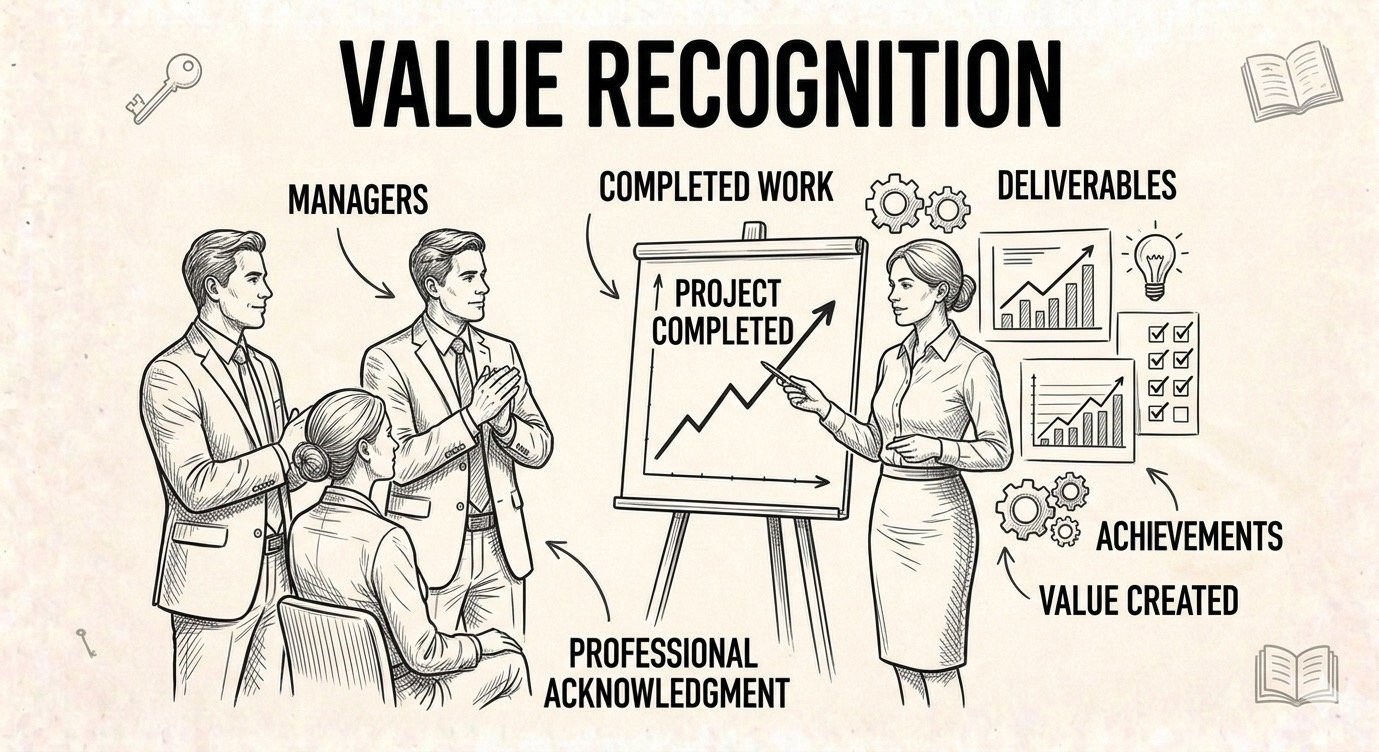
Self-marketing often carries uncomfortable connotations-boasting, showing off, or worse, narcissism. Yet in today's competitive professional environment, the ability to effectively market your contributions is not optional; it's essential. The distinction lies in approach: ethical self-marketing isn't about fabricating accomplishments or inflating your importance. It's about ensuring that genuine contributions don't go unnoticed because you're too hesitant or uncomfortable to share them.
Consider how engineers view technical publication. When professionals publish research papers in technical journals, they don't perceive it as showing off-they see it as professional responsibility, knowledge contribution, and advancing their field. The same principle applies to smaller, daily opportunities that may not merit formal publication but certainly deserve visibility. A clever solution to a tricky problem, a process improvement that saves team time, a mentoring conversation that unlocks someone's potential-these moments represent ideal opportunities for knowledge sharing and professional recognition.
Yet many capable professionals let these opportunities pass. Some feel embarrassed, believing that marketing their work seems boastful. Others simply find it easier not to bother, assuming their manager will naturally notice and promote their contributions. This passivity creates risk: not all managers actively scan for such opportunities, and relying entirely on others to recognize and market your work means important contributions often go unacknowledged. These small moments of visibility accumulate over time into internal recognition, reputation building, and career advancement opportunities.
The reality is straightforward: your work creates value, but value unseen is value lost. When you solve a problem, document the solution and share it through appropriate channels-brown bag sessions, team wikis, technical forums. When you develop expertise in an area, volunteer to mentor others or present at team meetings. When you achieve something noteworthy, share the approach and lessons learned, not just the outcome. This isn't self-promotion for ego gratification; it's professional responsibility to ensure organizational knowledge doesn't remain locked in one person's head.
Beyond internal recognition, external visibility increasingly matters for career development. Writing articles for industry publications, contributing to technical forums like Stack Overflow, presenting at conferences or user groups, publishing thoughtful analysis on LinkedIn, answering questions on platforms like Quora-these activities build professional reputation beyond your immediate organization. They position you as someone who doesn't just do good work but contributes to the broader professional community. They create opportunities you cannot access through internal visibility alone.
The fundamental mindset shift required is this: self-marketing isn't about convincing people you're better than you are. It's about ensuring people know what you actually contribute. When done ethically, self-marketing benefits not just you, but your organization and your profession. It spreads knowledge, inspires others, and elevates collective standards. Make self-marketing a habit-dedicate a portion of your career planning to visibility efforts. Set specific goals: "This year I'll publish two blog posts about lessons learned" or "I'll present at three internal knowledge-sharing sessions." Treat visibility as seriously as you treat execution, because in the long run, what people know about your contributions matters as much as the contributions themselves.
Leadership in Practice
A senior engineer at a major technology company consistently delivered exceptional technical work but rarely shared insights beyond immediate team interactions. Meanwhile, a peer with comparable technical skills regularly wrote internal blog posts explaining complex problems they'd solved, presented at brown-bag sessions, and actively participated in cross-functional technical forums. When a high-profile project required selecting a technical lead, the more visible engineer was chosen despite both having similar expertise. The selection wasn't bias or politics-it was information asymmetry. Leadership knew the visible engineer could handle complex problems because they'd repeatedly demonstrated problem-solving approaches in public forums. The quieter engineer's capabilities remained largely unknown beyond their immediate team.
This experience prompted the overlooked engineer to fundamentally change their approach. They began documenting solutions in the company wiki, volunteering to present at architecture review meetings, and writing detailed post-mortems after major initiatives. Within eighteen months, they'd become one of the most respected technical voices in the organization-not because their work improved (it was always strong), but because their contributions became visible. They were invited to join strategic initiatives, asked to mentor junior engineers, and ultimately promoted ahead of the peer who'd initially advanced faster.
The insight they gained: "I thought quality work spoke for itself. I was wrong. Quality work speaks for itself within the room where it happens. Everywhere else, you need to speak for it. That's not ego-that's professional responsibility."
Leadership Framework
**The Strategic Visibility Framework**
Effective self-marketing requires systematic approach across multiple channels:
**1. Internal Knowledge Sharing**
Identify three to five significant learnings or solutions each quarter and package them for sharing: Document clever solutions in team wikis with searchable titles. Volunteer to present lessons learned at team meetings or brown-bag sessions. Participate actively in technical forums and internal Q&A platforms. Offer to mentor others in areas where you've developed expertise. Each interaction builds your reputation as someone who doesn't just execute but contributes to collective intelligence.
**2. Cross-Functional Visibility**
Break out of your immediate team bubble: Participate meaningfully in cross-functional meetings-ask insightful questions, share relevant experiences. Volunteer for initiatives that expose you to other parts of the organization. Build relationships with managers and leaders outside your direct reporting chain. This broader visibility creates career opportunities your immediate team cannot provide.
**3. External Professional Presence**
Extend your reputation beyond organizational boundaries: Write articles or blog posts about industry challenges you've tackled. Present at local user groups, meetups, or conferences. Contribute to technical forums like Stack Overflow with thoughtful answers. Publish analysis or commentary on platforms like LinkedIn or Medium. Each external touchpoint builds professional capital that transcends your current role.
**4. Strategic Documentation**
Make your contributions discoverable: Maintain a personal achievement log documenting significant contributions. Keep a portfolio of work products-designs, analyses, presentations. Write project post-mortems that capture not just outcomes but approaches and lessons. This documentation becomes invaluable during review cycles, role transitions, and opportunity discussions.
**5. Manager Partnership**
Help your manager market you: In one-on-ones, proactively share significant accomplishments and impacts. When receiving praise from others, forward it to your manager with context. Ask explicitly: "Are there opportunities for me to gain visibility with senior leadership?" Your manager wants you to succeed but cannot promote contributions they don't know about.
**6. Quality Over Volume**
Self-marketing isn't about constant self-promotion: Choose moments that represent genuine learning, innovation, or impact. Focus on sharing insights that benefit others, not just celebrating yourself. Let the value of your contributions speak through the usefulness of what you share. One thoughtful technical deep-dive generates more credibility than ten shallow status updates.
**Critical Success Factor**: The professionals who advance fastest aren't necessarily those who do the best work-they're those who do excellent work AND ensure key stakeholders know about it. This isn't cynicism; it's reality. Treat visibility as a professional skill requiring the same systematic attention you give to technical execution.
"Your work speaks for itself-but only to people who can see it." - Wisdom from countless professionals who learned visibility matters