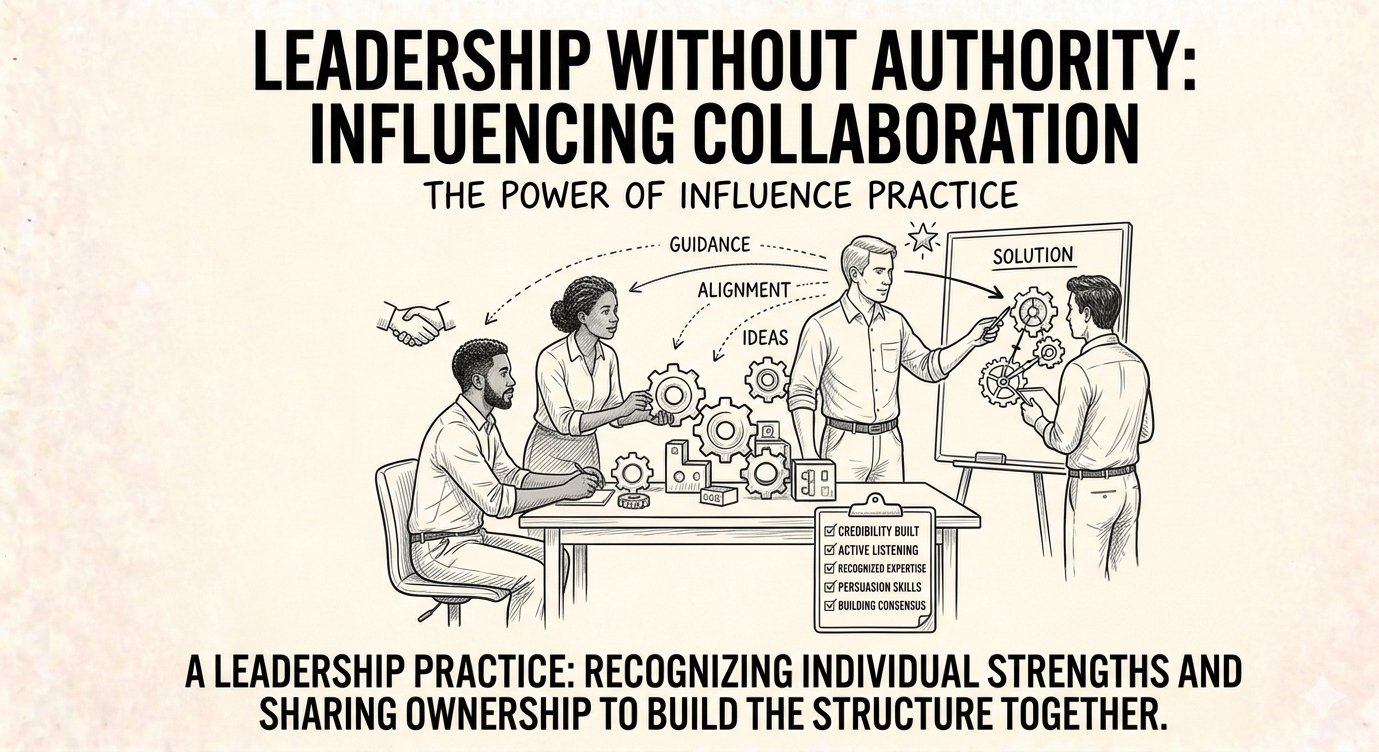
The very nature of leadership has fundamentally transformed in recent years. Keith Ferrazzi's "Leading Without Authority" arrives at a pivotal moment-when the Fourth Industrial Revolution has rendered traditional hierarchical leadership insufficient for the challenges we face. The velocity of change, the complexity of problems, and the distributed nature of expertise mean that no single leader, regardless of title or authority, can command their way to success. Instead, we must embrace what Ferrazzi calls "co-elevation"-a mission-driven approach where influence trumps authority, and collaborative problem-solving occurs through fluid partnerships rather than rigid organizational structures.
Co-elevation represents more than a management technique; it's a fundamental reimagining of how work gets done. When leaders commit to going higher together, they create co-creative relationships built on radical candor, mutual accountability, and shared purpose. This approach requires us to shed the armor of positional power and embrace personal qualities that many leaders find uncomfortable: vulnerability in admitting what we don't know, generosity in sharing credit and resources, gratitude for contributions regardless of hierarchy, forgiveness when experiments fail, and authentic celebration of collective wins. The paradox is striking-by giving up the trappings of authority, leaders gain something far more powerful: genuine commitment from people who choose to follow the mission rather than the title.
The first principle of co-elevation challenges our instincts about team formation. For every critical initiative, your real team extends far beyond your direct reports or those boxes connected to yours on the org chart. The most essential contributors to your mission might sit in different departments, work for different companies, or operate in different geographies. Effective leaders in this new paradigm take personal responsibility for identifying and engaging this broader ecosystem of stakeholders, recognizing that the formal team represents just the visible tip of the iceberg. Success depends on your ability to enlist, energize, and align people over whom you have no formal authority-people who will commit their discretionary effort because they believe in the mission and trust in the relationship.
This shift demands that we fundamentally reconsider how we define our sphere of influence and responsibility. Rather than asking "Who reports to me?" the critical question becomes "Who needs to be part of this mission for us to succeed?" This reframing transforms how we approach stakeholder engagement, resource allocation, and problem-solving. It requires us to become architects of informal networks, curators of talent regardless of organizational boundaries, and facilitators of connections that enable collective intelligence to emerge. The leaders who master this approach discover something remarkable: the outcomes achieved through co-elevation consistently exceed what could be accomplished through traditional command-and-control methods, precisely because they tap into the full potential of distributed expertise and authentic commitment.
Why This Matters
In an era where competitive advantage increasingly depends on speed, innovation, and adaptability, leaders who rely solely on positional authority will find themselves consistently outmaneuvered by those who can mobilize informal networks and cross-functional collaboration. Organizations that fail to develop co-elevation capabilities will struggle to solve complex problems that span departmental silos, lose top talent who crave more meaningful collaboration, and miss critical market opportunities that require rapid coordination across traditional boundaries. The ability to lead without authority has evolved from a nice-to-have soft skill into a hard business requirement that directly impacts time-to-market, innovation output, and organizational resilience.
Leadership in Practice
When the new CEO became the company's CEO several years ago, he inherited a company plagued by internal competition and siloed thinking. Departments hoarded information, the collaboration platform competed rather than collaborated, and the infamous "stack ranking" system had created a culture where authority and self-preservation trumped collective success. The CEO recognized that the company's survival in the cloud-computing era required a fundamental shift from "know-it-alls" to "learn-it-alls"-but he couldn't simply command this transformation into existence. Instead, the CEO modeled co-elevation principles from the top. He dissolved traditional boundaries by creating cross-functional "One a major technology company" initiatives where engineers, salespeople, and product managers from different divisions worked together on customer solutions without regard to org-chart hierarchies. He personally demonstrated vulnerability by admitting the company's past mistakes and expressing genuine curiosity about ideas from all levels. Most significantly, he empowered the collaboration platform to form fluid partnerships around customer needs rather than waiting for top-down directives. When the cloud platform team needed to integrate with professional social media after the acquisition, they self-organized cross-company the collaboration platform that operated outside traditional reporting structures, united by the mission rather than managed by authority. The results speak volumes: the company's market capitalization grew from approximately $300 billion to over $2 trillion under the CEO's leadership, driven largely by their cloud platform's success-a product that required unprecedented collaboration across previously warring factions. Employee engagement scores rose dramatically, and the company transformed from a company people left to one where talent wanted to stay and contribute. This turnaround wasn't achieved through restructuring or mandate, but through cultivating a culture where people learned to lead without authority and elevate each other toward shared goals.
Leadership Framework
**The Co-Elevation Leadership Framework: Building Influence Beyond Authority**
**Step 1: Map Your Mission Ecosystem**
Before assembling any team, clarity on mission is paramount. Define the specific outcome you're driving toward, then systematically identify every person whose expertise, resources, or influence could materially impact success-regardless of where they sit organizationally. Create a stakeholder map that includes direct reports, peer leaders, subject matter experts, external partners, and even potential skeptics who could derail progress. Critical success factor: Resist the temptation to limit your thinking to "available" resources; instead, identify the right resources.
**Step 2: Cultivate Co-Creative Relationships**
Approach potential team members not with requests for their time, but with invitations to shared purpose. Articulate the mission's significance, why their specific contribution matters, and what success would mean collectively. Practice generous listening to understand their priorities and constraints, then find authentic alignment between the mission and what they care about. Warning: This isn't manipulation; people detect insincerity instantly. Only invite people into missions you genuinely believe will benefit them and advance work they value.
**Step 3: Establish Mutual Accountability**
Co-elevation fails without reciprocal commitment. Create explicit agreements about who will deliver what by when, and build in regular synchronization points for candid feedback. The key difference from traditional accountability: it flows in all directions, not just top-down. As the leader, you must be equally accountable to team members for removing obstacles, providing context, and delivering on your commitments. Critical success factor: Model vulnerability by asking for feedback on your own performance first.
**Step 4: Enable Self-Organization**
Once the mission and accountability structures are clear, resist the urge to dictate how the work gets done. Allow the team to self-organize around the problem, bringing their expertise to bear in ways you couldn't have prescribed. Your role shifts from director to facilitator-asking powerful questions, connecting people with complementary skills, and ensuring information flows freely. Warning: This requires genuine trust and comfort with uncertainty; micromanaging destroys the co-elevation dynamic.
**Step 5: Celebrate and Amplify**
When the team achieves wins-large or small-celebrate them publicly and specifically. Amplify individual contributions, especially from those who lack formal authority or visibility. This isn't just about recognition; it's about reinforcing the behaviors and relationships that made success possible. Share the story of how collaboration created outcomes beyond what any individual could achieve. Critical success factor: Make celebration a discipline, not an afterthought, and ensure credit flows to contributors, not just leaders.
Leadership Takeaway
The most powerful leaders in the Fourth Industrial Revolution will be those who measure their impact not by the size of their team or budget, but by the breadth of their influence and the quality of their co-creative relationships. Starting tomorrow, identify one critical initiative where you've been constrained by thinking within organizational boundaries, then map three people outside your formal authority who could transform the outcome if they fully engaged. Reach out to one of them with a genuine invitation to co-elevate around a shared mission-and watch how influence without authority can accomplish what command and control never could.
"The task of leadership is not to put greatness into people, but to elicit it, for the greatness is there already." — John Buchan
Ramu Kaka's Wisdom
Beta, a true leader is like the sun-it doesn't pull the plants upward by force, but creates the conditions where everything naturally grows toward the light. When you learn to shine on others rather than casting shadows with your authority, you'll be amazed at how high everyone rises together.
Reflection Questions
- When was the last time I achieved a significant outcome by mobilizing people over whom I had no formal authority—and what made them choose to commit their energy to the mission?
- Which critical stakeholders am I excluding from my current initiatives simply because they don't appear on my org chart, and what expertise or influence am I sacrificing as a result?
- How comfortable am I demonstrating vulnerability, asking for help, and accepting feedback from people at all levels—and what might this discomfort be costing my team's performance?