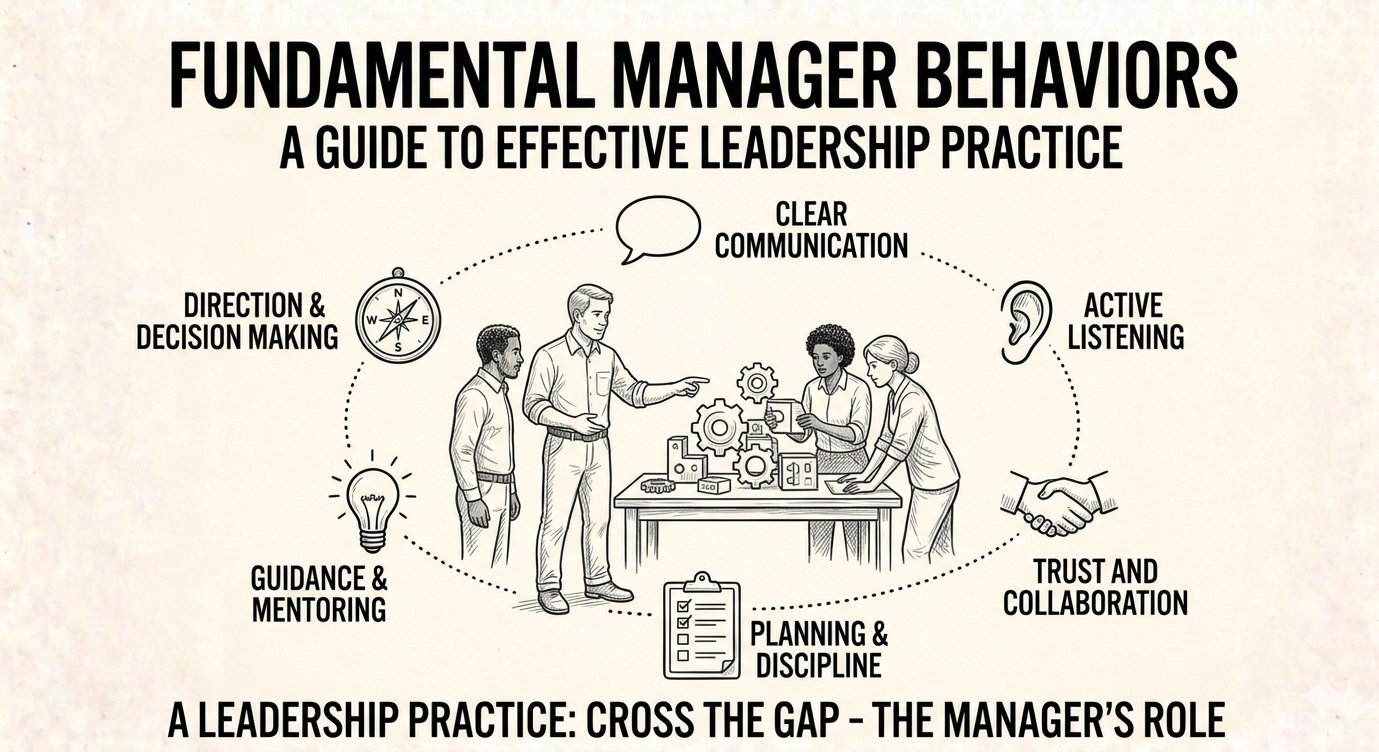
Drawing from timeless principles in "The Unwritten Laws of Business," certain behaviors and techniques distinguish effective managers from merely adequate ones. These are not abstract leadership philosophies but concrete practices that directly impact your effectiveness.
**Every Manager Must Know What Goes On in Their Domain**
This applies primarily to major developments and significant events - not obsessive tracking of minor details assigned to subordinates. Micromanagement becomes a vice when it impedes operations.
Nevertheless, the fundamental truth remains: the more informed you are, the more effectively you can manage. Strategic awareness of your domain is non-negotiable for leadership effectiveness.
**Do Not Try to Do It All Yourself**
This tendency represents bad business on multiple levels: bad for you, bad for the work, and bad for your employees.
You must delegate responsibility even when you could handle everything yourself. Part of your job is developing your staff's initiative, resourcefulness, and judgment. The most effective way to accomplish this is loading them with all the responsibility they can carry without risk of serious failure or embarrassment.
Your role is not to be the best individual contributor on your team. Your role is to multiply effectiveness through others.
**Put First Things First in Applying Yourself to Your Job**
Since there is rarely time for everything, form the habit of concentrating on important matters first. The important things are those for which you are held directly responsible and accountable.
Assign these responsibilities top priority when budgeting your time. Then delegate as many secondary items as possible that will not fit into your schedule. The discipline of prioritization is what separates effective executives from perpetually overwhelmed ones.
**Cultivate the Habit of Boiling Matters Down to Their Simplest Terms**
The ability to reduce apparently complicated situations to their basic, essential elements is a form of wisdom usually derived from experience. Make it a practice to integrate, condense, summarize, and simplify your facts rather than expand, complicate, and fragment them.
The mental discipline that instinctively compels you to get at the heart of the matter is among the most valuable qualities of effective executives. Complexity is often a mask for unclear thinking.
**Cultivate the Habit of Making Brisk, Clean-Cut Decisions**
Decisions become easier and more frequently correct when you have essential facts at hand. The application of judgment can be facilitated by formulating principles and policies in advance.
You do not need to be right every time, but you must take definite positions and see them through. It is futile to try to keep everyone happy when deciding issues involving incompatible viewpoints.
By all means, give everyone a fair hearing. But after all parties have had their say and all facts are on the table, dispose of the matter decisively - even if someone's toes get stepped on. Prolonged indecision is often more damaging than an imperfect decision executed with commitment.
These five disciplines - knowing your domain, delegating effectively, prioritizing ruthlessly, simplifying complexity, and deciding decisively - form the operational foundation of managerial excellence. Master them, and you master the fundamentals of your craft.
Leadership in Practice
When the new CEO assumed the company's CEO role in several years ago, he inherited an organization paralyzed by competing priorities and a culture where executives hoarded information and responsibilities. A major technology company had become a confederation of fiefdoms, with senior leaders personally involved in granular product decisions that should have been delegated five levels down. The CEO's transformation began not with strategy pronouncements, but with a fundamental reset of leadership priorities. He instituted a ruthless simplification protocol: every initiative had to connect clearly to one of three strategic pillars, and leaders were evaluated not on how much they controlled but on how effectively they developed their teams. The CEO personally modeled the discipline of "boiling things down," replacing verbose strategy documents with clear, simple frameworks that every employee could understand and apply. He pushed decision-making authority downward, making it clear that his role wasn't to approve every product feature but to ensure the company had the right people empowered to make those decisions. Over the following years, the company's market capitalization had doubled, but more importantly, employee engagement scores showed dramatic increases in autonomy, clarity of purpose, and leadership trust. The transformation wasn't about working harder-it was about 150,000 employees finally working on the right things, led by managers who had learned to prioritize, delegate, and simplify.
Leadership Framework
**The Priority-Driven Leadership Framework**
**Step 1: Establish Your Non-Negotiables**
Identify the 3-5 outcomes for which you are directly accountable-not activities, but results. These become your priority filter for every decision about time allocation. Write them down, share them with your team, and review them weekly. Critical success factor: Ensure these align with what your organization actually rewards and measures.
**Step 2: Create Visibility Without Interference**
Design information systems that provide early warning of significant developments without requiring your involvement in execution. This might include weekly scorecards, skip-level conversations, or structured pulse checks. The goal is intelligent awareness, not control. Warning: If your team is spending more time reporting to you than doing the work, you've crossed the line into micromanagement.
**Step 3: Delegate with Intent**
For every responsibility outside your non-negotiables, systematically transfer ownership to the lowest competent level. Provide context, establish boundaries, define success criteria, then step back. This isn't abdication-it's investment in organizational capability. Critical success factor: Create safety for responsible failure; punishing mistakes after delegation destroys trust and initiative.
**Step 4: Practice Radical Simplification**
Before every meeting, presentation, or decision, force yourself to articulate the core issue in one sentence. If you can't, you don't understand it well enough to lead others through it. Train yourself and your team to strip away tangential information and focus on essential elements. Warning: Simplification requires deep understanding; superficial leaders confuse simplicity with simplemindedness.
**Step 5: Protect Your Priority Time**
Schedule your non-negotiable priorities first, treating them as immovable commitments. Everything else fits around them or doesn't happen. This requires saying "no" frequently and comfortably. Critical success factor: Your calendar is a moral document-it reveals your true priorities regardless of what you say they are.
"The art of being wise is the art of knowing what to overlook." - William James