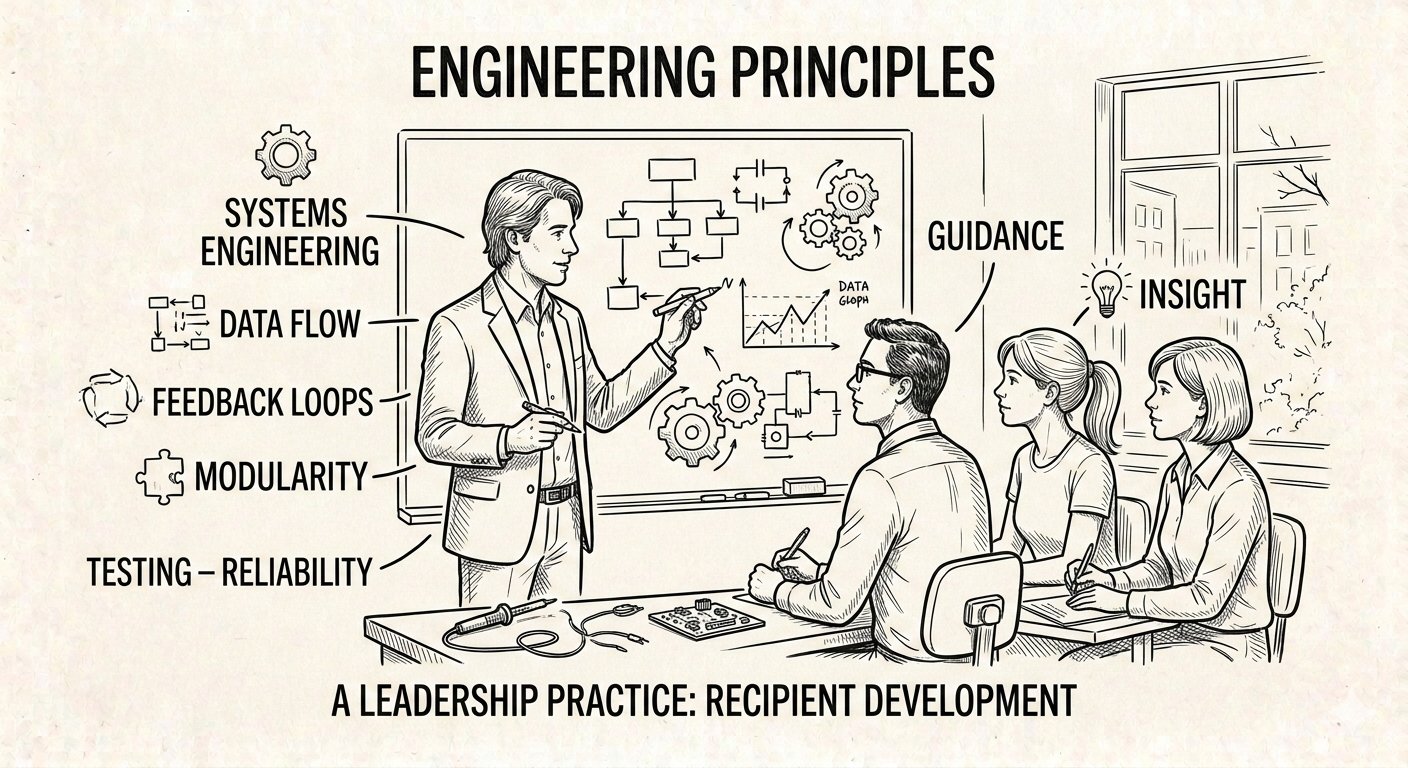
Building a world-class team represents one of leadership's most persistent challenges-not simply in recruiting talent, but in unlocking the potential already present within your organization. The uncomfortable truth many leaders face is this: some employees never grow, not because they lack capability, but because their environment fails to nurture development. The difference between stagnant teams and high-performing ones rarely lies in the raw talent available; it lies in the systematic approach leaders take to cultivate that talent.
Development begins with the foundation of trust. Employees who doubt their leader's intentions operate in a defensive posture, conserving energy for self-protection rather than channeling it toward growth. Leaders earn this trust not through declarations but through consistent demonstration-showing genuine concern for employee welfare, maintaining unwavering integrity, and investing time in relationships that extend beyond transactional work interactions. When trust exists, even difficult conversations become opportunities for growth rather than threats to be deflected.
With trust established, effective leaders create a developmental architecture built on three pillars: clarity, support, and visibility. Clear, challenging goals provide direction and stretch capabilities, but only when employees understand how their work connects to organizational imperatives. Support transforms ambitious goals from overwhelming to achievable-through resources, mentorship, and strategic connections that expand an employee's network and capabilities. Visibility ensures that growth doesn't occur in obscurity; leaders must actively create platforms for employees to demonstrate expanding competencies to broader audiences.
The final elements-feedback and recognition-create the reinforcement loop that sustains development. Timely, constructive feedback serves as the navigation system, helping employees course-correct before small deviations become major problems. Recognition, particularly when delivered strategically to enhance visibility with senior leadership, validates progress and motivates continued effort. Yet these elements only work when layered upon the foundation of trust and systematic support.
The question isn't whether employees can grow-most can. The question is whether leaders create the conditions that make growth inevitable. Those who master this systematic approach don't just develop individual employees; they build organizational cultures where continuous development becomes the norm, creating sustainable competitive advantages that cannot be easily replicated.
Why This Matters
Employee development directly impacts your organization's ability to execute strategy and adapt to market changes. Companies that systematically develop their people outperform competitors by 2.5x in revenue growth and are 4x more likely to retain top talent. When leaders fail to create growth conditions, they trigger a cascade of consequences: high performers leave for better opportunities, remaining employees stagnate and disengage, and the organization loses the internal bench strength needed for succession planning. In today's war for talent, your ability to grow people isn't a nice-to-have-it's a strategic imperative that determines whether you'll have the leadership capacity to execute your future vision.
Leadership in Practice
When the new CEO became the company's CEO several years ago, he inherited a company notorious for its stack-ranking system and cutthroat internal competition-an environment where employees focused more on political maneuvering than growth. The CEO recognized that the company's stagnation wasn't a talent problem; it was a development problem rooted in cultural dysfunction. He systematically dismantled the competitive evaluation system and replaced it with a 'growth mindset' culture emphasizing learning over knowing, collaboration over competition. The CEO personally modeled vulnerability, sharing his own learning journey and mistakes in town halls. He implemented 'Connects'-regular one-on-one conversations focused on employee development rather than just performance metrics. Leaders were evaluated not just on results but on their ability to develop others. He created cross-functional projects that gave employees visibility across the organization and exposure to senior leadership. Most critically, he rebuilt trust by consistently demonstrating that taking intelligent risks and learning from failures would be rewarded, not punished. The results speak volumes: a major technology company's the company's value increased substantially from $300 billion to over $1 trillion in five years, employee engagement scores jumped significantly, and the company successfully pivoted to cloud-first strategy-a transformation that required massive organizational learning and adaptation. The turnaround wasn't about hiring different people; it was about creating conditions where existing talent could finally grow. The CEO proved that when leaders systematically apply developmental principles, they don't just change individual trajectories-they transform entire organizations.
Leadership Framework
**The GROWTH Framework for Employee Development**
**G - Ground in Trust:** Before any development occurs, invest 90 days building authentic relationships. Conduct weekly one-on-ones focused on understanding employee aspirations, concerns, and motivations. Demonstrate consistency between words and actions. Share your own failures and learning moments to model vulnerability.
**R - Raise the Bar with Clarity:** Set goals that stretch capabilities by 15-20% beyond current comfort zones. Use the 'line of sight' technique: explicitly connect each goal to team objectives, departmental priorities, and organizational strategy. Ensure employees can articulate why their work matters in the bigger picture.
**O - Orchestrate Support Systems:** Conduct a 'support audit' for each challenging goal. Ask: What resources, connections, or knowledge does this employee lack? Proactively provide mentorship, cross-functional introductions, training, or tools before employees struggle. Remove organizational barriers that impede progress.
**W - Wire in Feedback Loops:** Implement weekly feedback conversations, not quarterly reviews. Use the 2:1 ratio: two pieces of specific positive reinforcement for every piece of corrective feedback. Focus feedback on behaviors and outcomes, not personality traits. When trust exists, increase candor progressively.
**T - Amplify Through Visibility:** Create a quarterly 'visibility plan' for each high-potential employee. Identify speaking opportunities, cross-functional projects, or executive presentations. Strategically recognize achievements in forums where senior leaders pay attention. Copy executives on emails highlighting specific accomplishments with concrete results.
**H - Honor Progress with Recognition:** Provide immediate recognition for milestone achievements. Combine public appreciation with private coaching on next-level opportunities. During performance reviews, advocate fiercely for compensation that reflects growth and contribution.
**Critical Success Factor:** This framework fails if implemented mechanically. The sequence matters-trust must precede challenge, support must accompany stretch goals, and recognition must be authentic. Leaders who skip steps or apply tactics without genuine investment in people will see employees comply but never truly grow.
Leadership Takeaway
Starting tomorrow, identify one employee whose growth has plateaued and audit which elements of the GROWTH framework are missing. Most leaders discover they've set goals without building trust, or provided feedback without orchestrating adequate support. The path to unlocking potential isn't mysterious-it's systematic. Choose one employee, implement the complete framework, and watch what happens when you create conditions where growth becomes inevitable rather than accidental. Your consistency in application will teach your team more about development than any training program ever could.
"Before you are a leader, success is all about growing yourself. When you become a leader, success is all about growing others." — Jack Welch, former CEO of General Electric
Ramu Kaka's Wisdom
A gardener doesn't pull on seedlings to make them grow faster-he ensures rich soil, adequate water, and proper sunlight, then trusts the natural process. Leaders who focus on creating the right conditions rather than forcing outcomes discover that growth isn't something you do to people; it's something that happens when you remove the obstacles preventing it.
Reflection Questions
- If I surveyed my team anonymously, what percentage would say they trust that I genuinely work in their best interest, and what specific actions have I taken in the past month to earn that trust?
- Which of my employees have remained at the same capability level for over a year, and can I honestly say I've provided all six elements of the GROWTH framework consistently?
- Am I creating visibility opportunities for my team with senior leadership, or am I unconsciously hoarding those opportunities to maintain my own visibility and value?