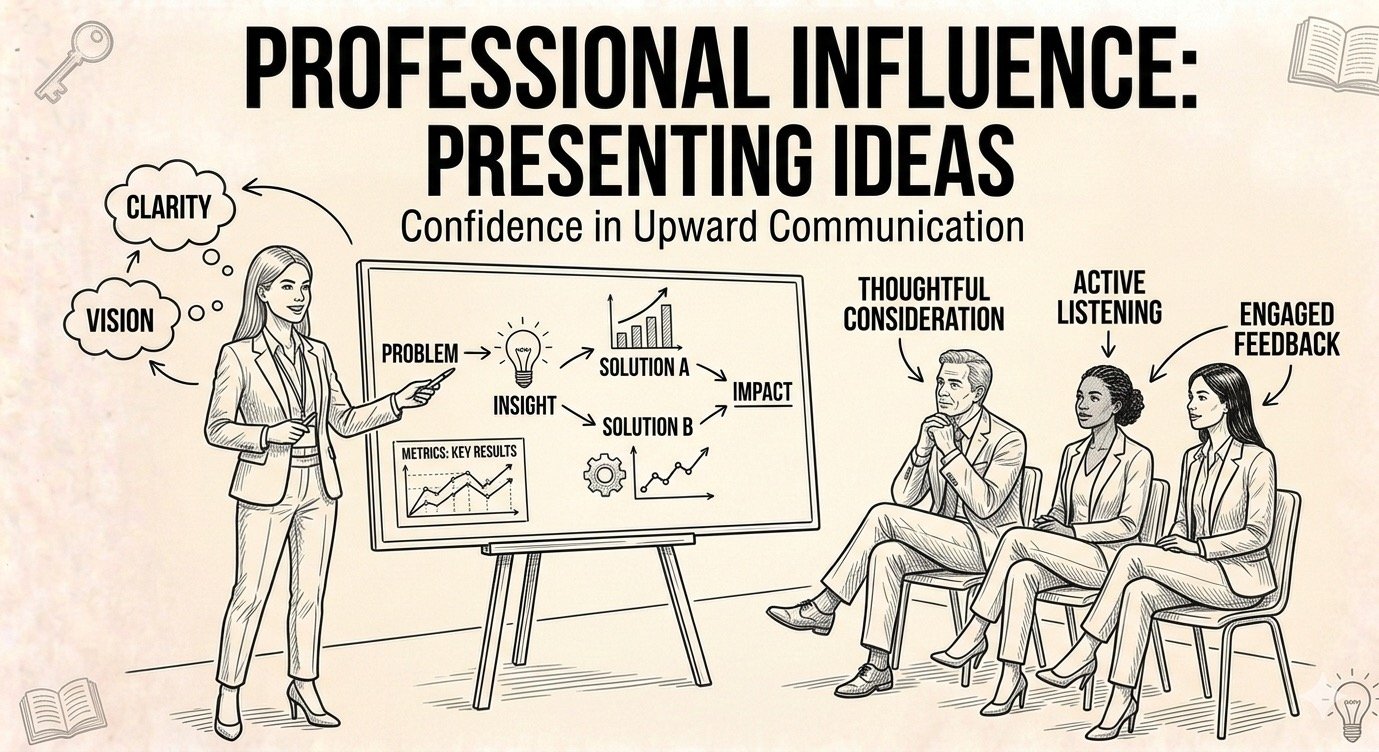
Middle managers face few higher-stakes moments than presentations to senior leadership. In thirty minutes or less, you must convey complex technical or organizational information, demonstrate strategic thinking, build credibility, and often secure decisions or resources. The challenge intensifies because senior leaders are chronically time-constrained, have limited context for your specific domain, and make rapid judgments about both your conclusions and your competence based on presentation quality.
The first critical insight: presenting to senior leadership differs fundamentally from presenting to peers or technical audiences. Peers tolerate detail and complexity because they work in similar domains. Senior leaders require brevity, clarity, and strategic framing. They want to understand implications and required decisions, not comprehensive background. The presentation structure that works for technical deep-dives fails catastrophically in executive contexts.
This creates a planning challenge. You have invested weeks or months developing deep understanding of your topic. Your instinct is to take your audience through that same journey, building context systematically. This "inside-out" approach feels thorough but wastes senior leadership's time. What matters to them is not how you reached your conclusions, but what those conclusions are and what they should do about them.
The alternative approach, "outside-in," starts from the audience's perspective: What decisions do they need to make? What concerns will they have? What context is truly essential versus merely interesting to you? An outside-in presentation puts conclusions first, supporting detail second, and comprehensive background in optional appendices they will likely never review.
Consider the tragic reality of most presentations to senior leadership: the presenter gets fifteen minutes into methodological background when they had planned for thirty minutes total. Leadership interrupts with questions. Time evaporates. The actual conclusions and recommendations get compressed into three rushed minutes. Decisions that required careful setup get made with inadequate context because you spent your time explaining how you got there rather than what you found.
Effective presentation skills for senior leadership contexts require systematic approach across multiple dimensions: structure designed for time scarcity, visual clarity that accelerates comprehension, dynamic adaptation to audience engagement, and thorough anticipation of likely questions and concerns.
Why This Matters
Research on organizational decision-making consistently demonstrates that presentation quality significantly impacts both decision outcomes and presenter credibility assessments. Two managers presenting identical analysis with different presentation structures can receive dramatically different reception—one seen as strategic and clear-thinking, the other as detail-oriented but not leadership material. This is not superficial bias; senior leaders make hundreds of decisions weekly and develop rapid pattern recognition for presentations that respect their time and cognitive load versus those that do not. In an era where middle manager advancement depends heavily on senior leadership sponsorship, the ability to present complex information with clarity, brevity, and strategic framing directly determines access to resources, projects, and career advancement.
Leadership in Practice
An engineering manager at a major technology company prepared to present a critical technical issue to a senior vice president. The problem was complex: a design flaw that would require significant rework but was not yet customer-impacting. The manager's initial presentation followed the classic inside-out structure: historical context, detailed technical background, timeline of discovery, methodical analysis of root causes, and finally, recommendations.
A mentor reviewed the draft and asked pointedly: "If the SVP only reads your first slide and interrupts with questions, will they understand the core issue and your recommendation?" The answer was no—that information lived on slide twelve of fifteen. The mentor advised: "Put everything that matters on slide one. Everything else is backup."
The manager rebuilt the presentation completely. Slide one became an executive summary: problem statement, business impact, root cause, recommendation, and required resources. Detailed technical analysis moved to backup slides. The presentation structure assumed the audience would interrupt constantly, so each section could stand alone. Visual aids replaced text-heavy explanations.
The actual presentation lasted eighteen minutes of the scheduled thirty. The SVP interrupted three times with questions, each time addressed efficiently using backup slides prepared in advance. By minute twenty, the decision was made and resources approved. The remaining time was spent on implementation discussion rather than basic problem explanation.
The manager reflected: "I spent twice as long preparing that presentation compared to my usual approach. But I got the decision I needed in half the time I expected, and I left with the SVP commenting that I presented clearly. That comment mattered more than the approved resources—it meant I would get future opportunities to present."
Leadership Framework
**The Executive Presentation Framework**
**1. Outside-In Structure**
Start with what senior leadership needs, not what you want to explain: Create an executive summary slide that stands alone - problem, impact, recommendation, required decision, resources needed. Assume you will only get to present this one slide. Everything else is supporting detail they may never see. Lead with conclusions, provide supporting analysis only when requested.
**2. The 10-90 Rule**
Your first 10 percent of slides should convey 90 percent of your message: Front-load all critical information. Detailed methodology, comprehensive analysis, and background context belong in backup slides. If senior leadership only sees three slides before time runs out, they should have everything needed for decisions.
**3. Story Structure**
Conceive presentations as stories with clear narrative arc: Begin with executive summary that tells the complete story in one slide. Organize subsequent slides as "peeling an onion" - each layer provides more detail only if audience wants to go deeper. Use backup slides extensively for technical depth you probably will not present but might need if questioned.
**4. Visual Over Verbal**
Replace text with visual aids wherever possible: Charts show trends better than bullet points. Diagrams explain relationships better than paragraphs. Gantt charts communicate schedules better than milestone tables. Visual processing is faster than reading, and senior leaders are chronically time-constrained. Less text, more graphics.
**5. Concise Language**
Be ruthlessly stingy with words: Every sentence on a slide represents potential distraction while you are speaking. Remove jargon that requires explanation. Use short, declarative sentences. If a word does not add essential meaning, delete it. Dense slides lose audience attention.
**6. Question Anticipation**
Prepare systematically for likely questions: Every assertion invites a question. Every recommendation raises concerns. List ten most probable questions and prepare concise answers, supported by backup slides if needed. Know your audience: schedule-driven leaders ask about timelines, cost-focused leaders ask about resources, risk-averse leaders ask about failure modes. Prepare accordingly.
**7. Internal Review**
Present to senior managers before presenting to senior leadership: People closer to executives understand their communication preferences and typical concerns. Incorporate their feedback seriously. Be willing to restructure completely based on their guidance. Better to rebuild the presentation than fail in the actual meeting.
**8. Dynamic Adaptation**
Read the room and adapt in real-time: If senior leader engagement drops, skip to next major topic. If questions focus on specific area, go deeper there and abbreviate other sections. If body language signals time pressure, jump directly to recommendations. What you planned to communicate matters less than what your audience needs to hear.
Leadership Takeaway
This week, take your next senior leadership presentation and audit it against the outside-in principle: Can someone understand your core message, recommendation, and required decision from slide one alone? If not, rebuild. Then reduce text by 50 percent, replacing words with visuals wherever possible. Finally, list ten questions you hope senior leaders do not ask - then prepare answers for exactly those questions, because those are precisely what they will ask. Remember: presentation quality shapes both decision outcomes and leadership perception of your strategic thinking.
"Clarity is power. The more clear and concise your communication, the greater your influence." - Principle of executive communication
Ramu Kaka's Wisdom
The messenger who takes an hour to deliver news that requires five minutes will not be trusted with important messages. The wise messenger says what matters first, then provides details only if asked. Senior leaders treasure their time - waste it and they will find other messengers.
Reflection Questions
- If senior leadership only read your first slide and interrupted with questions, would they understand your recommendation and required decision - or would critical information live on slide twelve?
- How much time do you spend explaining how you reached conclusions versus what those conclusions are and what leadership should do about them?
- When preparing presentations, do you structure them for your comfort (building context systematically) or for audience needs (front-loading decisions and recommendations)?