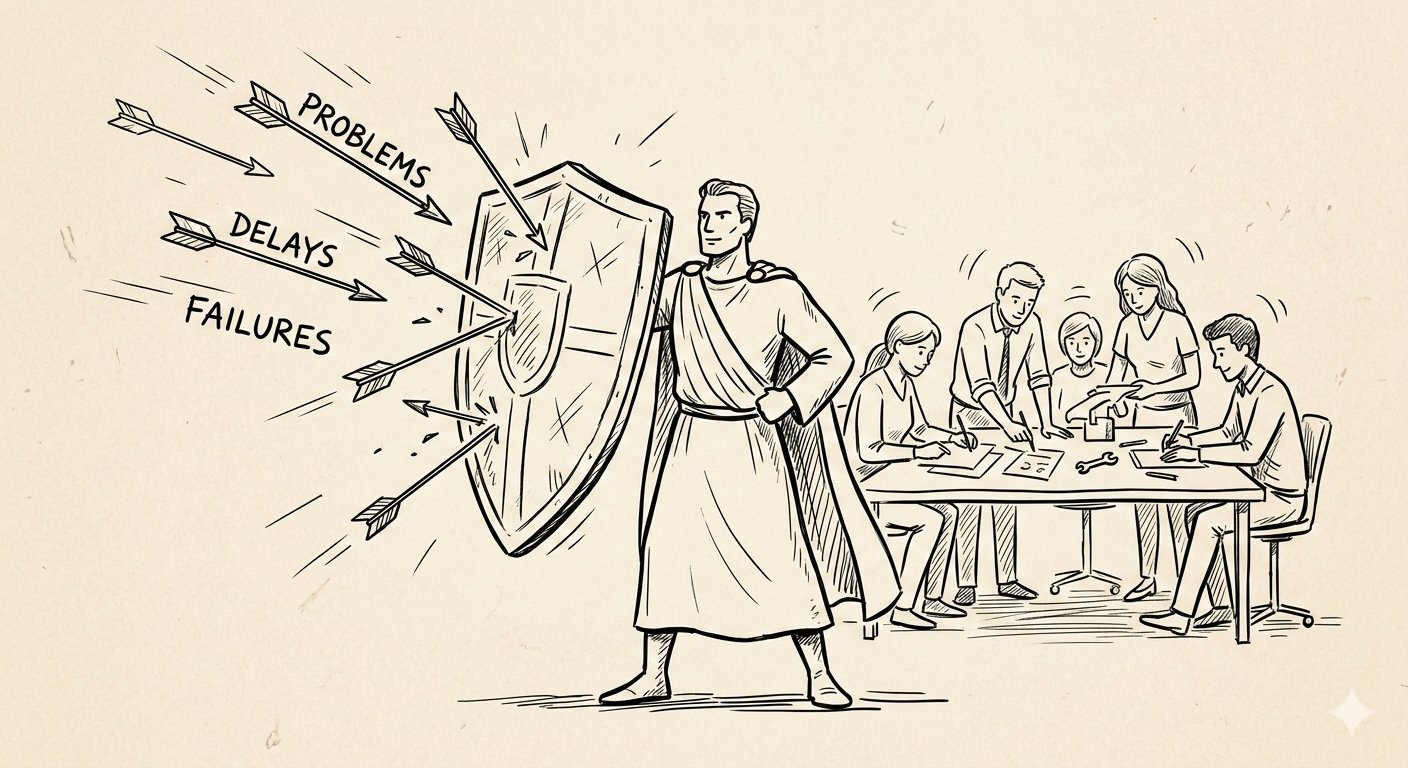
Leadership begins and ends with ownership. In every organization, on every team, all responsibility for success and failure rests squarely with the leader. There is no one else to blame, no external factors to cite, no subordinates to point fingers at. The leader must acknowledge mistakes, admit failures, take complete ownership, and develop a plan to win.
When subordinates underperform, leaders who practice extreme ownership cannot deflect blame. The leader bears full responsibility for explaining the strategic mission, developing effective tactics, and securing the training and resources necessary for the team to execute successfully. If a team member consistently fails to meet standards despite training and mentoring, the leader must prioritize the team and mission over any individual and make the difficult decision to replace that person.
Taking total responsibility for failure requires extraordinary humility and courage. Our natural instinct is to protect our ego and find external explanations for setbacks. However, accepting complete ownership is essential for learning, growing as a leader, and improving team performance. It transforms how teams operate - instead of wasting energy on blame, they focus that energy on solving problems and improving execution.
Extreme ownership demands that leaders examine organizational problems through the objective lens of reality, without emotional attachment to their own plans and agendas. It requires setting ego aside, accepting responsibility for failures, confronting weaknesses honestly, and working consistently to build a more effective team. True leaders do not take credit for their team's successes - they bestow that honor upon their subordinates. When this mindset permeates every level of an organization, it creates a culture where everyone focuses on solutions rather than excuses.
Why This Matters
When leaders blame circumstances, other departments, or their team members, they surrender their power to improve. Extreme ownership is the difference between teams that make excuses and teams that make progress. Organizations where leaders take complete responsibility create cultures of accountability where problems get solved rather than explained away. Without this foundation, even talented teams become mired in finger-pointing and defensiveness.
Leadership in Practice
When the new CEO took over as CEO of a major technology company several years ago, the company was struggling with a toxic culture of internal competition and blame. Divisions wouldn't share information, teams protected their turf, and innovation suffered. The CEO's first major initiative wasn't a product launch - it was introducing a growth mindset and extreme ownership culture. He started by taking ownership of the company's failures himself, publicly acknowledging the company had missed mobile and failed to see cloud's importance early enough. Rather than blame his predecessors, he focused on what he and the current leadership team would do differently. This modeling of ownership from the top transformed the organization. The results speak for themselves: the company's market cap has increased significantly under the CEO's leadership. Teams that previously competed now collaborate. The company that was written off as irrelevant became a cloud computing powerhouse. The transformation began with one leader taking extreme ownership and insisting every leader do the same.
Leadership Framework
The Extreme Ownership Framework:
1. OWN EVERYTHING - Accept that if you are in charge, everything that happens under your leadership is your responsibility. No exceptions, no excuses.
2. NO BAD TEAMS - Recognize that poor team performance is a leadership problem. Leaders who take over underperforming teams and turn them around prove there are only bad leaders, not bad teams.
3. BELIEVE IN THE MISSION - You cannot effectively lead a mission you don't believe in. If you cannot support it, work to change it or step aside.
4. CHECK YOUR EGO - Set aside personal pride and defensiveness. Focus relentlessly on the mission and team success, not on being right.
5. LEAD UP AND DOWN - Practice ownership not just with your subordinates but with your superiors and peers. Help them succeed through your ownership mindset.
Critical Success Factors:
- Model ownership publicly before demanding it from others
- Replace blame language with solution language
- Analyze failures objectively without defensiveness
- Give credit down, take blame up
- Make ownership part of your culture, not just a slogan
In the end, it is important to remember that we cannot become what we need to be by remaining what we are. - Max DePree