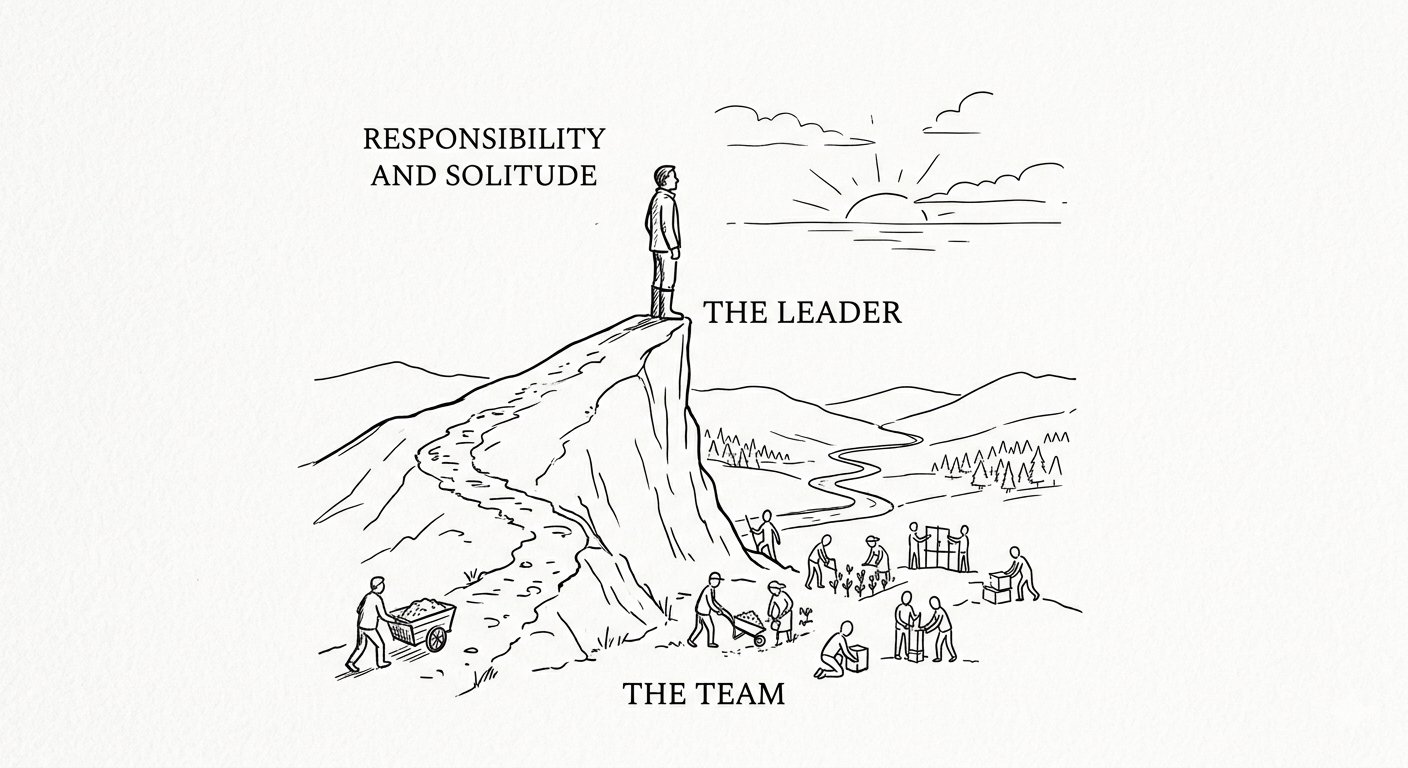
Leadership isn't just lonely at the top-it's stressful throughout the journey. The anxiety of unmet expectations, unreasonable deadlines, and workplace politics creates a persistent pressure that follows leaders regardless of title or company. Many emerging leaders fall into the trap of believing that the next role, the next organization, or the next team will somehow eliminate these stressors. This is a fundamental misunderstanding of leadership reality.
The truth is that stress is not a problem to be solved but a condition to be managed. Research consistently shows that identical situations produce vastly different stress responses depending on the individual's mindset and coping mechanisms. The differentiator isn't the absence of pressure-it's the presence of effective stress management practices. Leaders who master this distinction don't wait for their environment to change; they change their relationship with the environment.
Three principles form the foundation of effective stress management in leadership. First, practice acceptance: Stop fighting reality. When you commit to an aggressive timeline or challenging goal, dwelling on your initial reservations only amplifies stress. Accept the commitment and redirect that mental energy toward execution. Second, maintain perspective: Remember you are not indispensable. a major technology company didn't collapse when a transformative CEO departed. Your project, regardless of its importance, will continue without you. This isn't about diminishing your contribution-it's about maintaining healthy perspective on what truly matters. Third, maintain temporal awareness: Embrace the wisdom of "this too shall pass." The presentation that feels career-defining today will barely register in your memory six months from now. Stress peaks before critical moments, then dissipates regardless of outcome.
The most effective leaders don't eliminate stress-they metabolize it. They develop what psychologists call "stress tolerance," the capacity to function optimally under pressure without allowing that pressure to degrade decision quality or personal wellbeing. This skill isn't innate; it's developed through deliberate practice and mindset cultivation. Leaders who build this capacity create a competitive advantage: they think clearly when others panic, they maintain relationships when others withdraw, and they model resilience when others falter.
Ultimately, managing leadership stress requires a fundamental shift from external to internal locus of control. You cannot control market conditions, board expectations, or competitive threats. You can control your response, your preparation, and your perspective. This shift from victim to agent, from reactive to proactive, transforms stress from a liability into information-a signal about what matters, what requires attention, and where you need to grow as a leader.
Why This Matters
Unmanaged leadership stress doesn't just affect individual wellbeing-it cascades through organizations, degrading decision quality, eroding team morale, and creating toxic cultures. Leaders under chronic stress make more reactive decisions, communicate less effectively, and model unsustainable work patterns that their teams replicate. Organizations led by stress-burdened leaders experience higher turnover, lower innovation, and diminished financial performance. In an era where adaptability and resilience determine competitive advantage, leaders who cannot manage their own stress become organizational liabilities.
Leadership in Practice
When the new CEO took over a major technology company in several years ago, he inherited a company suffocating under competitive pressure and internal politics. The organization was known for its brutal stack-ranking system and cutthroat culture where leaders operated in constant fear of failure. The CEO could have perpetuated this high-stress environment, but instead he recognized that sustainable performance required a fundamentally different approach to pressure. The CEO introduced a "growth mindset" philosophy throughout the company's leadership ranks, explicitly teaching executives to reframe challenges as learning opportunities rather than existential threats. He modeled this himself, publicly discussing his own uncertainties and emphasizing learning over perfection. He eliminated stack ranking, reduced the political infighting that created chronic stress, and encouraged leaders to accept vulnerability as strength rather than weakness. He famously told executives: "Don't be a know-it-all, be a learn-it-all." The results speak volumes. The company's market capitalization increased from $300 billion to over $2 trillion under the CEO's leadership. Employee satisfaction scores improved dramatically, and the company regained its reputation for innovation. By teaching leaders to manage stress through acceptance, perspective, and growth orientation rather than denial and perfectionism, the CEO didn't just reduce pressure-he channeled it into sustainable high performance. The transformation demonstrates that leadership stress management isn't soft skills-it's a hard business imperative.
Leadership Framework
**The STAR Framework for Leadership Stress Mastery**
**S - Situational Acceptance:** Begin by conducting a weekly "reality audit." List your current stressors and categorize them as controllable or uncontrollable. For uncontrollable stressors, practice explicit acceptance through written acknowledgment: "This deadline is aggressive and I have concerns, AND I am committed to meeting it." This linguistic shift from "but" to "and" eliminates the internal resistance that amplifies stress.
**T - Temporal Perspective:** Implement the "six-month test" before major decisions or stressful moments. Ask yourself: "Will this matter in six months?" For most leadership stressors, the answer is no. Keep a "stress journal" where you record high-anxiety moments, then review them quarterly to build evidence that "this too shall pass" isn't just philosophy-it's pattern.
**A - Agency Focus:** Create a daily "control inventory." Each morning, identify three things within your control today (your preparation, your communication, your attitude) and three things outside your control (market conditions, others' reactions, past decisions). Invest energy only in the former. This practice builds the internal locus of control essential for stress resilience.
**R - Relational Support:** Establish a confidential peer advisory group of 3-4 leaders facing similar challenges. Meet monthly to share stressors and strategies. Leaders often suffer alone because they believe they should have all the answers. This isolation amplifies stress. Structured peer support provides perspective, normalizes leadership challenges, and creates accountability for stress management practices.
**Critical Success Factor:** The STAR framework only works with consistent practice. Stress management is not an event; it's a discipline. Leaders who apply these principles sporadically during crises see minimal benefit. Those who build them into daily routines develop genuine stress tolerance that becomes a leadership superpower.
"You have power over your mind—not outside events. Realize this, and you will find strength." — Marcus Aurelius