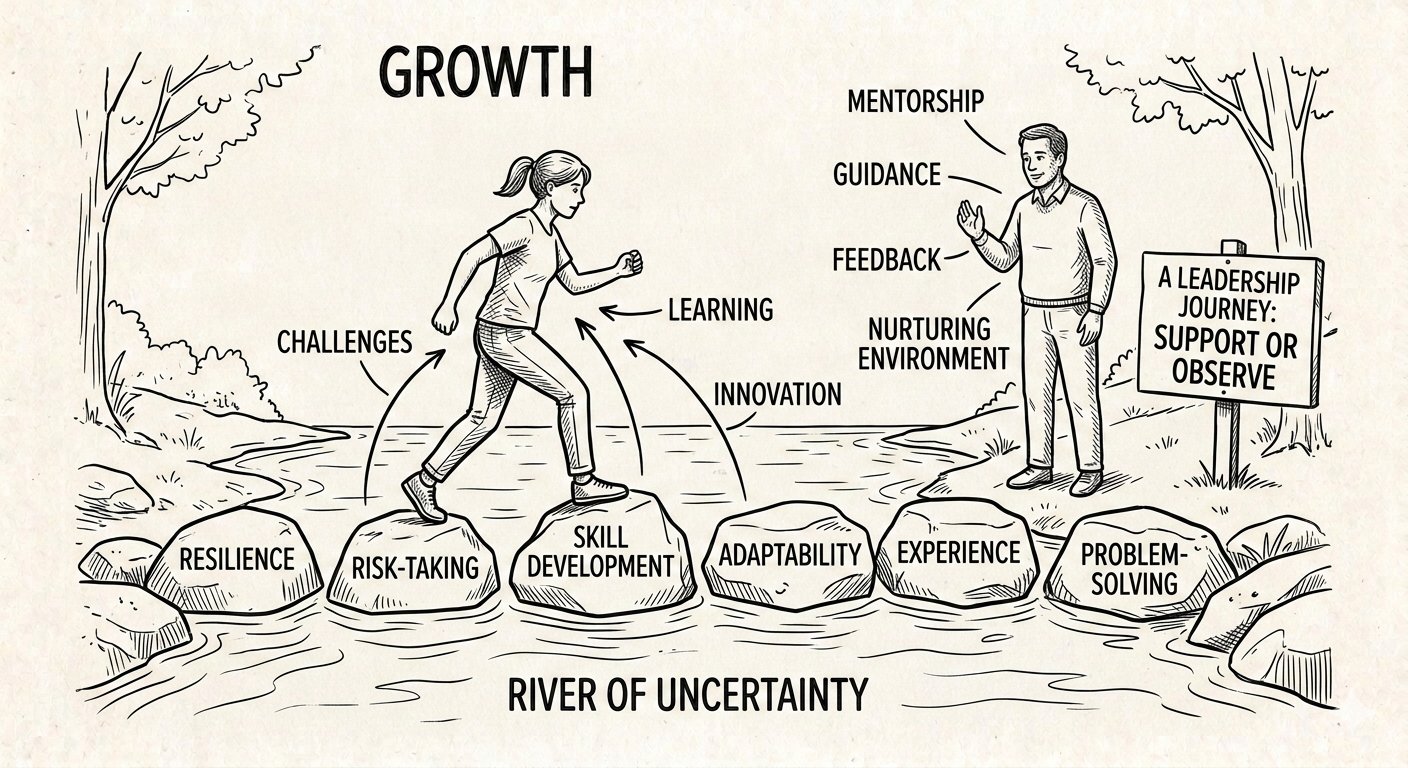
The most effective managers understand that their role transcends task delegation and performance monitoring-they are fundamentally teachers shaping the capabilities of their teams. Drawing from ancient philosophical wisdom adapted for modern leadership, three disciplines form the foundation of managerial excellence: Concentration, Consistency, and Cooperation. These aren't abstract virtues but practical tools that determine whether your team executes with precision or drifts toward mediocrity.
Concentration represents the intellectual discipline to anchor attention in the present moment. In today's hyperconnected workplace, the average knowledge worker toggles between applications over 1,200 times daily, fragmenting focus into ineffective micro-moments. As a manager-teacher, your first responsibility is modeling and instilling singular focus-helping your team resist the seductive pull of multitasking that research consistently shows reduces productivity by up to 40%. This means establishing clear priorities, protecting your team from conflicting directives, and creating environments where deep work flourishes. When organizations chase too many metrics simultaneously-revenue growth, cost reduction, innovation, and market share-they create cognitive overload that paralyzes decision-making. Great manager-teachers cut through this noise, translating enterprise strategy into clear, focused objectives that direct daily action.
Consistency forms the second pillar-the unwavering alignment between stated values and daily behaviors. Your team watches not what you say in meetings, but what you reward, tolerate, and model when pressure mounts. Consistency builds the psychological safety necessary for learning, as team members understand expectations remain stable even as circumstances shift. This doesn't mean rigidity; it means your core principles remain anchored while tactics adapt. When you consistently invest time in coaching conversations, your team learns that development matters. When you consistently make data-driven decisions, your team internalizes analytical rigor. Inconsistency, conversely, breeds cynicism and learned helplessness-why invest effort when priorities shift with each quarterly review?
Cooperation completes the triad, recognizing that individual excellence means nothing without collective achievement. The manager-teacher cultivates cooperation not through team-building exercises, but by designing work that requires interdependence, establishing shared goals that supersede individual metrics, and modeling collaborative problem-solving. This means publicly crediting others, openly seeking input, and demonstrating that collective success outweighs personal recognition. When these three disciplines converge-concentrated effort, consistent principles, and cooperative execution-you create teams capable of sustained high performance. Your role as teacher isn't to have all the answers, but to develop the thinking patterns and behavioral disciplines that enable your team to generate their own solutions.
Why This Matters
Organizations promote talented individual contributors into management roles, yet 60% of new managers fail within the first two years-primarily because they never transition from doer to teacher. When managers fail to develop their people through focused, consistent, collaborative coaching, companies face cascading costs: higher turnover, lower engagement, stalled innovation, and ultimately competitive disadvantage. In knowledge economies where human capital drives value creation, your effectiveness as a manager-teacher directly determines whether your organization builds capability faster than competitors. Ignore this teaching imperative, and you'll perpetually scramble to hire external talent while your best people leave for organizations that invest in their growth.
Leadership in Practice
When the new CEO assumed the company's CEO role in several years ago, he inherited a culture characterized by internal competition, siloed thinking, and inconsistent priorities that had cost the company mobile and cloud leadership. The CEO recognized that transforming a major technology company required transforming managers from taskmasters into teachers. He personally modeled the three disciplines: concentration (laser focus on cloud-first, mobile-first strategy, shutting down pet projects that diluted focus), consistency (every leadership meeting began with customer stories, embedding customer-centricity into decision-making), and cooperation (replacing stack-ranking performance systems that pitted employees against each other with collaborative team metrics). The CEO invested heavily in manager development, requiring leaders to read Carol Dweck's work on growth mindset and practice coaching conversations rather than directive management. He created the "Manager Excellence" program, teaching managers to conduct regular one-on-ones focused on learning and development, not just status updates. The measurable results validated the approach: the company's market capitalization grew from $300 billion to over $2 trillion within seven years, their cloud platform became the second-largest cloud platform, and employee engagement scores increased by 23 percentage points. The transformation wasn't driven by brilliant strategy alone-it succeeded because thousands of the company managers learned to teach their teams to think differently, focus intensely on customer problems, and collaborate across traditional boundaries.
Leadership Framework
**The 3C Manager-Teacher Framework**
**Step 1: Establish Concentration Through Clarity**
- Translate organizational strategy into 3-5 clear team priorities (no more)
- Block 2-hour focus periods on team calendars for deep work
- Eliminate low-value meetings and cascade only essential information
- Shield your team from organizational noise that doesn't impact their objectives
**Step 2: Build Consistency Through Visible Patterns**
- Schedule recurring 1-on-1 coaching conversations (never cancel these)
- Document decision-making principles and reference them when making choices
- Publicly recognize behaviors that align with stated values
- Address misalignment immediately-don't let exceptions become norms
**Step 3: Design Cooperation Into Work Structure**
- Create shared team goals that require interdependence to achieve
- Implement peer teaching-rotate who leads learning sessions
- Make collaboration visible through shared documentation and transparent progress tracking
- Reward collective achievement more than individual heroics
**Step 4: Practice Deliberate Development Conversations**
- Use the 70-20-10 model: 70% learning through challenging assignments, 20% through coaching/feedback, 10% through formal training
- Ask more questions than you answer-develop thinking, don't just transfer knowledge
- Connect daily tasks to skill development: "This project will build your stakeholder management capabilities"
**Critical Success Factor**: Manager-teachers must first master these disciplines personally before teaching others. Your team learns more from observing your behaviors under pressure than from listening to your words in calm moments.
**Warning**: Avoid the "teaching trap" of believing development happens only in formal sessions. The most powerful teaching occurs in real-time coaching during actual work-the hallway conversation after a client meeting, the quick debrief following a presentation, the collaborative problem-solving when obstacles emerge.
"Before you are a leader, success is all about growing yourself. When you become a leader, success is all about growing others." — Jack Welch, former CEO of General Electric