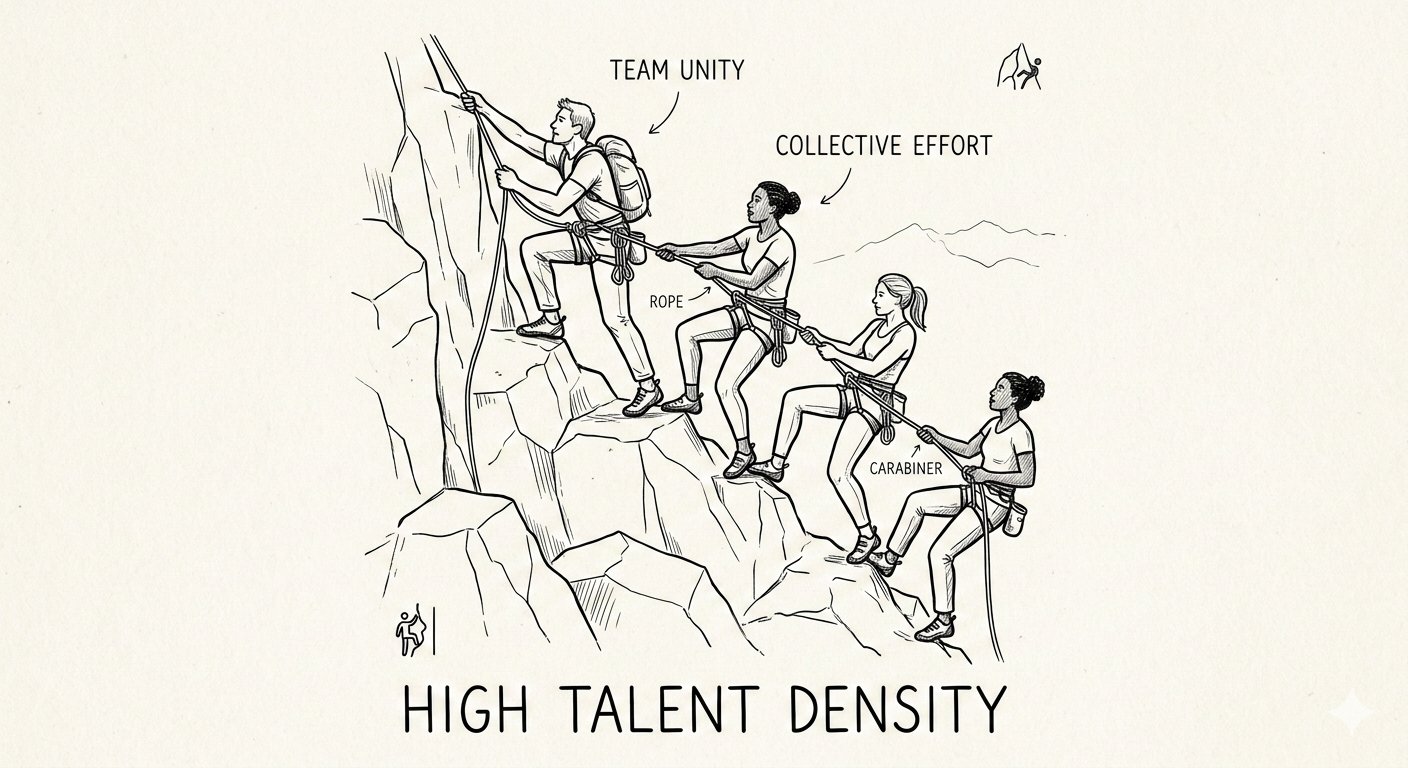
Building exceptional teams isn't about accumulating headcount-it's about maximizing talent density. The principle is deceptively simple: one outstanding performer doesn't just outperform an average one by a modest margin; they often deliver 10x the impact. This isn't hyperbole. When you examine the characteristics that separate extraordinary contributors from the merely competent, patterns emerge that every leader should internalize.
Extraordinary talent exhibits a relentless work ethic paired with insatiable curiosity. These individuals don't clock in and out-they're genuinely energized by challenges and immerse themselves in continuous learning. They read voraciously, ask penetrating questions, and connect disparate ideas in novel ways. But their intelligence isn't merely academic; it's applied. They build extensive networks across diverse fields, understanding that breakthrough insights often come from unexpected intersections. Their rolodex isn't a vanity metric-it's a strategic asset they cultivate through authentic relationship-building and consistent value creation.
What truly distinguishes high-density talent is their ownership mentality and creative problem-solving approach. They view constraints as design parameters, not roadblocks, constantly asking "Why not?" instead of accepting "That's how it's always been done." When setbacks occur, they don't waste energy on blame or excuses; they extract lessons and iterate rapidly. This self-reliance extends to personal development-they treat their own capabilities as perpetually improvable, addressing weaknesses with the same rigor they apply to business problems. They understand that sustainable success requires working on yourself as diligently as you work on your projects.
Perhaps most critically, elite performers maintain equanimity under pressure. While others panic during turbulence, they slow down, ask clarifying questions, and make sound decisions. This composure isn't detachment-it's confidence born from preparation and perspective. They know that timing matters, that not every problem requires immediate action, and that preserving judgment during chaos is a competitive advantage. For leaders, the imperative is clear: one exceptional team member who embodies these traits will outperform three adequate ones while consuming fewer resources and creating less management overhead. The mathematics of talent density should fundamentally reshape how you approach hiring, development, and team composition.
Why This Matters
Talent density directly impacts your organization's speed, innovation capacity, and competitive positioning. In an era where execution velocity determines market winners, having teams diluted with mediocre performers creates drag that compounds across every initiative. Conversely, concentrating exceptional talent creates a multiplier effect-high performers elevate those around them, establish higher standards, and accomplish in weeks what average teams struggle with for quarters. Ignore talent density, and you'll find yourself outmaneuvered by leaner competitors who do more with dramatically fewer people.
Leadership in Practice
A major streaming company provides the definitive case study in talent density. In 2001, facing post-dot-com contraction, the company laid off a third of its workforce. CEO the company's CEO and his leadership team expected productivity to plummet. Instead, something remarkable happened: the remaining employees became more creative, collaborative, and productive. The reason? They'd inadvertently created extraordinary talent density by retaining only their strongest performers. This experience crystallized into the company's now-famous a performance evaluation approach-managers regularly ask themselves: "Which of my people, if they told me they were leaving for a similar role at another company, would I fight hard to keep?" Those who don't pass this test receive generous severance packages, regardless of adequate performance. The company discovered that one outstanding engineer could accomplish what three average ones struggled to deliver, and that adequate performance, while not bad, actively diluted the team's overall capability. This philosophy enabled the company to transform from DVD rentals to streaming dominance to original content production-multiple industry disruptions accomplished with remarkably lean teams. The results speak volumes: the company maintains significantly lower employee-to-revenue ratios than competitors while consistently out-innovating them. By recently, they generated approximately $2.8 million in revenue per employee-roughly double the media industry average. More importantly, their talent density approach created a self-reinforcing culture where top performers wanted to work because they were surrounded exclusively by other exceptional contributors. The lesson isn't about being ruthless-it's about being honest that team composition isn't neutral; it either multiplies or divides your organization's effectiveness.
Leadership Framework
**The Talent Density Optimization Framework**
**Step 1: Implement Rigorous Hiring Thresholds**
Raise your bar dramatically. Institute a "must be exceptional at something" standard for every hire-not well-rounded adequacy, but genuine distinction in at least one critical dimension. Use diverse interview panels and require unanimous enthusiasm, not consensus compromise. One toxic or mediocre hire doesn't simply underperform; they reset your team's standards downward and consume extraordinary management energy.
**Step 2: Apply the Keeper Test Quarterly**
For each team member, honestly answer: "If this person resigned tomorrow, would I fight to keep them, or would I feel secretly relieved?" This isn't about likability-it's about impact and density. Those who don't clear this bar should receive honest feedback and, if improvement doesn't materialize within a defined period, generous transition support. Retaining adequate performers is expensive compassion that penalizes your best people.
**Step 3: Create Density-Reinforcing Conditions**
High performers need context, not control. Provide extraordinary clarity on objectives and constraints, then grant significant autonomy in execution. Eliminate administrative friction, political gamesmanship, and approval bottlenecks that frustrate top talent. Pay at the top of market-exceptional people are not 10% better than average; they're 10x better, so 2x compensation is still a bargain. Create environments where excellence is the norm, mediocrity is conspicuous, and A-players attract other A-players.
**Step 4: Develop Your Density Assets**
Talent density isn't static. Invest disproportionately in developing your keepers-premium training, executive coaching, stretch assignments, and sabbaticals. Create explicit expectations that everyone continuously works on themselves. Make learning from failure and iteration speed cultural hallmarks. The highest-density teams are learning machines that compound their advantages over time.
**Step 5: Measure Density Outcomes, Not Just Inputs**
Track output-per-person metrics across teams and projects. Measure decision speed, innovation rate, and quality of execution-not just hours worked or processes followed. Identify your highest-density teams and study what makes them exceptional. Make talent density a regular topic in leadership reviews, with the same rigor you apply to financial metrics.
**Critical Success Factor:** This framework fails if applied mechanistically without genuine care for people. The goal isn't cruelty-it's creating teams where everyone can do their best work surrounded by other exceptional contributors. Approach this with transparency, honesty, and generosity, or you'll simply create fear and politics.
Leadership Takeaway
Tomorrow, conduct an honest talent audit of your team using the keeper test-not to immediately act, but to gain clarity on your current density. Identify your true A-players and ask yourself what would make them even more effective, then remove one obstacle they face this week. Simultaneously, have one difficult but honest conversation with someone performing adequately but not exceptionally. Building high-density teams requires courage to make uncomfortable decisions, but the alternative-managing mediocrity-is far more exhausting and produces far worse outcomes. Your best people are watching to see if you'll protect the team's standards.
"The best thing you can do for your employees is to hire only 'A' players to work alongside them. 'B' and 'C' players drag everybody down." — a transformative CEO
Ramu Kaka's Wisdom
A basket of mangoes is only as good as its ripest fruit can inspire, and as poor as its rotting ones can spoil. Choose your fruit carefully, tend to it diligently, and don't be afraid to remove what no longer serves the harvest.
Reflection Questions
- If you could rebuild your team from scratch with only your current top 50% of performers, would your organization actually become more effective—and what does that tell you about your current talent density?
- What systemic factors in your organization make it difficult to maintain high talent density—hiring pressures, political sensitivities, compensation constraints, or your own discomfort with difficult conversations?
- Are your best performers staying because they're surrounded by other exceptional contributors, or despite being frustrated by inadequate teammates—and how long until they leave if it's the latter?